<?xml version="1.0" encoding="ISO-8859-1"?>
<?xml-stylesheet href="http://www.atomenabled.org/css/atom.css" type="text/css"?>
<feed xml:lang="en" xmlns="http://www.w3.org/2005/Atom">
  <title>UniGE ChemPubs Hagemann group</title>
  <subtitle>Hagemann group publications at University of Geneva, Switzerland</subtitle>
  <link href="http://www.unige.ch/sciences/chifi/index.php?publis/welcome.php" />
  <link rel="self" href="http://www.unige.ch/sciences/chifi/publis/atom/ChemPubs_A.xml" />
  <id><![CDATA[http://www.unige.ch/sciences/chifi/index.php?publis/welcome.php]]></id>
  <updated>2011-11-15T15:21:45Z</updated>
<div class="info" xmlns="http://www.w3.org/1999/xhtml">This is an Atom formatted XML site feed. It is intended to be viewed in a Newsreader or syndicated to another site. </div>
  <author>
    <name>Webmaster physical chemistry</name>
    <email>Dominique.Lovy@unige.ch</email>
  </author>
  <logo>http://www.unige.ch/sciences/chifi/imgs/chimiephysique25.png</logo>
  <entry>
    <title>Modified ene-yne compounds: a novel functional material with nonlinear optical properties</title>
    <link rel="alternate" type="text/html" hreflang="en"
       href="http://www.unige.ch/sciences/chifi/publis/list_refsl.php?rid=1270" />
    <id>http://www.unige.ch/sciences/chifi/publis/list_refsl.php?rid=1270</id>
    <updated>2011-11-15T16:21:45Z</updated>
    <content type="html" xml:lang="en">
<![CDATA[<br />
<div><h4>Modified ene-yne compounds: a novel functional material with nonlinear optical properties</h4><br />
D. Lumpi, B. Stöger, C. Hametner, F. Kubel, G. Reider, <a href="&#109;&#97;&#x69;&#108;&#x74;&#x6f;:&#72;&#x61;&#110;&#x73;&#45;&#x52;&#117;do&#x6c;&#x66;.H&#x61;&#x67;&#101;m&#x61;&#x6e;n&#x40;u&#x6e;&#x69;&#103;e&#46;&#99;&#x68;?Subject=Your publication in CrystEngComm, vol. in press (2011)">H. Hagemann</a>, A. Karpfen and J. Fröhlich<br />
<br />
<em>CrystEngComm</em>,  <b>in press</b>  , 2011  <br />
<br />
<b>Links</b>:   <a href="http://dx.doi.org/10.1039.c1ce06093g">DOI (Digital Object Identifier)</a><br />
<br />
</div> ]]> 
    </content>
  </entry>
  <entry>
    <title type="html"><![CDATA[Lanthanide-Mediated Supramolecular Cages and Host&ndash;Guest Interactions]]></title>
    <link rel="alternate" type="text/html" hreflang="en"
       href="http://www.unige.ch/sciences/chifi/publis/list_refsl.php?rid=1258" />
    <id>http://www.unige.ch/sciences/chifi/publis/list_refsl.php?rid=1258</id>
    <updated>2011-10-21T09:51:56Z</updated>
    <content type="html" xml:lang="en">
<![CDATA[<br />
<div><h4>Lanthanide-Mediated Supramolecular Cages and Host&ndash;Guest Interactions</h4><br />
B. El Aroussi, L. Guénée, <a href="m&#97;&#x69;&#x6c;&#116;&#111;:P&#114;odi&#x70;&#x74;&#x61;&#x2e;&#x50;a&#108;&#64;&#117;&#110;i&#103;&#x65;&#x2e;&#99;&#x68;?Subject=Your publication in Inorg. Chem., vol. 50 (2011) p.8588">P. Pal</a> and J. Hamacek<br />
<br />
<a href="http://pubs3.acs.org/acs/journals/toc.page?incoden=inocaj" target="new"><em>Inorganic Chemistry</em></a>,  <b>50</b> (17)  , 2011  , p8588 -8597<br />
<br />
<center><img src="http://www.unige.ch/sciences/chifi/publis/pics/double/ref01258.png" /></center><br />
<p style="text-align:justify;"><b>Abstract</b>: <br />The structure and thermodynamic properties of lanthanide complexes with a new tripodal ligand&nbsp;<strong>L2</strong>&nbsp;have been elucidated using different physicochemical methods. At stoichiometric ratios, the tetrahedral three-dimensional complexes with lanthanide cations are formed in acetonitrile with good stabilities. Despite minor structural changes comparing to previously investigated tripodal ligands, the resulting assembly exhibits different features revealed with the crystal structure of [Eu<sub>4</sub><strong>L2</strong><sub>4</sub>](OH)(ClO<sub>4</sub>)<sub>11</sub>&nbsp;(orthorhombic,&nbsp;<em>Pbcn</em>). Interestingly, the highly charged edifice contains an inner cage encapsulating a perchlorate anion. Such lanthanide mediated cage-like assemblies are rare, and may be of interest for different sensing applications. Indeed, the anionic guest can be exchanged with different anions. The related host&ndash;guest equilibria were investigated with NMR techniques. Various aspects of these reactions are qualitatively discussed.<br /></p><br />
<b>Links</b>:  <a href="http://archive-ouverte.unige.ch/unige:17235">unige:17235</a> <a href="http://pubs.acs.org/doi/abs/10.1021/ic201156q">Abstract</a>  <a href="http://pubs.acs.org/doi/full/10.1021/ic201156q">Article HTML</a>  <a href="http://pubs.acs.org/doi/pdf/10.1021/ic201156q">Article PDF</a>  <a href="http://dx.doi.org/10.1021/ic201156q">DOI (Digital Object Identifier)</a><br />
<br />
</div> ]]> 
    </content>
  </entry>
  <entry>
    <title>Thermodynamics, Structure and Properties of Polynuclear Lanthanide Complexes with a Tripodal Ligand: Insight into their Self-Assembly</title>
    <link rel="alternate" type="text/html" hreflang="en"
       href="http://www.unige.ch/sciences/chifi/publis/list_refsl.php?rid=1259" />
    <id>http://www.unige.ch/sciences/chifi/publis/list_refsl.php?rid=1259</id>
    <updated>2011-10-20T13:56:21Z</updated>
    <content type="html" xml:lang="en">
<![CDATA[<br />
<div><h4>Thermodynamics, Structure and Properties of Polynuclear Lanthanide Complexes with a Tripodal Ligand: Insight into their Self-Assembly</h4><br />
J. Hamacek, C. Besnard, T. Penhouet and <a href="m&#x61;&#105;&#x6c;&#x74;o&#58;&#80;i&#101;r&#114;&#101;-&#89;v&#x65;&#x73;&#46;M&#x6f;&#x72;ga&#x6e;&#x74;&#105;&#x6e;&#105;&#x40;&#117;&#110;&#105;&#x67;e.&#99;&#104;?Subject=Your publication in Chem. - Eur. J., vol. 17 (2011) p.6753">P.-Y. Morgantini</a><br />
<br />
<a href="http://www3.interscience.wiley.com/cgi-bin/jhome/26293" target="new"><em>Chemistry - A European Journal</em></a>,  <b>17</b> (24)  , 2011  , p6753 -6764<br />
<br />
<p style="text-align:justify;"><b>Abstract</b>: <br />Self-assembly processes between a tripodal ligand and Ln<sup>III</sup>&nbsp;cations have been investigated by means of supramolecular analytical methods. At an equimolar ratio of components, tetranuclear tetrahedral complexes are readily formed in acetonitrile. The structural analysis of the crystallographic data shows a helical wrapping of binding strands around metallic cations. The properties of this series of highly charged 3D compounds were examined by using NMR spectroscopy and optical methods in solution and in the solid state. In the presence of excess metal, a new trinuclear complex was identified. The X-ray crystal structure elucidated the coordination of metallic cations with two ligands of different conformations. By varying the metal/ligand ratio, a global speciation of this supramolecular system has been evidenced with different spectroscopic methods. In addition, these rather complicated equilibria were successfully characterised with the thermodynamic stability constants. A rational analysis of the self-assembly processes was attempted by using the thermodynamic free energy model and the impact of the ligand structure on the effective concentration is discussed.<br /></p><br />
<b>Keywords</b>: helical structures;lanthanides;polynuclear complexes;thermodynamics;tripodal ligands<br />
<br />
<b>Links</b>:  <a href="http://archive-ouverte.unige.ch/unige:17236">unige:17236</a> <a href="http://onlinelibrary.wiley.com/doi/10.1002/chem.201100173/abstract">Abstract</a>  <a href="http://onlinelibrary.wiley.com/doi/10.1002/chem.201100173/full">Article HTML</a>  <a href="http://onlinelibrary.wiley.com/doi/10.1002/chem.201100173/pdf">Article PDF</a>  <a href="http://dx.doi.org/10.1002/chem.201100173">DOI (Digital Object Identifier)</a><br />
<br />
</div> ]]> 
    </content>
  </entry>
  <entry>
    <title>Porous and Dense Magnesium Borohydride Frameworks: Synthesis, Stability, and Reversible Absorption of Guest Species</title>
    <link rel="alternate" type="text/html" hreflang="en"
       href="http://www.unige.ch/sciences/chifi/publis/list_refsl.php?rid=1262" />
    <id>http://www.unige.ch/sciences/chifi/publis/list_refsl.php?rid=1262</id>
    <updated>2011-09-26T15:58:52Z</updated>
    <content type="html" xml:lang="en">
<![CDATA[<br />
<div><h4>Porous and Dense Magnesium Borohydride Frameworks: Synthesis, Stability, and Reversible Absorption of Guest Species</h4><br />
Y. Filinchuk, B. Richter, T.R. Jensen, V. Dmitriev, D. Chernyshov and <a href="m&#97;&#x69;l&#x74;&#x6f;&#x3a;&#x48;&#x61;&#110;&#115;&#x2d;&#82;&#x75;&#100;&#111;&#x6c;&#102;&#46;&#x48;&#x61;&#103;&#101;m&#x61;&#110;&#110;&#x40;u&#x6e;&#x69;ge&#46;&#x63;&#x68;?Subject=Your publication in Angew. Chem. Intl. Ed., vol. in press (2011)">H. Hagemann</a><br />
<br />
<a href="http://www3.interscience.wiley.com/cgi-bin/jhome/26737" target="new"><em>Angewandte Chemie International Edition</em></a>,  <b>in press</b>  , 2011  <br />
<br />
<center><img src="http://www.unige.ch/sciences/chifi/publis/pics/double/ref01262.png" /></center><br />
<p style="text-align:justify;"><b>Abstract</b>: <br /><strong>Highly occupied</strong>: A highly porous form of Mg(BH<sub>4</sub>)<sub>2</sub>&nbsp;(see picture; Mg green, BH<sub>4</sub>&nbsp;blue, unit cells shown in red) reversibly absorbs H<sub>2</sub>, N<sub>2</sub>, and CH<sub>2</sub>Cl<sub>2</sub>. At high pressures, this material transforms into an interpenetrated framework that has 79&thinsp;% higher density than the other polymorphs. Mg(BH<sub>4</sub>)<sub>2</sub>&nbsp;can act as a coordination polymer that has many similarities to metal&ndash;organic frameworks.<br /></p><br />
<b>Keywords</b>: framework materials;host|guest systems;hydrides;hydrogen storage;polymorphism<br />
<br />
<b>Links</b>:  <a href="http://doi.wiley.com/10.1002/anie.201100675">Abstract</a>  <a href="http://onlinelibrary.wiley.com/doi/10.1002/anie.201100675/pdf">Article PDF</a>  <a href="http://dx.doi.org/10.1002/anie.201100675">DOI (Digital Object Identifier)</a><br />
<br />
</div> ]]> 
    </content>
  </entry>
  <entry>
    <title type="html"><![CDATA[New fundamental experimental studies on &alpha;-Mg(BH<sub>4</sub>)<sub>2</sub> and other borohydrides]]></title>
    <link rel="alternate" type="text/html" hreflang="en"
       href="http://www.unige.ch/sciences/chifi/publis/list_refsl.php?rid=1212" />
    <id>http://www.unige.ch/sciences/chifi/publis/list_refsl.php?rid=1212</id>
    <updated>2011-09-19T07:53:30Z</updated>
    <content type="html" xml:lang="en">
<![CDATA[<br />
<div><h4>New fundamental experimental studies on &alpha;-Mg(BH<sub>4</sub>)<sub>2</sub> and other borohydrides</h4><br />
<a href="&#x6d;&#x61;i&#108;&#x74;&#111;:Ha&#110;&#115;&#x2d;&#82;&#117;&#100;&#x6f;&#x6c;&#102;&#x2e;H&#x61;g&#101;&#x6d;&#x61;&#110;&#110;&#x40;&#117;&#110;ig&#x65;.&#99;&#104;?Subject=Your publication in J. Alloys Compd., vol. 509 (2011)">H. Hagemann</a>, <a href="&#109;ailt&#111;&#x3a;&#86;&#105;&#x6e;c&#x65;&#110;&#122;&#x61;&#x2e;&#68;an&#x6e;a&#64;&#117;&#110;&#105;ge&#x2e;&#x63;&#104;?Subject=Your publication in J. Alloys Compd., vol. 509 (2011)">V. D'Anna</a>, J.-P. Rapin, R. Cerný, Y. Filinchuk, K.C. Kim, D.S. Sholl and S.F. Parker<br />
<br />
<a href="http://www.sciencedirect.com/science//journal/09258388" target="new"><em>Journal of Alloys and Compounds</em></a>,  <b>509</b> (2)  , 2011  <br />
<br />
<center><img src="http://www.unige.ch/sciences/chifi/publis/pics/double/ref01212.png" /></center><br />
<p style="text-align:justify;"><b>Abstract</b>: <br />Several new studies of Mg(BH<sub>4</sub>)<sub>2</sub> are reported. A 1:1 LiBH<sub>4</sub>:Mg(BH<sub>4</sub>)<sub>2</sub> mixture was studied by in situ synchrotron X-ray diffraction and reveals an eutectic behavior with the eutectic composition more rich in Mg(BH<sub>4</sub>)<sub>2</sub>, and the eutectic temperature lower than 456&nbsp;K. No dual cation compound was observed in this experiment.<br />  <br />New vibrational spectra including INS data have been obtained and are compared with theoretical DFT calculations and recent NMR studies, showing good agreement.<br /></p><br />
<b>Keywords</b>: hydrogen storage materials; vibrational spectroscopy; synchrotron X-ray diffraction<br />
<br />
<b>Links</b>:  <a href="http://archive-ouverte.unige.ch/unige:16970">unige:16970</a>  <a href="http://www.sciencedirect.com/science?_ob=ArticleURL&_udi=B6TWY-519DF46-G&_user=9565874&_coverDate=10%2F23%2F2010&_alid=1606077565&_rdoc=1&_fmt=high&_orig=search&_origin=search&_zone=rslt_list_item&_cdi=5575&_sort=r&_st=13&_docanchor=&view=c&_ct=12&_acct=C000043220&_version=1&_urlVersion=0&_userid=9565874&md5=b61bff8ee1493b76479b5be44e957090&searchtype=a">Article HTML</a>  <a href="http://www.sciencedirect.com/science?_ob=MImg&_imagekey=B6TWY-519DF46-G-9&_cdi=5575&_user=9565874&_pii=S0925838810025776&_origin=search&_coverDate=10%2F23%2F2010&_sk=999999999&view=c&wchp=dGLbVtz-zSkWA&md5=520fa7fe7a9e17f2ec6fb20f6a7ba62d&ie=/sdarticle.pdf">Article PDF</a>  <a href="http://dx.doi.org/10.1016/j.jallcom.2010.10.068">DOI (Digital Object Identifier)</a><br />
<br />
</div> ]]> 
    </content>
  </entry>
  <entry>
    <title type="html"><![CDATA[Ba<sub>2.2</sub>Ca<sub>0.8</sub>Mg<sub>4</sub>F<sub>14</sub>, a new &ldquo;solid solution stabilized&rdquo; matrix for an intense blue phosphor]]></title>
    <link rel="alternate" type="text/html" hreflang="en"
       href="http://www.unige.ch/sciences/chifi/publis/list_refsl.php?rid=1251" />
    <id>http://www.unige.ch/sciences/chifi/publis/list_refsl.php?rid=1251</id>
    <updated>2011-08-23T15:49:32Z</updated>
    <content type="html" xml:lang="en">
<![CDATA[<br />
<div><h4>Ba<sub>2.2</sub>Ca<sub>0.8</sub>Mg<sub>4</sub>F<sub>14</sub>, a new &ldquo;solid solution stabilized&rdquo; matrix for an intense blue phosphor</h4><br />
F. Kubel, M. Pantazi and <a href="&#x6d;&#x61;i&#x6c;&#x74;o&#x3a;&#72;&#97;&#x6e;&#115;-&#82;&#117;&#100;o&#x6c;&#x66;&#x2e;&#72;&#97;&#x67;&#x65;&#109;a&#x6e;&#110;@&#117;nig&#x65;&#x2e;&#x63;&#x68;?Subject=Your publication in Cryst. Res. Techn., vol. 46 (2011) p.899">H. Hagemann</a><br />
<br />
<a href="http://www3.interscience.wiley.com/cgi-bin/jhome/5007559?CRETRY=1&SRETRY=0" target="new"><em>Crystal Research and Technology</em></a>,  <b>46</b> (9)  , 2011  , p899 -905<br />
<br />
<center><img src="http://www.unige.ch/sciences/chifi/publis/pics/double/ref01251.png" /></center><br />
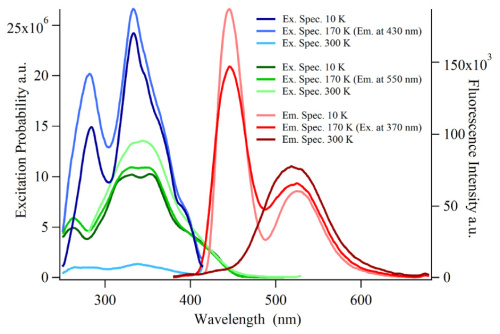
<p style="text-align:justify;"><b>Abstract</b>: <br />Barium calcium magnesium fluoride (Ba<sub>2</sub>(Ba<sub>x</sub>Ca<sub>1-x</sub>)Mg<sub>4</sub>F<sub>14</sub>, x=0.19-0.26) has been synthesized at 850 &deg;C from precursors prepared by the solution precipitation method. Single crystals with composition of Ba<sub>2.200(2)</sub>Ca<sub>0.800(2)</sub>Mg<sub>4</sub>F<sub>14</sub>were obtained after prolonged heating. Lattice parameters from single crystal data are&nbsp;<em>a</em>&nbsp;= 12.4203(8) and&nbsp;<em>c</em>&nbsp;= 7.4365(5) &Aring; [tetragonal, space group P4<sub>2</sub>/mnm (No. 136)]. They increase with increasing barium concentration within a given stability window. The structure is built of a network of MgF<sub>6</sub>&nbsp;octahedra forming a pyrochlore related channel system and isolated fluorine ions. Within the channels, heavy alkaline earth ions are located. The wide channel is filled with off-center positioned barium ions. The channel with a narrow cross section hosts both ions, Ca<sup>2+</sup>and Ba<sup>2+</sup>. The structure is isotypic with Pb<sub>3</sub>Nb<sub>4</sub>O<sub>12</sub>F<sub>2</sub>&nbsp;but has a different coordination around Ba/Ca and Pb, respectively. Doped with &sim;1% Eu(II), the compound shows intense blue luminescence under UV activation.<br /></p><br />
<b>Keywords</b>: solid solution stabilized compound, fluoride, blue phosphor<br />
<br />
<b>Links</b>:  <a href="http://archive-ouverte.unige.ch/unige:16784">unige:16784</a>  <a href="http://onlinelibrary.wiley.com/doi/10.1002/crat.201000624/pdf">Article PDF</a>  <a href="http://dx.doi.org/10.1002/crat.201000624">DOI (Digital Object Identifier)</a><br />
<br />
</div> ]]> 
    </content>
  </entry>
  <entry>
    <title type="html"><![CDATA[Mg<sub>x</sub>Mn<sub>(1&minus;x)</sub>(BH4)<sub>2</sub> (x = 0&ndash;0.8), a cation solid solution in a bimetallic borohydride]]></title>
    <link rel="alternate" type="text/html" hreflang="en"
       href="http://www.unige.ch/sciences/chifi/publis/list_refsl.php?rid=1243" />
    <id>http://www.unige.ch/sciences/chifi/publis/list_refsl.php?rid=1243</id>
    <updated>2011-08-08T15:08:04Z</updated>
    <content type="html" xml:lang="en">
<![CDATA[<br />
<div><h4>Mg<sub>x</sub>Mn<sub>(1&minus;x)</sub>(BH4)<sub>2</sub> (x = 0&ndash;0.8), a cation solid solution in a bimetallic borohydride</h4><br />
R. Cerny, N. Penin, <a href="&#x6d;&#97;&#x69;&#x6c;&#x74;o&#x3a;Vi&#x6e;c&#x65;&#110;&#x7a;a&#46;&#68;&#97;&#x6e;&#110;a&#x40;u&#110;&#x69;ge&#46;&#x63;&#x68;?Subject=Your publication in Acta Mater., vol. 59 (2011) p.5171">V. D'Anna</a>, <a href="&#x6d;&#97;&#x69;&#108;&#x74;&#111;&#58;&#72;&#97;&#110;s-&#x52;&#117;&#x64;&#x6f;&#x6c;&#x66;&#x2e;Ha&#x67;&#x65;m&#x61;n&#x6e;&#x40;&#117;&#110;&#105;&#x67;&#x65;&#x2e;c&#104;?Subject=Your publication in Acta Mater., vol. 59 (2011) p.5171">H. Hagemann</a>, E. Durand and J. Ruzicka<br />
<br />
<a href="http://www.sciencedirect.com/science/journal/13596454" target="new"><em>Acta Materialia</em></a>,  <b>59</b> (13)  , 2011  , p5171 -5180<br />
<br />
<p style="text-align:justify;"><b>Abstract</b>: <br />A solid solution of magnesium and manganese borohydrides was studied by in situ synchrotron radiation X-ray powder diffraction and infrared spectroscopy. A combination of thermogravimetry, mass and infrared spectroscopy, and atomic emission spectroscopy were applied to clarify the thermal gas desorption of pure Mn(BH<sub>4</sub>)<sub>2</sub>&nbsp;and a solid solution of composition Mg<sub>0.5</sub>Mn<sub>0.5</sub>(BH<sub>4</sub>)<sub>2</sub>. Mg<em><sub>x</sub></em>Mn<sub>(1&minus;</sub><em><sub>x</sub></em><sub>)</sub>(BH<sub>4</sub>)<sub>2</sub>&nbsp;(<em>x&nbsp;=&nbsp;</em>0&ndash;0.8) conserves the trigonal structure of Mn(BH<sub>4</sub>)<sub>2</sub>&nbsp;at room temperature. Manganese is dissolved in the hexagonal structure of &alpha;-Mg(BH<sub>4</sub>)<sub>2</sub>, with the upper solubility limit not exceeding 10&nbsp;mol.% at room temperature. There exists a two-phase region of trigonal and hexagonal borohydrides within the compositional range<em>x&nbsp;</em>=&nbsp;0.8&ndash;0.9 at room temperature. Infrared spectra show splitting of various vibrational modes, indicating the presence of two cations in the trigonal Mg<em><sub>x</sub></em>Mn<sub>(1&minus;</sub><em><sub>x</sub></em><sub>)</sub>(BH<sub>4</sub>)<sub>2</sub>&nbsp;solid solutions, as well as the appearance of a second phase, hexagonal &alpha;-Mg(BH<sub>4</sub>)<sub>2</sub>, at higher magnesium contents. All vibrational frequencies are shifted to higher values with increasing magnesium content. The decomposition temperature of the trigonal Mg<em><sub>x</sub></em>Mn<sub>(1&minus;</sub><em><sub>x</sub></em><sub>)</sub>(BH<sub>4</sub>)<sub>2</sub>&nbsp;(<em>x&nbsp;=&nbsp;</em>0&ndash;0.8) does not vary significantly as a function of the magnesium content (433&ndash;453&nbsp;K). The desorbed gas contains mostly hydrogen and 3&ndash;7.5&nbsp;mol.% diborane B<sub>2</sub>H<sub>6</sub>, as determined from analyses of the Mn(BH<sub>4</sub>)<sub>2</sub>&nbsp;and Mg<sub>0.5</sub>Mn<sub>0.5</sub>(BH<sub>4</sub>)<sub>2</sub>&nbsp;samples. An eutectic relation between &alpha;-Mg(BH<sub>4</sub>)<sub>2</sub>&nbsp;and LiBH<sub>4</sub>&nbsp;is observed. The solid solution Mg<em><sub>x</sub></em>Mn<sub>(1&minus;</sub><em><sub>x</sub></em><sub>)</sub>(BH<sub>4</sub>)<sub>2</sub>&nbsp;is a promising material for hydrogen storage as it decomposes at a similar temperature to Mn(BH<sub>4</sub>)<sub>2</sub>, i.e. at a much lower temperature than pure Mg(BH<sub>4</sub>)<sub>2</sub>&nbsp;without significantly losing hydrogen weight capacity thanks to substitution of Mn by Mg up to 80&nbsp;mol.%. The questions of diborane release and reversibility remain to be addressed.<br /></p><br />
<b>Keywords</b>: hydrides; hydrogen storage; synchrotron radiation<br />
<br />
<b>Links</b>:  <a href="http://archive-ouverte.unige.ch/unige:16759">unige:16759</a> <a href="http://www.sciencedirect.com/science/article/pii/S1359645411003089">Abstract</a>  <a href="http://www.sciencedirect.com/science/article/pii/S1359645411003089">Article HTML</a>  <a href="http://www.sciencedirect.com/science?_ob=MImg&_imagekey=B6TW8-530K2C4-2-2&_cdi=5556&_user=9565874&_pii=S1359645411003089&_origin=browse&_coverDate=06%2F01%2F2011&_sk=999999999&view=c&wchp=dGLbVzz-zSkzS&md5=52591c4187f535a5082e77964219b749&ie=/sdarticle.pdf">Article PDF</a>  <a href="http://dx.doi.org/10.1016/j.actamat.2011.04.052">DOI (Digital Object Identifier)</a><br />
<br />
</div> ]]> 
    </content>
  </entry>
  <entry>
    <title type="html"><![CDATA[Novel sodium aluminium borohydride containing the complex anion [Al(BH<small><sub>4</sub></small>,Cl)<small><sub>4</sub></small>]<small><sup>&minus;</sup></small>]]></title>
    <link rel="alternate" type="text/html" hreflang="en"
       href="http://www.unige.ch/sciences/chifi/publis/list_refsl.php?rid=1241" />
    <id>http://www.unige.ch/sciences/chifi/publis/list_refsl.php?rid=1241</id>
    <updated>2011-08-08T15:07:19Z</updated>
    <content type="html" xml:lang="en">
<![CDATA[<br />
<div><h4>Novel sodium aluminium borohydride containing the complex anion [Al(BH<small><sub>4</sub></small>,Cl)<small><sub>4</sub></small>]<small><sup>&minus;</sup></small></h4><br />
I. Lindemann, R.D. Ferrer, L. Dunsch, R. Cerny, <a href="m&#97;&#x69;l&#116;&#x6f;:H&#x61;&#x6e;&#115;&#45;&#82;ud&#111;&#x6c;&#x66;&#46;&#x48;&#97;&#x67;&#101;&#109;&#97;&#x6e;n&#x40;&#117;n&#x69;g&#101;&#46;c&#x68;?Subject=Your publication in Faraday Discuss., vol. 151 (2011) p.231">H. Hagemann</a>, <a href="&#x6d;a&#105;&#x6c;&#116;&#x6f;&#x3a;&#x56;&#x69;&#110;&#x63;&#101;&#x6e;z&#x61;&#46;&#x44;a&#x6e;&#x6e;&#97;&#x40;&#117;&#110;&#x69;&#103;&#101;&#x2e;&#99;&#104;?Subject=Your publication in Faraday Discuss., vol. 151 (2011) p.231">V. D'Anna</a>, Y. Filinchuk, L. Schultz and O. Gutfleisch<br />
<br />
<a href="http://www.rsc.org/Publishing/Journals/fd/" target="new"><em>Faraday Discussions</em></a>,  <b>151</b>  , 2011  , p231 -242<br />
<br />
<center><img src="http://www.unige.ch/sciences/chifi/publis/pics/double/ref01241.png" /></center><br />
<p style="text-align:justify;"><b>Abstract</b>: <br />The synthesis of a novel alkali-metal aluminium borohydride NaAl(BH<small><sub>4</sub></small>)<small><sub><em>x</em></sub></small>Cl<small><sub>4&minus;<em>x</em></sub></small>&nbsp;from NaBH<small><sub>4</sub></small>&nbsp;and AlCl<small><sub>3</sub></small>&nbsp;using a solid state metathesis reaction is described. Structure determination was carried out using synchrotron powder diffraction data and vibrational spectroscopy. An orthorhombic structure (space group&nbsp;<em>Pmn</em>2<small><sub>1</sub></small>) is formed which contains Na<small><sup>+</sup></small>&nbsp;cations and complex [Al(BH<small><sub>4</sub></small>,Cl)<small><sub>4</sub></small>]<small><sup>&minus;</sup></small>anions. Due to the high chlorine content (1 &le;&nbsp;<em>x</em>&nbsp;&le; 1.43) the hydrogen density of the borohydride is only between 2.3 and 3.5 wt.% H<small><sub>2</sub></small>&nbsp;in contrast to the expected 14.6 wt.% for chlorine free NaAl(BH<small><sub>4</sub></small>)<small><sub>4</sub></small>. The decomposition of NaAl(BH<small><sub>4</sub></small>)<small><sub><em>x</em></sub></small>Cl<small><sub>4&minus;<em>x</em></sub></small>&nbsp;is observed in the target range for desorption at about 90 &deg;C by differential scanning calorimetry (DSC),&nbsp;<em>in situ</em>&nbsp;Raman spectroscopy and synchrotron powder X-ray diffraction. Thermogravimetric analysis (TG) shows extensive mass loss indicating the loss of H<small><sub>2</sub></small>&nbsp;and B<small><sub>2</sub></small>H<small><sub>6</sub></small>&nbsp;at about 90 &deg;C followed by extensive weight loss in the form of chloride evaporation.<br /></p><br />
<b>Links</b>:  <a href="http://archive-ouverte.unige.ch/unige:16758">unige:16758</a> <a href="http://pubs.rsc.org/en/content/articlelanding/2011/fd/c0fd00024h">Abstract</a>  <a href="http://pubs.rsc.org/en/content/articlehtml/2011/fd/c0fd00024h">Article HTML</a>  <a href="http://pubs.rsc.org/en/content/articlepdf/2011/fd/c0fd00024h">Article PDF</a>  <a href="http://dx.doi.org/10.1039/C0FD00024H">DOI (Digital Object Identifier)</a><br />
<br />
</div> ]]> 
    </content>
  </entry>
  <entry>
    <title type="html"><![CDATA[YMn<small><sub>2</sub></small>H<small><sub><em>x</em></sub></small>&nbsp;and RMn<small><sub>2&minus;<em>y</em></sub></small>Fe<small><sub><em>y</em></sub></small>H<small><sub>6</sub></small>&nbsp;(R = Y, Er) studied by Raman, infrared and inelastic neutron scattering spectroscopies]]></title>
    <link rel="alternate" type="text/html" hreflang="en"
       href="http://www.unige.ch/sciences/chifi/publis/list_refsl.php?rid=1240" />
    <id>http://www.unige.ch/sciences/chifi/publis/list_refsl.php?rid=1240</id>
    <updated>2011-08-08T15:06:46Z</updated>
    <content type="html" xml:lang="en">
<![CDATA[<br />
<div><h4>YMn<small><sub>2</sub></small>H<small><sub><em>x</em></sub></small>&nbsp;and RMn<small><sub>2&minus;<em>y</em></sub></small>Fe<small><sub><em>y</em></sub></small>H<small><sub>6</sub></small>&nbsp;(R = Y, Er) studied by Raman, infrared and inelastic neutron scattering spectroscopies</h4><br />
V. Paul-Boncour, S.F. Parker, <a href="&#109;&#97;&#105;&#108;&#x74;&#111;:&#72;a&#110;&#x73;&#x2d;&#x52;&#117;&#x64;&#111;&#108;&#102;.Ha&#103;&#101;&#109;&#x61;n&#110;@&#x75;&#x6e;&#105;&#x67;e&#46;&#x63;&#x68;?Subject=Your publication in Faraday Discuss., vol. 151 (2011) p.307">H. Hagemann</a>, S.M. Filipek, R. Wierzbicki and M. Latroche<br />
<br />
<a href="http://www.rsc.org/Publishing/Journals/fd/" target="new"><em>Faraday Discussions</em></a>,  <b>151</b>  , 2011  , p307 -314<br />
<br />
<p style="text-align:justify;"><b>Abstract</b>: <br />YMn<small><sub>2</sub></small>&nbsp;forms either interstitial YMn<small><sub>2</sub></small>H<small><sub><em>x</em></sub></small>&nbsp;hydrides for&nbsp;<em>x</em>&nbsp;&le; 4.5 or a complex YMn<small><sub>2</sub></small>H<small><sub>6</sub></small>&nbsp;hydride when submitted to high hydrogen pressure. These compounds have been studied by inelastic neutron scattering (INS) in order to clarify the different modes of H vibration. The INS spectra of YMn<small><sub>2</sub></small>H<small><sub><em>x</em></sub></small>&nbsp;hydrides are strongly dependent on the H content. YMn<small><sub>2</sub></small>H<small><sub>6</sub></small>&nbsp;and YMn<small><sub>2</sub></small>D<small><sub>6</sub></small>&nbsp;show broad bands, also observed by Raman and IR spectroscopy, assigned to H&ndash;Mn&ndash;H (or D) and Mn&ndash;H bending and stretching modes. Both ErMn<small><sub>2</sub></small>D<small><sub>6</sub></small>&nbsp;and ErMn<small><sub>1.8</sub></small>Fe<small><sub>0.2</sub></small>D<small><sub>6</sub></small>&nbsp;show, in addition to the H vibration mode, an intense band at 215 cm<small><sup>&minus;1</sup></small>&nbsp;which has been attributed to a magnetic excitation of Er<small><sup>3+</sup></small>&nbsp;in view of its momentum transfer dependence.<br /></p><br />
<b>Links</b>:  <a href="http://archive-ouverte.unige.ch/unige:16757">unige:16757</a> <a href="http://pubs.rsc.org/en/content/articlelanding/2011/fd/c0fd00019a">Abstract</a>  <a href="http://pubs.rsc.org/en/content/articlehtml/2011/fd/c0fd00019a">Article HTML</a>  <a href="http://pubs.rsc.org/en/content/articlepdf/2011/fd/c0fd00019a">Article PDF</a>  <a href="http://dx.doi.org/10.1039/C0FD00019A">DOI (Digital Object Identifier)</a><br />
<br />
</div> ]]> 
    </content>
  </entry>
  <entry>
    <title type="html"><![CDATA[Structural and vibrational properties of Ca<sub>2</sub>FeH<sub>6</sub>&nbsp;and Sr<sub>2</sub>RuH<sub>6</sub>]]></title>
    <link rel="alternate" type="text/html" hreflang="en"
       href="http://www.unige.ch/sciences/chifi/publis/list_refsl.php?rid=1216" />
    <id>http://www.unige.ch/sciences/chifi/publis/list_refsl.php?rid=1216</id>
    <updated>2011-04-18T13:41:16Z</updated>
    <content type="html" xml:lang="en">
<![CDATA[<br />
<div><h4>Structural and vibrational properties of Ca<sub>2</sub>FeH<sub>6</sub>&nbsp;and Sr<sub>2</sub>RuH<sub>6</sub></h4><br />
<a href="&#x6d;&#x61;&#x69;&#x6c;to&#58;&#x48;&#97;&#x6e;&#x73;&#x2d;R&#x75;&#100;o&#x6c;&#x66;&#46;&#72;&#x61;&#x67;&#101;m&#97;&#110;&#x6e;&#64;&#x75;&#110;&#x69;g&#x65;&#46;&#x63;&#x68;?Subject=Your publication in J. Phys. Chem. Solids, vol. 72 (2011) p.286">H. Hagemann</a>, <a href="&#109;&#x61;&#105;&#108;&#116;&#x6f;&#x3a;&#86;&#105;&#110;&#99;en&#x7a;&#97;&#x2e;&#68;&#x61;&#x6e;&#110;&#x61;@&#x75;&#110;i&#103;&#101;&#x2e;&#99;&#x68;?Subject=Your publication in J. Phys. Chem. Solids, vol. 72 (2011) p.286">V. D'Anna</a>, <a href="&#109;&#97;&#105;&#108;&#x74;&#x6f;:&#77;ax&#46;&#76;a&#119;s&#111;&#x6e;@&#x75;&#110;&#105;&#103;e&#x2e;&#x63;h?Subject=Your publication in J. Phys. Chem. Solids, vol. 72 (2011) p.286">L.M. Lawson Daku</a>, S. Gomes, G. Renaudin and K. Yvon<br />
<br />
<a href="http://www.sciencedirect.com/science//journal/00223697" target="new"><em>Journal of Physics and Chemistry of Solids</em></a>,  <b>72</b>  , 2011  , p286 -289<br />
<br />
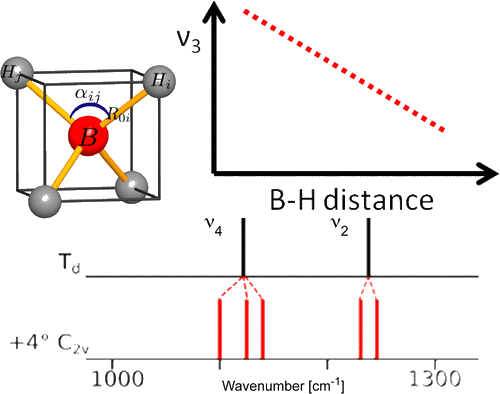
<p style="text-align:justify;"><b>Abstract</b>: <br />The structural and vibrational properties of the isostructural compounds Ca<sub>2</sub>FeH<sub>6</sub>&nbsp;and Sr<sub>2</sub>RuH<sub>6</sub>&nbsp;are determined by periodic DFT calculations and compared with their previously published experimental crystal structures as well as new experimental vibrational data. The analysis of the vibrational data is extended to the whole series of alkaline-earth iron and ruthenium hydrides A<sub>2</sub>TH<sub>6</sub>&nbsp;(A = Mg,Ca,Sr; T = Fe, Ru) in order to identify correlations between selected frequencies and the T-H bond length. The bulk moduli of Ca<sub>2</sub>FeH<sub>6</sub>&nbsp;and Sr<sub>2</sub>RuH<sub>6</sub>&nbsp;have also been determined within DFT. Their calculated values prove to compare well with the experimental values reported for Mg<sub>2</sub>FeH<sub>6</sub>&nbsp;and several other compounds of this structure.<br /></p><br />
<b>Keywords</b>: hydrogen storage materials; DFT calculations; lattice vibrations<br />
<br />
<b>Links</b>:  <a href="http://archive-ouverte.unige.ch/unige:14988">unige:14988</a> <a href="http://www.sciencedirect.com/science?_ob=ArticleURL&_udi=B6TXR-520M23K-1&_user=9565874&_coverDate=01/21/2011&_rdoc=6&_fmt=high&_orig=browse&_origin=browse&_zone=rslt_list_item&_srch=doc-info(%23toc%235597%239999%23999999999%2399999%23FLA%23display%23Articles)&_cdi=5597&_sort=d&_docanchor=&_ct=89&_acct=C000043220&_version=1&_urlVersion=0&_userid=9565874&md5=e47f9a30a72f47e28381d08b65fe5f33&searchtype=a">Abstract</a>  <a href="http://www.sciencedirect.com/science?_ob=MImg&_imagekey=B6TXR-520M23K-1-1&_cdi=5597&_user=9565874&_pii=S0022369711000114&_origin=browse&_coverDate=01%2F21%2F2011&_sk=999999999&view=c&wchp=dGLzVlz-zSkzS&md5=9e6e891c039746869f7fb8864efddd05&ie=/sdarticle.pdf">Article PDF</a>  <a href="http://dx.doi.org/10.1016/j.jpcs.2011.01.001">DOI (Digital Object Identifier)</a><br />
<br />
</div> ]]> 
    </content>
  </entry>
  <entry>
    <title>Experimental evidence of librational vibrations determining the stability of calcium borohydride</title>
    <link rel="alternate" type="text/html" hreflang="en"
       href="http://www.unige.ch/sciences/chifi/publis/list_refsl.php?rid=1215" />
    <id>http://www.unige.ch/sciences/chifi/publis/list_refsl.php?rid=1215</id>
    <updated>2011-04-18T13:39:13Z</updated>
    <content type="html" xml:lang="en">
<![CDATA[<br />
<div><h4>Experimental evidence of librational vibrations determining the stability of calcium borohydride</h4><br />
A. Borgschulte, R. Gremaud, A. Züttel, P. Martelli, A. Remhof, A.J. Ramirez-Cuesta, K. Refson, E.G. Bardaji, W. Lohstroh, M. Fichtner, <a href="&#x6d;&#x61;&#x69;l&#116;o&#58;&#x48;&#97;&#x6e;&#115;-R&#117;d&#111;&#x6c;&#x66;&#x2e;&#72;&#x61;&#103;&#101;&#109;&#97;&#x6e;&#x6e;&#64;&#117;n&#105;&#103;&#x65;&#x2e;ch?Subject=Your publication in Phys. Rev. B, vol. 83 (2011) p.24102">H. Hagemann</a> and M. Ernst<br />
<br />
<a href="http://prb.aps.org/" target="new"><em>Physical Review B</em></a>,  <b>83</b> (2)  , 2011  , p24102 <br />
<br />
<center><img src="http://www.unige.ch/sciences/chifi/publis/pics/double/ref01215.png" /></center><br />
<p style="text-align:justify;"><b>Abstract</b>: <br />The high energy of hydrogen vibrations in solids is the origin of their strong impact on thermodynamic properties. The peculiar structure of complex hydrides amplifies this impact. We shed light on the vibrational properties of three allotropes of Ca(BH<sub>4</sub>)<sub>2</sub> using density-functional theory calculations, infrared spectroscopy, and inelastic neutron scattering. We show that the vibrational properties of Ca(BH<sub>4</sub>)<sub>2</sub> depend on the specific phase and are hitherto the origin of their differences in stability.<br /></p><br />
<b>Links</b>:  <a href="http://archive-ouverte.unige.ch/unige:14989">unige:14989</a> <a href="http://prb.aps.org/abstract/PRB/v83/i2/e024102">Abstract</a>  <a href="http://prb.aps.org/pdf/PRB/v83/i2/e024102">Article PDF</a>  <a href="http://dx.doi.org/10.1103/PhysRevB.83.024102">DOI (Digital Object Identifier)</a><br />
<br />
</div> ]]> 
    </content>
  </entry>
  <entry>
    <title>Polarized Raman and Hyperpolarizability studies of Hydroxyethylammonium (L) tartrate monohydrate for quadratic nonlinear optics</title>
    <link rel="alternate" type="text/html" hreflang="en"
       href="http://www.unige.ch/sciences/chifi/publis/list_refsl.php?rid=1211" />
    <id>http://www.unige.ch/sciences/chifi/publis/list_refsl.php?rid=1211</id>
    <updated>2011-03-23T16:16:10Z</updated>
    <content type="html" xml:lang="en">
<![CDATA[<br />
<div><h4>Polarized Raman and Hyperpolarizability studies of Hydroxyethylammonium (L) tartrate monohydrate for quadratic nonlinear optics</h4><br />
R. Nagalakshmi, V. Krishnakumar, <a href="&#x6d;&#97;&#105;&#x6c;t&#x6f;&#x3a;H&#x61;&#x6e;&#115;&#45;&#82;&#x75;&#100;&#111;l&#x66;&#x2e;&#72;&#97;g&#101;&#109;a&#x6e;&#110;&#x40;&#117;&#110;&#105;&#x67;&#x65;&#x2e;&#99;&#x68;?Subject=Your publication in J. Mol. Struct., vol. 988 (2011) p.17">H. Hagemann</a> and S. Muthunatesan<br />
<br />
<a href="http://www.sciencedirect.com/science//journal/00222860" target="new"><em>Journal of Molecular Structure</em></a>,  <b>988</b>  , 2011  , p17 -23<br />
<br />
<p style="text-align:justify;"><b>Abstract</b>: <br />Single crystals of Hydroxyethylammonium L &ndash; tartrate monohydrate [HEALT] have been grown by slow evaporation technique using water as a solvent. The structural and vibrational properties of the crystals were studied. Besides these characterizations ab initio quantum chemical calculations have been performed at HF/6-31G (d) level to derive first order hyperpolarizability. It is shown that the first order hyperpolarizability is found to be 14.2 times more than that of urea. The characteristic vibrational frequencies obtained from polarized Raman spectra in different scattering configurations have been assigned based on the complete factor group analysis. Vibrational analysis of IR and Raman reveals that the charge transfer interaction must be responsible for nonlinear optical (NLO) properties of the present system. The UV absorption measurements have also been carried out to confirm the utility of the material for optical applications.<br /></p><br />
<b>Keywords</b>: solution growth; X ray diffraction; vibrational spectroscopy; polarized Raman, hyperpolarizability<br />
<br />
<b>Links</b>:  <a href="http://archive-ouverte.unige.ch/unige:14817">unige:14817</a> <a href="http://www.sciencedirect.com/science?_ob=ArticleURL&_udi=B6TGS-51KT8MH-2&_user=9565874&_coverDate=12%2F01%2F2010&_alid=1606070398&_rdoc=3&_fmt=high&_orig=search&_origin=search&_zone=rslt_list_item&_cdi=5262&_sort=r&_st=13&_docanchor=&view=c&_ct=4&_acct=C000043220&_version=1&_urlVersion=0&_userid=9565874&md5=569ec18c43227c6aac5c01ef8a2ac9ab&searchtype=a">Abstract</a>  <a href="http://www.sciencedirect.com/science?_ob=MImg&_imagekey=B6TGS-51KT8MH-2-1&_cdi=5262&_user=9565874&_pii=S0022286010009221&_origin=search&_coverDate=12%2F01%2F2010&_sk=999999999&view=c&wchp=dGLbVlz-zSkWA&md5=b578c47597f3d355190e36b5c90b6937&ie=/sdarticle.pdf">Article PDF</a>  <a href="http://dx.doi.org/10.1016/j.molstruc.2010.11.056">DOI (Digital Object Identifier)</a><br />
<br />
</div> ]]> 
    </content>
  </entry>
  <entry>
    <title>Structure and Characterization of KSc(BH4)4</title>
    <link rel="alternate" type="text/html" hreflang="en"
       href="http://www.unige.ch/sciences/chifi/publis/list_refsl.php?rid=1205" />
    <id>http://www.unige.ch/sciences/chifi/publis/list_refsl.php?rid=1205</id>
    <updated>2011-03-18T16:22:02Z</updated>
    <content type="html" xml:lang="en">
<![CDATA[<br />
<div><h4>Structure and Characterization of KSc(BH<sub>4</sub>)<sub>4</sub></h4><br />
R. Cerny, D.B. Ravnsbæk, G. Severa, Y. Filinchuk, <a href="&#109;&#97;&#105;&#x6c;&#x74;&#111;&#x3a;&#86;&#105;&#110;&#99;e&#x6e;&#x7a;a&#x2e;&#x44;&#97;&#110;&#110;&#x61;&#64;&#x75;n&#x69;g&#x65;&#46;&#x63;&#104;?Subject=Your publication in J. Phys. Chem. C, vol. 114 (2010) p.19540">V. D'Anna</a>, <a href="&#x6d;&#x61;&#105;l&#x74;&#x6f;&#58;&#72;&#x61;&#110;&#115;-&#82;&#x75;&#x64;&#111;&#x6c;f&#x2e;&#x48;&#97;&#103;em&#97;&#x6e;n&#x40;&#x75;&#x6e;&#x69;&#x67;&#101;.&#99;&#x68;?Subject=Your publication in J. Phys. Chem. C, vol. 114 (2010) p.19540">H. Hagemann</a>, D. Haase, J. Skibsted, C.M. Jensen and T.R. Jensen<br />
<br />
<a href="http://pubs.acs.org/journals/jpccck/index.html" target="new"><em>Journal of Physical Chemistry C</em></a>,  <b>114</b> (45)  , 2010  , p19540 -19549<br />
<br />
<p style="text-align:justify;"><b>Abstract</b>: <br />A new potassium scandium borohydride, KSc(BH<sub>4</sub>)<sub>4</sub>, is presented and characterized by a combination of <em>in situ</em> synchrotron radiation powder X-ray diffraction, thermal analysis, and vibrational and NMR spectroscopy. The title compound, KSc(BH<sub>4</sub>)<sub>4</sub>, forms at ambient conditions in ball milled mixtures of potassium borohydride and ScCl<sub>3</sub> together with a new ternary chloride K<sub>3</sub>ScCl<sub>6</sub>, which is also structurally characterized. This indicates that the formation of KSc(BH<sub>4</sub>)<sub>4</sub> differs from a simple metathesis reaction, and the highest scandium borohydride yield (~31 mol %) can be obtained with a reactant ratio KBH<sub>4</sub>:ScCl<sub>3</sub> of 2:1. KSc(BH<sub>4</sub>)<sub>4</sub> crystallizes in the orthorhombic crystal system, <em>a</em> = 11.856(5), <em>b</em> = 7.800(3), <em>c</em> = 10.126(6) &Aring;, <em>V</em> = 936.4(8) &Aring;<sup>3</sup> at RT, with the space group symmetry <em>Pnma</em>. KSc(BH<sub>4</sub>)<sub>4</sub> has a BaSO<sub>4</sub> type structure where the BH<sub>4</sub> tetrahedra take the oxygen positions. Regarding the packing of cations, K<sup>+</sup>, and complex anions, [Sc(BH<sub>4</sub>)<sub>4</sub>]<sup>&minus;</sup>, the structure of KSc(BH<sub>4</sub>)<sub>4</sub> can be seen as a distorted variant of orthorhombic neptunium, Np, metal. Thermal expansion of KSc(BH<sub>4</sub>)<sub>4</sub> in the temperature range RT to 405 K is anisotropic, and the lattice parameter <em>b</em> shows strong nonlinearity upon approaching the melting temperature. The vibrational and NMR spectra are consistent with the structural model, and previous investigations of the related compounds ASc(BH<sub>4</sub>)<sub>4</sub> with A = Li, Na. KSc(BH<sub>4</sub>)<sub>4</sub> is stable from RT up to ~405 K, where the compound melts and then releases hydrogen in two rapid steps approximately at 460&minus;500 K and 510&minus;590 K. The hydrogen release involves the formation of KBH<sub>4</sub>, which reacts with K<sub>3</sub>ScCl<sub>6</sub> and forms a solid solution, K(BH<sub>4</sub>)<sub>1&minus;<em>x</em></sub>Cl<sub><em>x</em></sub>. The ternary potassium scandium chloride K<sub>3</sub>ScCl<sub>6</sub> observed in all samples has a monoclinic structure at room temperature, <em>P</em>2<sub>1</sub>/<em>a</em>, <em>a</em> = 12.729(3), <em>b</em> = 7.367(2), <em>c</em> = 12.825(3) &Aring;, &beta; = 109.22(2)&deg;, <em>V</em> = 1135.6(4) &Aring;<sup>3</sup>, which is isostructural to K<sub>3</sub>MoCl<sub>6</sub>. The monoclinic polymorph transforms to cubic at 635 K, <em>a</em> = 10.694 &Aring; (based on diffraction data measured at 769 K), which is isostructural to the high temperature phase of K<sub>3</sub>YCl<sub>6</sub>.<br /></p><br />
<b>Keywords</b>: borohydrides; hydrogen storage; metathesis; X-ray diffraction<br />
<br />
<b>Links</b>:  <a href="http://archive-ouverte.unige.ch/unige:14680">unige:14680</a> <a href="http://pubs.acs.org/doi/abs/10.1021/jp106280v">Abstract</a>  <a href="http://pubs.acs.org/doi/full/10.1021/jp106280v">Article HTML</a>  <a href="http://pubs.acs.org/doi/pdf/10.1021/jp106280v">Article PDF</a>  <a href="http://dx.doi.org/10.1021/jp106280v">DOI (Digital Object Identifier)</a><br />
<br />
</div> ]]> 
    </content>
  </entry>
  <entry>
    <title>Deuterium-Hydrogen Exchange in Solid Mg(BH4)2</title>
    <link rel="alternate" type="text/html" hreflang="en"
       href="http://www.unige.ch/sciences/chifi/publis/list_refsl.php?rid=1042" />
    <id>http://www.unige.ch/sciences/chifi/publis/list_refsl.php?rid=1042</id>
    <updated>2011-03-18T16:20:07Z</updated>
    <content type="html" xml:lang="en">
<![CDATA[<br />
<div><h4>Deuterium-Hydrogen Exchange in Solid Mg(BH<sub>4</sub>)<sub>2</sub></h4><br />
<a href="&#x6d;&#x61;&#x69;&#108;to&#58;&#72;&#x61;&#x6e;&#115;&#45;&#x52;&#x75;&#x64;o&#x6c;&#x66;.H&#97;&#x67;&#x65;m&#97;&#110;&#110;&#64;&#117;&#x6e;i&#x67;&#101;&#x2e;c&#104;?Subject=Your publication in J. Phys. Chem. C, vol. 114 (2010) p.10045">H. Hagemann</a>, <a href="&#x6d;&#97;&#105;&#x6c;t&#111;&#x3a;&#x56;i&#x6e;&#x63;&#x65;&#110;&#122;&#x61;&#46;D&#97;&#110;&#110;&#x61;&#x40;&#x75;&#x6e;&#105;&#x67;&#101;&#x2e;&#99;&#104;?Subject=Your publication in J. Phys. Chem. C, vol. 114 (2010) p.10045">V. D'Anna</a>, J.-P. Rapin and K. Yvon<br />
<br />
<a href="http://pubs.acs.org/journals/jpccck/index.html" target="new"><em>Journal of Physical Chemistry C</em></a>,  <b>114</b> (21)  , 2010  , p10045 -10047<br />
<br />
<p style="text-align:justify;"><b>Abstract</b>: <br />Deuterium&minus;hydrogen exchange in solid &alpha;-Mg(BH<sub>4</sub>)<sub>2</sub> is demonstrated. Compared to the previously reported exchange reactions in the alkali borohydrides, the temperature at which isotope exchange starts to take place is significantly lower (132 &deg;C vs 200 &deg;C for LiBH<sub>4</sub>). The activation energy for the deuterium&minus;hydrogen exchange reaction is estimated to be 51 &plusmn; 15 kJ/mol. Almost complete isotope exchange was observed by treating solid Mg(BH<sub>4</sub>)<sub>2</sub> for 72 h at 172 &deg;C with 42 bar of D<sub>2</sub>. Preliminary experiments indicate that under these conditions Ca(BH<sub>4</sub>)<sub>2</sub> also undergoes isotope exchange.<br /></p><br />
<b>Links</b>:  <a href="http://archive-ouverte.unige.ch/unige:14684">unige:14684</a> <a href="http://pubs.acs.org/doi/abs/10.1021/jp101484f">Abstract</a>  <a href="http://pubs.acs.org/doi/full/10.1021/jp101484f">Article HTML</a>  <a href="http://pubs.acs.org/doi/pdf/10.1021/jp101484f">Article PDF</a>  <a href="http://dx.doi.org/10.1021/jp101484f">DOI (Digital Object Identifier)</a><br />
<br />
</div> ]]> 
    </content>
  </entry>
  <entry>
    <title type="html"><![CDATA[Nuclear Magnetic Resonance Study of Reorientational Motion in &alpha;-Mg(BH<sub>4</sub>)<sub>2</sub>]]></title>
    <link rel="alternate" type="text/html" hreflang="en"
       href="http://www.unige.ch/sciences/chifi/publis/list_refsl.php?rid=1046" />
    <id>http://www.unige.ch/sciences/chifi/publis/list_refsl.php?rid=1046</id>
    <updated>2011-03-18T16:18:26Z</updated>
    <content type="html" xml:lang="en">
<![CDATA[<br />
<div><h4>Nuclear Magnetic Resonance Study of Reorientational Motion in &alpha;-Mg(BH<sub>4</sub>)<sub>2</sub></h4><br />
A.V. Skripov, A.V. Soloninin, O.A. Babanova, <a href="&#x6d;a&#x69;&#x6c;&#x74;&#111;&#x3a;&#72;a&#x6e;&#x73;&#x2d;&#82;&#x75;&#x64;ol&#x66;&#46;&#72;a&#x67;&#x65;&#109;&#97;nn&#64;&#117;&#110;&#x69;&#x67;&#101;&#46;&#99;&#x68;?Subject=Your publication in J. Phys. Chem. C, vol. 114 (2010) p.12370">H. Hagemann</a> and Y. Filinchuk<br />
<br />
<a href="http://pubs.acs.org/journals/jpccck/index.html" target="new"><em>Journal of Physical Chemistry C</em></a>,  <b>114</b> (28)  , 2010  , p12370 -12374<br />
<br />
<p style="text-align:justify;"><b>Abstract</b>: <br />To study the reorientational motion of BH<sub>4</sub> groups in the low-temperature (&alpha;) phase of Mg(BH<sub>4</sub>)<sub>2</sub>, we have performed nuclear magnetic resonance (NMR) measurements of the <sup>1</sup>H and <sup>11</sup>B spin&minus;lattice relaxation rates in this compound over wide ranges of temperature (82&minus;443 K) and resonance frequency (14&minus;90 MHz for <sup>1</sup>H and 14&minus;28 MHz for <sup>11</sup>B). It is found that the thermally activated reorientational motion in &alpha;-Mg(BH<sub>4</sub>)<sub>2</sub> is characterized by a coexistence of at least three jump processes with strongly differing activation energies. Taking into account the anisotropy of the local environment of BH<sub>4</sub> groups in &alpha;-Mg(BH<sub>4</sub>)<sub>2</sub>, these jump processes can be attributed to different types of reorientation. The nearly linear coordination of BH<sub>4</sub> groups by two Mg atoms suggests that the fastest jump process corresponds to the rotation around the 2-fold axis connecting B and two Mg atoms, whereas the slowest process is associated with the rotation around two other 2-fold axes perpendicular to the Mg&minus;B&minus;Mg line.<br /></p><br />
<b>Links</b>:  <a href="http://archive-ouverte.unige.ch/unige:14686">unige:14686</a> <a href="http://pubs.acs.org/doi/abs/10.1021/jp1037206">Abstract</a>  <a href="http://pubs.acs.org/doi/full/10.1021/jp1037206">Article HTML</a>  <a href="http://pubs.acs.org/doi/pdf/10.1021/jp1037206">Article PDF</a>  <a href="http://dx.doi.org/10.1021/jp1037206">DOI (Digital Object Identifier)</a><br />
<br />
</div> ]]> 
    </content>
  </entry>
  <entry>
    <title type="html"><![CDATA[Pressure and Temperature Influence on the Desorption Pathway of the LiBH<sub>4</sub>&minus;MgH<sub>2</sub> Composite System]]></title>
    <link rel="alternate" type="text/html" hreflang="en"
       href="http://www.unige.ch/sciences/chifi/publis/list_refsl.php?rid=1058" />
    <id>http://www.unige.ch/sciences/chifi/publis/list_refsl.php?rid=1058</id>
    <updated>2011-03-18T16:08:43Z</updated>
    <content type="html" xml:lang="en">
<![CDATA[<br />
<div><h4>Pressure and Temperature Influence on the Desorption Pathway of the LiBH<sub>4</sub>&minus;MgH<sub>2</sub> Composite System</h4><br />
U. Bösenberg, D.B. Ravnsbæk, <a href="&#x6d;&#97;&#x69;&#x6c;&#x74;&#111;:&#72;a&#x6e;s-&#x52;ud&#111;&#108;&#x66;&#x2e;&#x48;&#97;&#x67;&#x65;&#x6d;&#x61;&#110;&#110;&#x40;&#x75;&#x6e;&#105;g&#x65;&#46;&#99;&#x68;?Subject=Your publication in J. Phys. Chem. C, vol. 114 (2010) p.15212">H. Hagemann</a>, <a href="&#109;&#97;&#x69;&#108;t&#x6f;&#58;&#86;&#105;&#110;&#x63;&#x65;&#x6e;&#122;&#97;.&#x44;&#97;&#x6e;&#110;&#x61;@&#117;n&#x69;&#103;&#x65;&#46;&#x63;&#104;?Subject=Your publication in J. Phys. Chem. C, vol. 114 (2010) p.15212">V. D'Anna</a>, C. Bonatto Minella, C. Pistidda, W. Van Beek, T.R. Jensen, R. Bormann and M. Dornheim<br />
<br />
<a href="http://pubs.acs.org/journals/jpccck/index.html" target="new"><em>Journal of Physical Chemistry C</em></a>,  <b>114</b> (35)  , 2010  , p15212 -15217<br />
<br />
<center><img src="http://www.unige.ch/sciences/chifi/publis/pics/double/ref01058.png" /></center><br />
<p style="text-align:justify;"><b>Abstract</b>: <br />The decomposition pathway in LiBH<sub>4</sub>&minus;MgH<sub>2</sub> reactive hydride composites was investigated systematically as a function of pressure and temperature. Individual decomposition of MgH2 and LiBH4 is observed at higher temperatures and low pressures (T &ge; 450 &deg;C and p(H<sub>2</sub>) &le; 3 bar), whereas simultaneous desorption of H<sub>2</sub> from LiBH<sub>4</sub> and formation of MgB<sub>2</sub> was observed at 400 &deg;C and a hydrogen backpressure of p(H<sub>2</sub>) = 5 bar. The simultaneous desorption of H<sub>2</sub> from LiBH<sub>4</sub> and MgH<sub>2</sub> without intermediate formation of metallic Mg could not be observed. In situ X-ray diffraction (XRD) and infrared (IR) spectroscopy reveal the present crystalline and amorphous phases.<br /></p><br />
<b>Links</b>:  <a href="http://archive-ouverte.unige.ch/unige:14742">unige:14742</a> <a href="http://pubs.acs.org/doi/abs/10.1021/jp104814u">Abstract</a>  <a href="http://pubs.acs.org/doi/full/10.1021/jp104814u">Article HTML</a>  <a href="http://pubs.acs.org/doi/pdf/10.1021/jp104814u">Article PDF</a>  <a href="http://dx.doi.org/10.1021/jp104814u">DOI (Digital Object Identifier)</a><br />
<br />
</div> ]]> 
    </content>
  </entry>
  <entry>
    <title>AZn2(BH4)5 (A = Li, Na) and NaZn(BH4)3: Structural Studies</title>
    <link rel="alternate" type="text/html" hreflang="en"
       href="http://www.unige.ch/sciences/chifi/publis/list_refsl.php?rid=1200" />
    <id>http://www.unige.ch/sciences/chifi/publis/list_refsl.php?rid=1200</id>
    <updated>2011-03-18T16:07:58Z</updated>
    <content type="html" xml:lang="en">
<![CDATA[<br />
<div><h4>AZn<sub>2</sub>(BH<sub>4</sub>)<sub>5</sub> (A = Li, Na) and NaZn(BH<sub>4</sub>)<sub>3</sub>: Structural Studies</h4><br />
R. Cerny, K.C. Kim, N. Penin, <a href="&#x6d;a&#105;&#108;&#116;&#111;&#x3a;&#86;&#x69;n&#99;&#101;&#x6e;z&#97;.&#x44;&#97;n&#110;&#97;&#x40;&#117;&#x6e;&#105;&#x67;e&#46;&#x63;&#104;?Subject=Your publication in J. Phys. Chem. C, vol. 114 (2010) p.19127">V. D'Anna</a>, <a href="&#109;&#97;&#105;&#x6c;&#116;&#111;&#x3a;H&#x61;&#110;s-&#82;&#x75;&#x64;&#x6f;&#x6c;&#x66;&#x2e;&#x48;&#x61;gem&#97;&#110;&#x6e;&#64;&#117;&#110;&#105;&#103;&#101;&#46;c&#x68;?Subject=Your publication in J. Phys. Chem. C, vol. 114 (2010) p.19127">H. Hagemann</a> and D.S. Sholl<br />
<br />
<a href="http://pubs.acs.org/journals/jpccck/index.html" target="new"><em>Journal of Physical Chemistry C</em></a>,  <b>114</b> (44)  , 2010  , p19127 -19133<br />
<br />
<center><img src="http://www.unige.ch/sciences/chifi/publis/pics/double/ref01200.png" /></center><br />
<p style="text-align:justify;"><b>Abstract</b>: <br />A combination of in situ synchrotron powder diffraction, energy minimization (DFT), and Raman and infrared spectroscopy confirmed porous interpenetrated 3D-framework structures of recently discovered alkali-metal&minus;zinc borohydrides, AZn<sub>2</sub>(BH<sub>4</sub>)<sub>5</sub> (A = Li, Na). In the less zinc rich NaZn(BH<sub>4</sub>)<sub>3</sub> the 3D-framework structural model has been confirmed but with a slightly modified description giving an isolated triangular anion, [Zn(BH<sub>4</sub>)<sub>3</sub>]<sup>&minus;</sup>, rather than a 1D anionic chain, {[Zn(BH<sub>4</sub>)<sub>3</sub>]<em><sub>n</sub></em>}<sup><em>n</em>&minus;</sup>. Another polymorph of NaZn(BH<sub>4</sub>)<sub>3</sub>, isostructural to a new compound, LiZn(BH<sub>4</sub>)<sub>3</sub>, is proposed by energy minimization. Both compounds, the new NaZn(BH<sub>4</sub>)<sub>3</sub> polymorph and LiZn(BH<sub>4</sub>)<sub>3</sub>, are, however, not observed experimentally at ambient pressure and in the temperature range of 100&minus;400 K. The alkali-metal&minus;zinc borohydride NaZn(BH<sub>4</sub>)<sub>3</sub> containing the triangular anion [Zn(BH<sub>4</sub>)<sub>3</sub>]<sup>&minus;</sup> is an equivalent of recently characterized alkali-metal&minus;scandium borohydrides NaSc(BH<sub>4</sub>)<sub>4</sub> and LiSc(BH<sub>4</sub>)<sub>4</sub> based on the tetrahedral [Sc(BH<sub>4</sub>)<sub>4</sub>]<sup>&minus;</sup> complex anion.<br /></p><br />
<b>Links</b>:  <a href="http://archive-ouverte.unige.ch/unige:14744">unige:14744</a> <a href="http://pubs.acs.org/doi/abs/10.1021/jp105957r">Abstract</a>  <a href="http://pubs.acs.org/doi/full/10.1021/jp105957r">Article HTML</a>  <a href="http://pubs.acs.org/doi/pdf/10.1021/jp105957r">Article PDF</a>  <a href="http://dx.doi.org/10.1021/jp105957r">DOI (Digital Object Identifier)</a><br />
<br />
</div> ]]> 
    </content>
  </entry>
  <entry>
    <title type="html"><![CDATA[Ionic layered BaFCl and Ba<sub>1&minus;x</sub>Sr<sub>x</sub>FCl compounds: Physical- and chemical-pressure effects]]></title>
    <link rel="alternate" type="text/html" hreflang="en"
       href="http://www.unige.ch/sciences/chifi/publis/list_refsl.php?rid=1053" />
    <id>http://www.unige.ch/sciences/chifi/publis/list_refsl.php?rid=1053</id>
    <updated>2011-03-18T16:07:05Z</updated>
    <content type="html" xml:lang="en">
<![CDATA[<br />
<div><h4>Ionic layered BaFCl and Ba<sub>1&minus;x</sub>Sr<sub>x</sub>FCl compounds: Physical- and chemical-pressure effects</h4><br />
<a href="&#x6d;&#x61;&#x69;&#108;&#x74;&#x6f;:Vi&#x6e;&#x63;&#x65;&#110;za.Da&#x6e;&#110;a&#64;&#117;&#110;&#105;&#x67;&#x65;&#x2e;c&#104;?Subject=Your publication in Phys. Rev. B, vol. 82 (2010) p.24108">V. D'Anna</a>, <a href="&#109;&#x61;il&#x74;&#x6f;&#x3a;&#77;&#97;&#x78;.&#x4c;aw&#x73;o&#x6e;&#x40;&#x75;&#x6e;&#x69;&#x67;&#x65;.c&#x68;?Subject=Your publication in Phys. Rev. B, vol. 82 (2010) p.24108">L.M. Lawson Daku</a>, <a href="&#109;&#x61;&#105;&#108;t&#x6f;&#x3a;&#x48;&#x61;&#110;&#115;&#45;&#x52;&#x75;&#x64;&#x6f;&#108;&#102;&#46;H&#97;&#103;&#x65;m&#x61;&#110;&#x6e;@u&#x6e;&#x69;&#103;e&#46;&#x63;&#x68;?Subject=Your publication in Phys. Rev. B, vol. 82 (2010) p.24108">H. Hagemann</a> and F. Kubel<br />
<br />
<a href="http://prb.aps.org/" target="new"><em>Physical Review B</em></a>,  <b>82</b> (2)  , 2010  , p24108 <br />
<br />
<center><img src="http://www.unige.ch/sciences/chifi/publis/pics/double/ref01053.png" /></center><br />
<p style="text-align:justify;"><b>Abstract</b>: <br />The effect on crystal structure and vibrational frequencies of physical pressure in BaFCl and chemical pressure in Ba<sub>1&minus;x</sub>Sr<sub>x</sub>FCl solid solutions is studied using periodic density-functional theory (DFT) calculations performed within the local-density approximation (LDA) and the generalized gradient approximation (GGA). These results are compared with previously published experimental data for BaFCl in conjunction with new experimental data for Ba<sub>1&minus;x</sub>Sr<sub>x</sub>FCl and show overall a good agreement with experiment. The GGA method outperforms the LDA method for the description of BaFCl under pressure. However, the two DFT methods perform equally well for the description of the solid solutions, which have been studied within the virtual-crystal approximation. They also give consistent values of the energy of formation of Ba<sub>1&minus;x</sub>Sr<sub>x</sub>FCl, which can be correlated with the experimentally observed melting points. The comparison of the calculated mode Gr&uuml;neisen parameters shows that, for the investigated systems, the effect of the chemical pressure and that of the physical pressure are not identical.<br /></p><br />
<b>Links</b>:  <a href="http://archive-ouverte.unige.ch/unige:14745">unige:14745</a> <a href="http://prb.aps.org/abstract/PRB/v82/i2/e024108">Abstract</a>  <a href="http://prb.aps.org/pdf/PRB/v82/i2/e024108">Article PDF</a>  <a href="http://dx.doi.org/10.1103/PhysRevB.82.024108">DOI (Digital Object Identifier)</a><br />
<br />
</div> ]]> 
    </content>
  </entry>
  <entry>
    <title type="html"><![CDATA[Raman  Spectroscopy Measurements of the Pressure&minus;Temperature Behavior of LiAlH<sub>4</sub>]]></title>
    <link rel="alternate" type="text/html" hreflang="en"
       href="http://www.unige.ch/sciences/chifi/publis/list_refsl.php?rid=1045" />
    <id>http://www.unige.ch/sciences/chifi/publis/list_refsl.php?rid=1045</id>
    <updated>2011-03-18T16:05:38Z</updated>
    <content type="html" xml:lang="en">
<![CDATA[<br />
<div><h4>Raman  Spectroscopy Measurements of the Pressure&minus;Temperature Behavior of LiAlH<sub>4</sub></h4><br />
<a href="&#x6d;&#97;&#x69;&#108;&#x74;&#x6f;&#x3a;&#74;&#117;a&#x6e;&#46;&#70;a&#108;&#x6c;as&#x40;&#x75;n&#105;&#x67;e&#x2e;&#99;&#104;?Subject=Your publication in J. Phys. Chem. C, vol. 114 (2010) p.11991">J.C. Fallas</a>, W.-M. Chien, D. Chandra, V.K. Kamisetty, E.D. Emmons, A.M. Covington, R. Chellappa, S.A. Gramsch, R.J. Hemley and <a href="&#x6d;&#97;&#x69;&#x6c;t&#111;:&#72;&#x61;&#x6e;s&#x2d;&#x52;&#x75;&#100;o&#108;&#102;&#46;&#x48;&#97;&#103;&#101;&#x6d;&#97;&#x6e;&#110;@&#117;&#110;&#105;g&#x65;.&#99;&#x68;?Subject=Your publication in J. Phys. Chem. C, vol. 114 (2010) p.11991">H. Hagemann</a><br />
<br />
<a href="http://pubs.acs.org/journals/jpccck/index.html" target="new"><em>Journal of Physical Chemistry C</em></a>,  <b>114</b> (27)  , 2010  , p11991 -11997<br />
<br />
<center><img src="http://www.unige.ch/sciences/chifi/publis/pics/double/ref01045.png" /></center><br />
<p style="text-align:justify;"><b>Abstract</b>: <br />The pressure/temperature phase diagram of LiAlH<sub>4</sub> has been  constructed by using Raman spectroscopy data. In situ high  pressure&minus;temperature experiments were carried out using resistively  heated diamond anvil cells up to 150 &deg;C and 7 GPa. Room temperature  phase transitions of monoclinic &alpha;-LiAlH<sub>4</sub> &rarr; &delta;-LiAlH<sub>4</sub> were observed at ~3.2 GPa. As the temperature is  increased to ~100 &deg;C, both the &alpha; and &delta; phases  transform to &beta;-LiAlH<sub>4</sub> and remain stable up to 5.5 GPa. At  temperatures greater than 300 &deg;C, a new &gamma;-LiAlH<sub>4</sub> phase forms.  Data of Konovalov (1995) has been used to define the phase boundary  between &beta;- and &gamma;-LiAlH<sub>4</sub> phases. We present a  pressure&minus;temperature phase diagram of LiAlH<sub>4</sub> based using  diamond anvil cells coupled with Raman spectroscopy.<br /></p><br />
<b>Links</b>:  <a href="http://archive-ouverte.unige.ch/unige:14747">unige:14747</a> <a href="http://pubs.acs.org/doi/abs/10.1021/jp1015017">Abstract</a>  <a href="http://pubs.acs.org/doi/full/10.1021/jp1015017">Article HTML</a>  <a href="http://pubs.acs.org/doi/pdf/10.1021/jp1015017">Article PDF</a>  <a href="http://dx.doi.org/10.1021/jp1015017">DOI (Digital Object Identifier)</a><br />
<br />
</div> ]]> 
    </content>
  </entry>
  <entry>
    <title type="html"><![CDATA[Thermal Desorption, Vibrational Spectroscopic, and DFT Computational Studies of the Complex Manganese Borohydrides Mn(BH<sub>4</sub>)<sub>2</sub>&nbsp;and [Mn(BH<sub>4</sub>)<sub>4</sub>]<sup>2&minus;</sup>]]></title>
    <link rel="alternate" type="text/html" hreflang="en"
       href="http://www.unige.ch/sciences/chifi/publis/list_refsl.php?rid=1061" />
    <id>http://www.unige.ch/sciences/chifi/publis/list_refsl.php?rid=1061</id>
    <updated>2011-03-18T16:01:53Z</updated>
    <content type="html" xml:lang="en">
<![CDATA[<br />
<div><h4>Thermal Desorption, Vibrational Spectroscopic, and DFT Computational Studies of the Complex Manganese Borohydrides Mn(BH<sub>4</sub>)<sub>2</sub>&nbsp;and [Mn(BH<sub>4</sub>)<sub>4</sub>]<sup>2&minus;</sup></h4><br />
G. Severa, <a href="m&#97;i&#x6c;t&#x6f;&#58;&#x48;&#x61;&#x6e;&#x73;&#x2d;&#x52;&#x75;&#100;&#x6f;l&#x66;&#46;Ha&#103;e&#109;&#x61;&#110;&#110;@u&#x6e;&#105;g&#x65;&#46;&#x63;&#x68;?Subject=Your publication in J. Phys. Chem. C, vol. 114 (2010) p.15516">H. Hagemann</a>, M. Longhini, J.W. Kaminski, <a href="m&#x61;&#105;&#108;&#116;&#x6f;:&#x54;&#111;&#109;&#x61;&#115;&#x7a;&#x2e;&#87;&#x65;s&#111;l&#111;&#119;s&#107;i&#64;&#x75;n&#105;g&#101;.&#x63;h?Subject=Your publication in J. Phys. Chem. C, vol. 114 (2010) p.15516">T.A. Wesolowski</a> and C.M. Jensen<br />
<br />
<a href="http://pubs.acs.org/journals/jpccck/index.html" target="new"><em>Journal of Physical Chemistry C</em></a>,  <b>114</b> (36)  , 2010  , p15516 -15521<br />
<br />
<center><img src="http://www.unige.ch/sciences/chifi/publis/pics/double/ref01061.png" /></center><br />
<p style="text-align:justify;"><b>Abstract</b>: <br />The mechanochemical reaction of LiBH<sub>4</sub>&nbsp;with MnCl<sub>2</sub>&nbsp;produces the neutral complex Mn(BH<sub>4</sub>)<sub>2</sub>. Thermal desorption studies show that the mechanochemical reaction of NaBH<sub>4</sub>&nbsp;with MnCl<sub>2</sub>produces a different species, apparently Na<sub>2</sub>Mn(BH<sub>4</sub>)<sub>4</sub>, that undergoes dehydrogenation of a much lower weight percent H at a ~20 &deg;C higher temperature than the neutral Mn(BH<sub>4</sub>)<sub>2</sub>. Vibrational spectroscopy also reveals that a complex manganese borohydride(s) in addition to Mn(BH<sub>4</sub>)<sub>2</sub>&nbsp;are formed from the mechanochemical reactions. Analysis of the vibrational spectra in conjunction with DFT calculations on a model Mn(BH<sub>4</sub>)<sub>4</sub><sup>2&minus;</sup>&nbsp;complex suggest bidentate binding of the [BH<sub>4</sub>]<sup>&minus;</sup>&nbsp;ligands to the Mn center in the anionic complex. The calculated highest frequencies of the B&minus;H stretching modes (corresponding to the &ldquo;free&rdquo; B&minus;H bonds) agree well with the experimental frequencies and support the presence of this structural feature.<br /></p><br />
<b>Links</b>:  <a href="http://archive-ouverte.unige.ch/unige:14754">unige:14754</a> <a href="http://pubs.acs.org/doi/abs/10.1021/jp101675q">Abstract</a>  <a href="http://pubs.acs.org/doi/full/10.1021/jp101675q">Article HTML</a>  <a href="http://pubs.acs.org/doi/pdf/10.1021/jp101675q">Article PDF</a>  <a href="http://dx.doi.org/10.1021/jp101675q">DOI (Digital Object Identifier)</a><br />
<br />
</div> ]]> 
    </content>
  </entry>
</feed>