XXXI SIBPA-IVSLA INTERNATIONAL SCHOOL OF PURE AND APPLIED BIOPHYSICS
Multiphoton and multiharmonic microscopy for the life sciences:
CONFIRMED LECTURERS
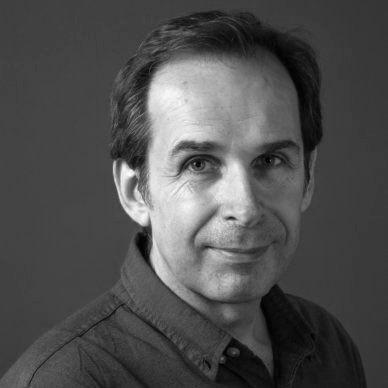
Emmanuel Beaurepaire
CNRS - École Polytechnique, Paris, France
Short bio
Emmanuel Beaurepaire is a specialist of multiphoton microscopy of tissues. He works at the Laboratory for Optics and Biosciences (LOB) at Ecole Polytechnique in Palaiseau, France, where he is appointed as a Research Director by the CNRS. The LOB microscopy group pioneered approaches for removing bottlenecks in live tissue studies, using strategies such as multicolor and label-free nonlinear imaging, light-sheet excitation, or wavefront shaping to address speed/depth/complexity issues. We also develop applications including imaging embryonic and nervous tissue development, and optical diagnostics.

Paolo Bianchini
Istituto Italiano di Tecnologia (IIT), Genova, Italy
Short bio
Paolo Bianchini is a biophysicist and optical microscopy expert, currently Technologist and Researcher at the Istituto Italiano di Tecnologia (IIT, Genoa), where he is also Scientific Manager of the Nikon Imaging Center. He is Visiting Professor at the University of Parma, where he teaches Advanced Microscopy, and member of the PhD Board in Physics. He serves as Scientific Coordinator and Principal Investigator of the IMPACT project (FISA 2024–2031) and participates in several European and national research initiatives. His research focuses on advanced optical microscopy techniques for biophysical and biomedical applications, with emphasis on minimally invasive and label-free imaging. His work spans the design and implementation of cutting-edge imaging technologies, including STED nanoscopy, image scanning microscopy (ISM), FLIM, SHG, and multimodal imaging approaches. His research has enabled quantitative studies of biological processes at the nanoscale, including single-molecule diffusion in living cells and virus–cell interactions. He is co-founder of Genoa Instruments, a company developing advanced microscopy technologies, and collaborates closely with Nikon Instruments’ R&D for the transfer of super-resolution solutions. He has authored over 125 scientific publications and holds several patents in optical microscopy. His contributions have been internationally recognized, including the “Innovators Under 35 Italia” award from MIT Technology Review. He is active in the scientific community as editor, reviewer, and organizer of international conferences.

Giulio Cerullo
Politecnico di Milano, Milano, Italy
Short bio
Giulio Cerullo is a Full Professor with the Physics Department, Politecnico di Milano, where he leads the Ultrafast Optical Spectroscopy laboratory. Prof. Cerullo’s research activity concerns on the one hand pushing our capabilities to generate and manipulate ultrashort light pulses, and on the other hand using such pulses to capture the dynamics of ultrafast events in molecular and solid-state systems. He has published over 600 papers which have received >375000 citations (H-index: 96 on Scopus). He is a Fellow of the Optical Society of America, of the European Physical Society, of the Accademia dei Lincei, of the Academia Europaea and of the Italian Academy of Technology and past Chair of the Quantum Electronics and Optics Division of the European Physical Society. He has been General Chair of the conferences CLEO/Europe 2017, Ultrafast Phenomena 2018 and the International Conference on Raman Spectroscopy 2024. He was awarded an ERC Advanced Grant in 2012 and an ERC Synergy Grant in 2025. In 2023, he received the Quantum Electronics Prize of the European Physical Society. He sits on the Editorial Boards of Science Advances, Ultrafast Science and Laser&Photonics Reviews. He is the co-founder of two spin off companies (NIREOS and Cambridge Raman Imaging).

Liangyi Chen
Peking University, Beijing, China
Short bio
Prof. Liangyi Chen is a Boya Distinguished and Tenured Professor at Peking University and a New Cornerstone Investigator. He received his training in Biomedical Engineering at Xi’an Jiaotong University and Huazhong University of Science and Technology. His research focuses on the development of advanced optical imaging technologies and quantitative image analysis methods. His lab applies these tools to study glucose-stimulated insulin secretion across multiple scales, from single cells to whole organisms, in both health and disease. He has developed several innovative imaging technologies, including Hessian SIM, SR-FACT, fast high-resolution miniature two-photon microscopy (FHIRM-TPM) for brain imaging in freely behaving mice, and the Sparse deconvolution algorithm for extending spatial resolution of fluorescence microscopes limited by the optics in general. Now he serves as the Deputy Director of the National Biomedical Imaging Center at Peking University. He has received support from the NSFC through the Distinguished Young Scholars Fund (continued). He is also the chief scientist for major national R&D programs under the Ministry of Science and Technology and key integrative projects under the NSFC Major Research Plan. Additionally, he is the Chinese lead coordinator for the International Research Network on BioImaging of the French Academy of Sciences (CNRS). His current research aims to integrate physics, mathematics, and engineering to advance in vivo super-resolution imaging and understand the systemic regulation of metabolic diseases such as type II diabetes.

Alberto Diaspro
Istituto Italiano di Tecnologia (IIT), Genova, Italy
Università degli Studi di Genova, Genova, Italy
Short bio
Alberto Diaspro is Full Professor of Applied Physics at the Physics Department of the University of Genoa, PI at the Italian Institute of Technology, affiliate at IBF-CNR, academic of the Ligurian Academy of Sciences and Letters and of the Venetian Institute of Sciences, Letters and Arts (IVSLA). He is active in European and national projects, he has over 500 scientific articles with >15000 citations (H = 60 on Scopus). AD designed and realised the 1st Italian multiphoton microscope (1999) and a hybrid artificial "nanobiorobot" (2000). He directed the design and realisation of the 1st Italian nanoscopy architecture at IIT (2008). He co-founded the Genoa Instruments start-up in 2019, and recently launched "The artificial microscope", EOS Dijon (2023). He is scientific responsible of the PNRR, Next Generation EU Eurobioimaging Infrastructure “SeeLife” at University of Genoa. In 2014, he received the Emily M. Grey Award from the Biophysical Society for "significant contributions to education in biophysics," and, in 2019, the Award for Scientific Communication from the Italian Physical Society. He is SPIE and EOS Fellow, IEEE and OSA senior member. He coordinates the ALM node of Eurobioimaging. AD is honorary editor-in-chief of Microscopy Research and Technique, and Director of the International School of Biophysics «Antonio Borsellino» at the "Ettore Majorana Foundation and Centre for Scientific Culture, Erice. AD received the Gregorio Weber Award for excellence in fluorescence studies in 2022. In 2024, AD has been appointed as Cavaliere dell’Ordine al “Merito della Repubblica Italiana” (Knight of the Order of Merit of the Italian Republic). The Italian Physical Society, SIF, awarded AD with the prestigious 2024 Enrico Fermi Prize “for original contributions to the development and application of optical microscopy and the crucial impact on cellular and molecular biophysics.” In 2025 he received the Montale Fuori di Casa Prize, “In Limine”. In 2026, the Mayor of Genoa, Silvia Salis, presented to AD the Grifo award - the highest civic honor awarded by the Municipality of Genoa.
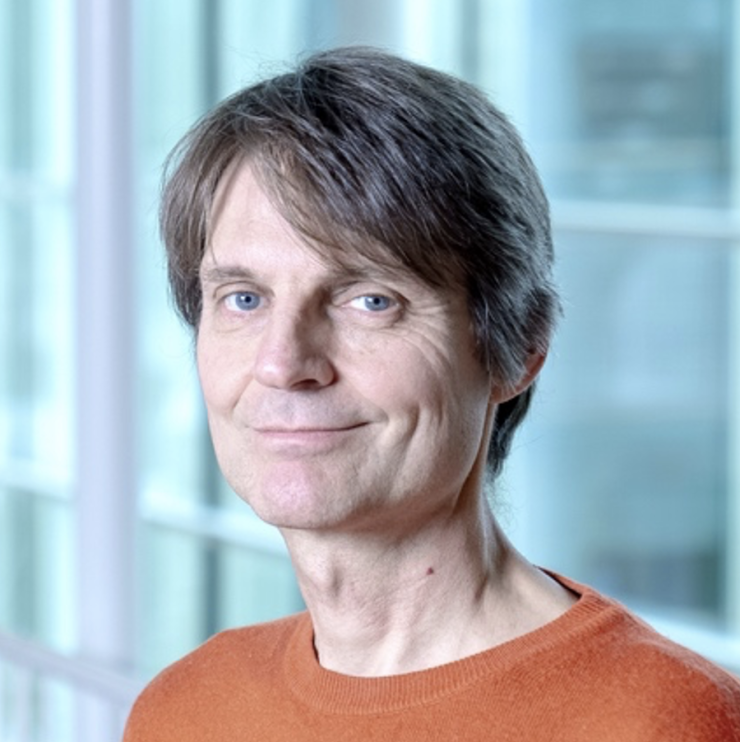
Peter Friedl
Radboud University Medical Center, Nijmegen, The Netherlands
Short bio
Peter Friedl. M.D., Ph.D. is directing the Microscopical Imaging Centre of the Radboud University Nijmegen Medical Centre, Nijmegen, Netherlands and, from 2011 to 2023, held a joint-faculty position at the University of Texas MD Anderson Cancer Center, Houston, TX, USA. Dr. Friedl received his M.D. degree from the University of Bochum, Germany in 1992 and the Ph.D. degree from the McGill University, Montreal in 1996. In 2002, he was board-certified as clinical dermatologist and 2003 as allergologist. He applies advanced microscopy and molecular intervention in 3D culture and preclinical tumor models to identify their response to molecular targeted and immunotherapy. He received numerous awards for advancing microscopy in the fields of cancer metastasis, host response to material and innovative 3D assays, including the Felix-Wankel Animal Protection Award (1994), the German Cancer Award (2008), the Award of the Advancement of Science (2014), the European Molecular Imaging Award (2016) as well as continuous ERC funding.
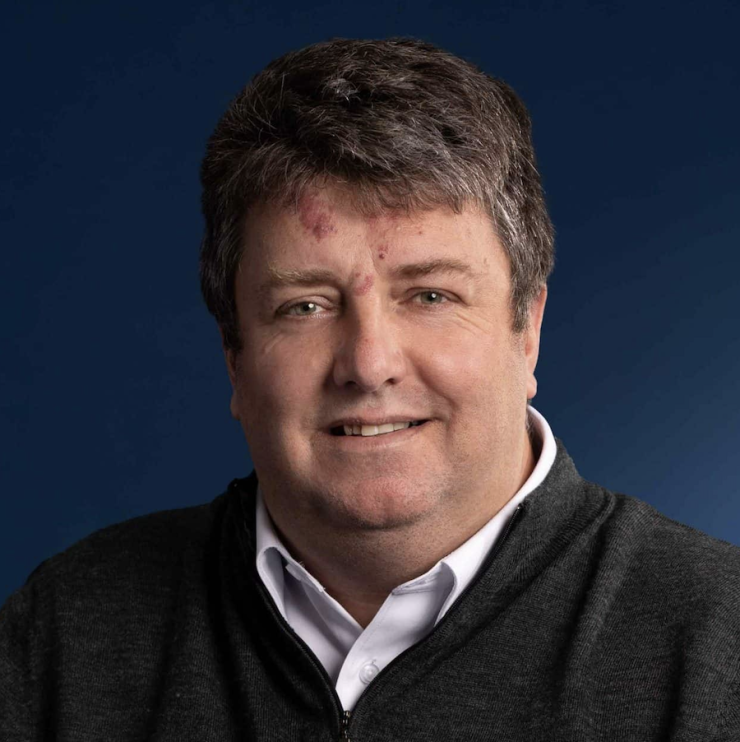
François Légaré
Institut National de la Recherche Scientifique, Varennes, Québec, Canada
Short bio
Prof. François Légaré is a chemical physicist who specializes in developing novel approaches for ultrafast science and technologies, as well as biomedical imaging with nonlinear optics. He joined the Energy Materials Telecommunications Center of INRS in 2006 and became full professor in 2013. From 2013 to 2023, he was the director of the Advanced Laser Light Source. Under his leadership, ALLS was upgraded with high average power Ytterbium laser systems and advanced instrumentation for time-resolved material characterization, has joined the LaserNetUS network, and the facility is recognized as a national infrastructure by the Canada Foundation for Innovation. He was awarded the Herzberg medal from the Canadian Association of Physics in 2015, and the Rutherford Memorial Medal in physics of the Royal Society of Canada in 2016. Prof. Légaré is a fellow of the American Physical Society and of Optica. Through his research, he is fostering the transfer of technologies to Canadian spin-off companies, including few-cycle and MD Photonique. Finally, he had the opportunity to supervise 67 internships, 25 M.Sc. students, 28 Ph.D. students, and 34 postdoctoral fellows.
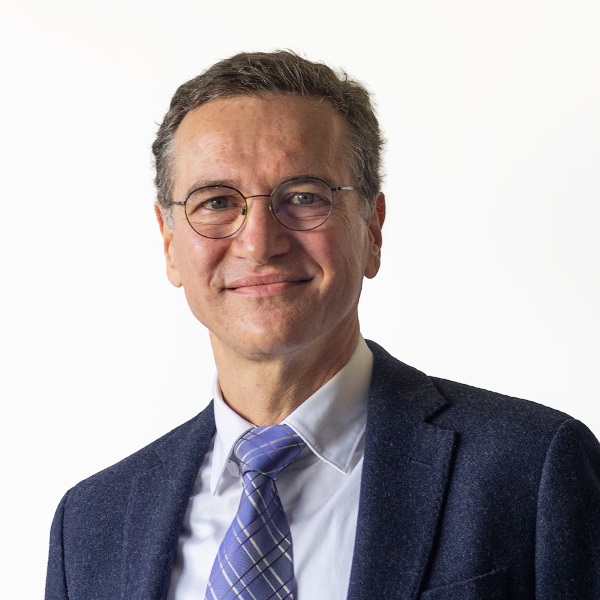
Francesco Pavone
Università degli Studi di Firenze, Firenze, Italy
Short bio
Pavone is directing a research group working in the field of biophotonics, in particular on microscopy, biomedical imaging, image analysis, data management and machine learning. He is the Italian node leader of the infrastructure EBRAIN and the italian delegate in the Board of Directors of the infrastructure EurobioImaging. He was in the evaluation panel of the European Research Council (PE3) and the DFG (Germany), fellow of SPIE, AIMBE and OSA. He has been awarded with the Fermi Prize in 2024. Pavone is founder of companies Light4tech (ww.l4t.it) in 2005 and Emoled (www.emoled.com) in 2016, NSight Dynamics srl in 2025 and author of several patents.

Robert Prevedel
EMBL, Heidelberg, Germany
Short bio
Dr. Robert Prevedel is a Group Leader and Senior Scientist at EMBL Heidelberg, Germany, where his group develops advanced and innovative optical technologies for biomedical imaging. For this, he draws from diverse fields such as multi-photon microscopy, photo-acoustics as well as advanced spectroscopy. Robert holds a PhD in experimental physics from the University of Vienna (Austria) for which he developed new approaches for optical quantum computing. During his postdoctoral years, first at the University of Waterloo (Canada) and later at the Institute of Molecular Pathology in Vienna (Austria), Robert worked on innovative optical methods and tools for biological imaging.

Cristina Rodríguez
Yale University, New Haven, CT, USA
Short bio
Cristina Rodríguez is a Howard Hughes Medical Institute (HHMI) Freeman Hrabowski Scholar and Assistant Professor in the Department of Biomedical Engineering at Yale University. She trained in physics in Venezuela and completed her PhD at the University of New Mexico, where she developed a passion for optics and advanced microscopy. She conducted postdoctoral research at HHMI Janelia Research Campus and the University of California, Berkeley, developing next-generation multiphoton imaging technologies to study neural circuits in living systems. Cristina established her lab at Yale in 2023, where her group develops advanced optical imaging technologies to visualize biological processes in their physiological context. Her lab integrates multiphoton microscopy with light-shaping techniques, such as adaptive optics, to overcome key limitations in imaging depth, resolution, and speed. The Rodríguez lab applies these innovations to visualize neuronal circuits in the rodent spinal cord in vivo, with the goal of revealing how neural circuits process somatosensory information. Cristina is the recipient of the Burroughs Wellcome Fund Career Award at the Scientific Interface, a Beckman Young Investigator Award, and is an HHMI Freeman Hrabowski Scholar.

Pieter Vanden Berghe
KU Leuven, Leuven, Belgium
Short bio
Pieter Vanden Berghe studied bio-engineering and obtained his PhD at the University of Leuven (KU Leuven, Belgium). After postdoc stays abroad he became an independent PI and is now in charge of the Laboratory of Enteric NeuroScience (LENS), which is part of the Translational Research Center for Gastrointestinal Disorders (TARGID). LENS mainly focuses on basic research questions in enteric neurobiology using different microscopy techniques. Originally, mainly immunofluorescence and Ca2+ imaging approaches were used film neuronal network activity and overcome the limitation of electrode recordings that were limited in their spatial resolution. The portfolio of imaging techniques was further expanded (mitochondrial imaging – synaptic imaging) during postdoctoral fellowships abroad (department of physiology and cell biology in Reno, Nevada (USA) in the laboratory of Dr. Terence Smith and Max-Planck institute for Biophysics in Göttingen, Dr. E. Neher). During that time he trained in techniques like TIRF and 2-photon imaging and was exposed to STED super resolution microscopy. All of these techniques are now operational in his lab and have become crucial and essential tools to investigate the function of enteric neurons in cultures, animal tissue preparations and human biopsies. The last couple of years, nonlinear techniques to achieve deep tissue fluorescence and multi-harmonic imaging were developed to further basic neurophysiology and to enhance the understanding of how the enteric nervous system controls intestinal function. P. Vanden Berghe is also director of the KU Leuven core facility Cell & tissue Imaging Cluster (CIC) that offers microscopy advise and measurement time on different (live) imaging setups (ranging from wide-field and light sheet to high-end confocal and multiphoton microscopes).

Chris Xu
Cornell University, Ithaca, NY, USA
Short bio
Chris Xu is the IBM Chair Professor of Engineering and director of the School of Applied and Engineering Physics, Cornell University. He is the Mong Family Foundation Director of Cornell Neurotech – Engineering. His current research areas are fiber optics and biomedical imaging, with major thrusts in multiphoton microscopy for deep brain imaging, multiphoton microendoscopy for clinical applications, and fiber-based devices and systems for telecommunications and optical imaging. Chris Xu pioneered the development of temporal focusing and long wavelength two- and three-photon microscopy for deep tissue imaging. Prior to Cornell, he was a member of technical staff at Bell Laboratories, and pioneered breakthrough development of fiber optic communication systems based on differential phase-shift keying. He received his Ph.D. in Applied Physics, Cornell University, and his B.S. in Physics from Fudan University. He holds 28 patents on optical communications and imaging. He has won the NSF CAREER award, Bell Labs team research award, and the Tau Beta Pi and two other teaching awards from Cornell Engineering College. He received Cornell Engineering Research Excellence Award in 2017. He is a fellow of the National Academy of Inventors and a fellow of Optica (formerly the Optical Society of America).
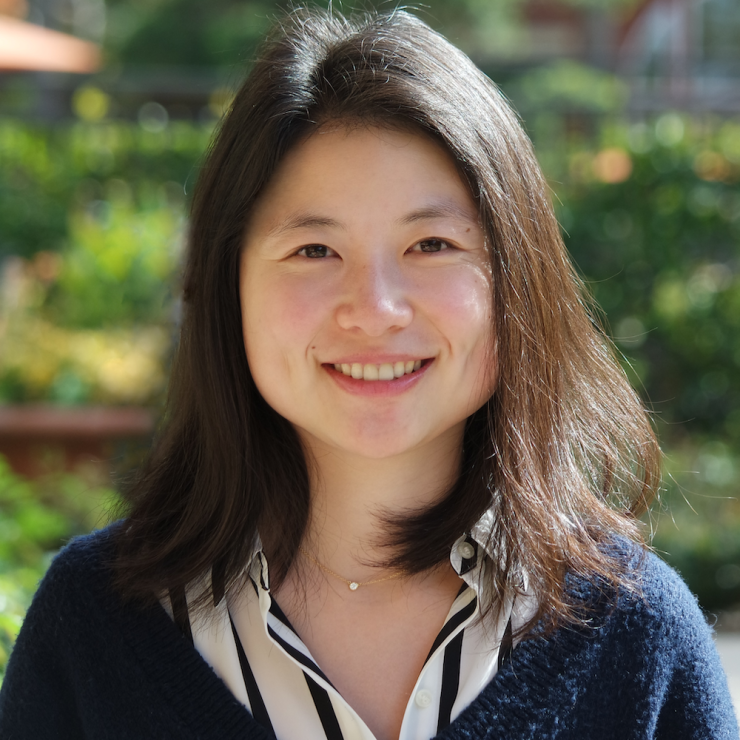
Sixian You
MIT, Boston, MA, USA
Short bio
Sixian You is Associate Professor in the MIT Department of Electrical Engineering and Computer Science. You’s research interests include biophotonics and microscopy, with an emphasis on developing hardware and algorithms to overcome longstanding imaging limitations for biomedical translation. Her lab focuses on label-free metabolic microscopy, deep and dynamic tissue imaging, and AI-assisted biodiscovery. You earned her PhD in bioengineering and biophotonics from the University of Illinois at Urbana-Champaign in 2019 and her BS in optoelectronic information engineering from Huazhong University of Science and Technology in 2013. She completed her postdoctoral research at the University of California Berkeley in 2021.