Research Themes
Metals, Resistance, and Bacterial Virulence:
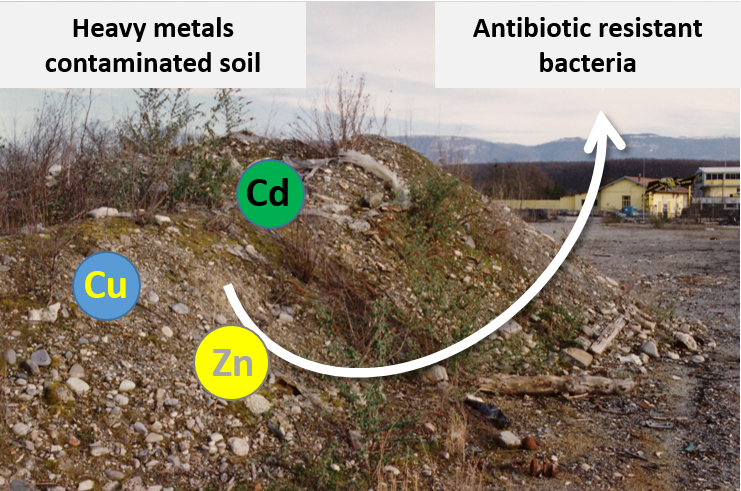
Our research explores the role of zinc (Zn) and copper (Cu) in bacterial physiology, particularly in Pseudomonas aeruginosa, an opportunistic pathogen responsible for severe infections. We study how exposure to these metals — in polluted environments or within the host during phagocytosis — influences:
- the regulation of zinc homeostasis.
- the development of carbapenem resistance,
- and the modulation of bacterial virulence.
These studies aim to better understand the connections between metals, antimicrobial resistance, and pathogenicity.
Novel Antimicrobial Strategies:
This research axis encompasses our applied projects focused on developing innovative solutions to combat bacterial infections. Our approaches span several complementary directions:
- Discovery of new antimicrobials
Search for natural compounds isolated from microorganisms (bacteria, fungi) or plants, including molecules active against Staphylococcus aureus and Pseudomonas aeruginosa, as well as antivirulence agents. - Antimicrobial peptides and biomaterials
In collaboration with the Section of Pharmaceutical Sciences, we develop wound dressings and implants incorporating chitosan derivatives and antimicrobial peptide dendrimers, active against P. aeruginosa. - Antimicrobial surfaces and alloys
In collaboration with physicists, we design new metallic materials whose composition and microstructure confer intrinsic antibacterial properties. These studies aim to create surfaces and alloys that limit microbial adhesion and growth, particularly for biomedical applications.