
“To aid in navigation:” the political economy of cotton in the Portuguese Empire
In 1790, British envoy Robert Walpole asked Luís Pinto de Sousa Coutinho, the Portuguese Secretary of State for Foreign Affairs and War, about one crucial component of the political economy of the Portuguese Empire. Walpole felt it odd that Portugal barred the importing of cotton goods from Britain while exporting large amounts of raw cotton to his country. Furthermore, he found it intriguing that, although Portugal sought to expand its cotton textile industry, it also accepted massive imports of cotton textiles from India. He asked him why the Portuguese did not ban these Asian imports and use Brazilian cotton in their domestic industry, or even allow cotton textiles from Britain to enter Portugal, boosting trade complementarity between the two countries? Coutinho's response was pithy, indicating only that Portugal acquired cotton products from India “to aid in navigation”1.
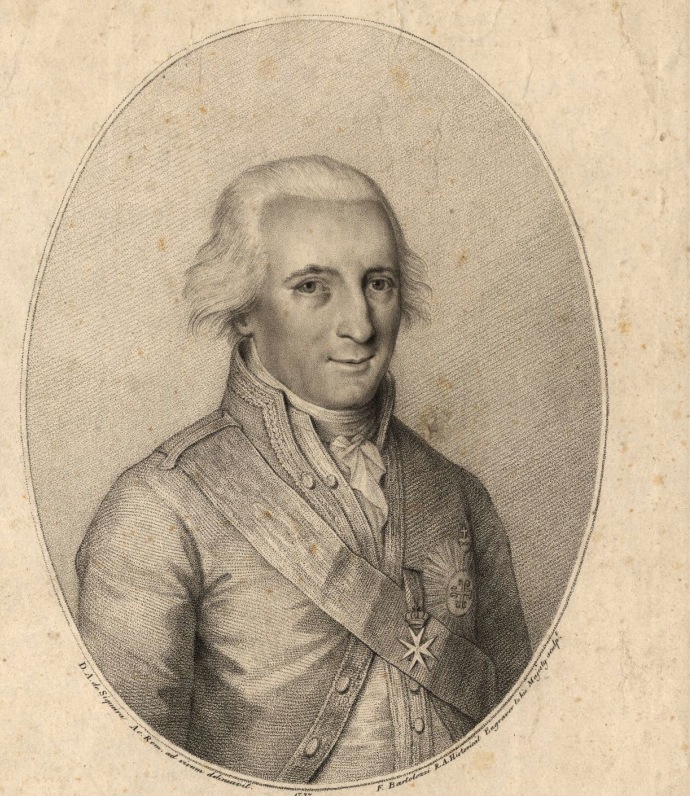
Notes and source: Luís Pinto de Sousa Coutinho, 1.º visconde de Balsemão, Biblioteca Nacional de Portugal.
This intriguing exchange, recorded in the extensive collection of correspondence between the British consuls in Portugal and the ministers in Britain, comes from a conversation, like many others, that Walpole had with Coutinho. Coutinho served as a kind of informant for Walpole to report first-hand on what was happening behind the scenes in Portuguese politics. It is notable that Coutinho’s response was not more complete, specifically that it did not elaborate on crucial features of the political economy of Portugal with respect to raw cotton from Brazil, industrialization in Portugal, the imports of Indian cotton goods or the Portuguese empire’s commercial partnership with its British counterpart. Its brevity may well reflect the fact that this was a complex juncture in the history of the Portuguese empire, where even well-informed political and economic actors lacked a clear understanding of what was happening. Portugal already had a controversial trade agreement with Britain to absorb its woollen cloths that had been in place since the beginning of the 18th century. But by the end of the century, cotton was in fashion and Anglo-Portuguese relations required an update, at least from the British perspective. Around 1806, another British envoy to Portugal, Strangford, proposed an updated version of the Methuen treaty “by which Portugal should admit English manufactures of cotton at twenty percent ad valorem, while England would give preference to raw cotton from Brazil.” The treaty did not materialize that year2. Indeed, British cotton goods would only enter the Portuguese Empire – legally – with the treaty of 1810. The Strangford Treaty responded to an even more complex situation than in 1790, one in which Britain was seeking new markets because of the limitations imposed by Napoleon with his Continental Blockade. The new treaty was intended to be a temporary agreement, until the end of the war, and involved lengthy discussions between Strangford and Rodrigo de Souza Coutinho in Rio de Janeiro. However, it ended up being an arrangement that lasted for quite some time.3 The British presence in Brazil also facilitated the transport of raw cotton to Liverpool and London, even though Britain's cotton sources were already well assured by production in the Southern United States.
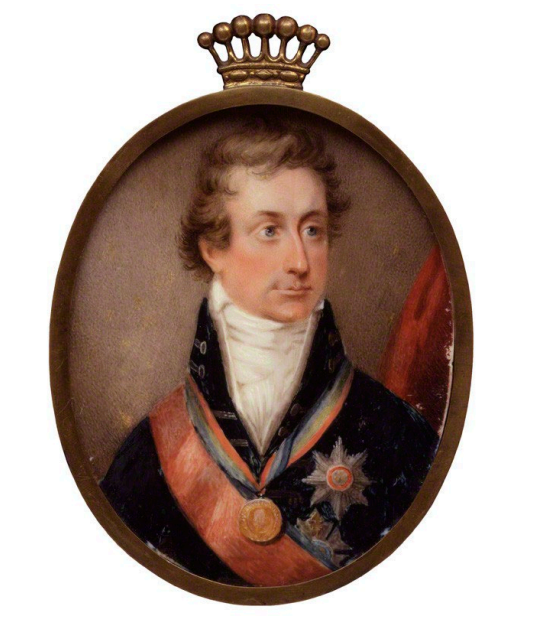 Notes & source: Percy Clinton Sydney Smythe, 6th Viscount Strangford by William Haines, circa 1808. National Portrait Gallery, London.
Given the historic alliance between Portugal and Britain, it is surprising that British cotton goods were not accepted earlier. Portugal was reluctant to make a deal with Britain for a long time, but not because the Portuguese industry was spinning copious amounts of raw cotton from Brazil. The cotton-spinning industry in Portugal was short-lived, despite its initial expansion and adoption of some technical improvements from Britain and weaving there did no better. It was cotton printing that was the great manufacturing business of the late eighteenth century, both for Portugal and for other European nations and kingdoms, as demonstrated by Chapman and Chassagne.4 Yet this sector in Portugal was highly dependent on textiles imported from India. And the Portuguese empire’s success in sourcing these textile imports contributed to the decline of the Portuguese spinning industry at the beginning of the nineteenth century. The Portuguese printing industry was a global industry, not only because it depended on the import of white plain cotton cloths from Bengal (the calicos) to make its products, but also because about half of its production was exported to Brazil and another part to Africa for the purchase of enslaved people5.
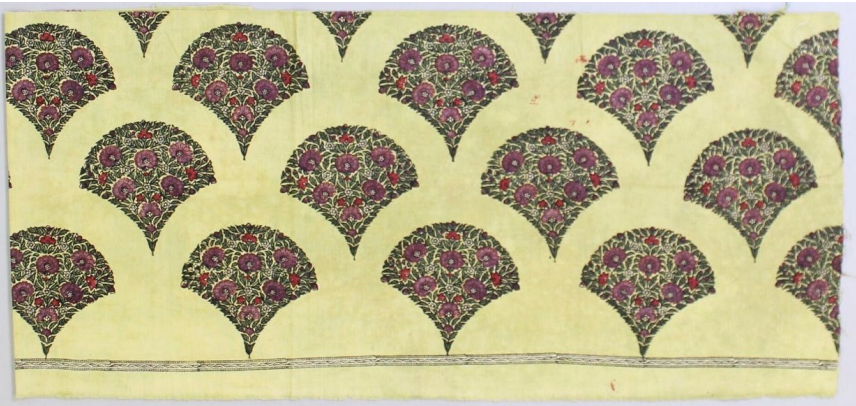
Notes and source: Cotton printed with a repeating pattern of fan-shaped motifs filled with purple, red and white flowers and green leaves, three pieces, India, 19th century. Victoria and Albert Museum, London.
It was easier to print the fabrics that came in bulk from India than to compete with the British in the markets for cotton yarn and cloth, where Portuguese manufacturing had no chance. The role of Lisbon and its commercial relations with India in the last quarter of the 18th century were essential to this pattern. The capital of the Portuguese Empire was second only to London as a major distribution center for Indian products in Europe. Lisbon’s status as a neutral port between 1796 and 1807 was important in this regard. Neutrality meant that the Portuguese were able to import Indian products more cheaply than their British counterparts, which were burdened by higher freight and insurance costs due to the French Wars (1793-1815).6 Moreover, silver was a crucial element in the purchase of cotton textiles during this period. According to Bauss, it was Brazilian gold in Lisbon that bought the silver – originally from Spanish America – that would be sent to Goa. Between 1796 and 1806, on an annual basis, Brazil sent around 389,687 pounds sterling in gold to Portugal, which in turn sent around 363,946 pounds sterling in silver to India.7 Gold from Brazil, silver from Spanish America, enslaved Africans, raw Brazilian cotton and Indian cloth. These were some of the components of which the Portuguese Empire’s economy was constituted at the turn of the 19th century. They would soon collapse, first with the treaty of 1810 and then with Brazil's independence in 1822. Aiding navigation, as Coutinho bluntly stated in 1790, was not restricted to trade with India. Navigation was the key element of the political economy of the Portuguese Empire when it came to cotton, both in its natural and manufactured form, since it was closely linked to other commodities around the world and dependent on the forced deportation of thousands of human beings. Navigation as a pillar of the Portuguese Empire could be included in what Sérgio called the “transport policy” of the Empire, or the “maritime vocation” of Lisbon as Costa pointed out8.
Felipe Souza Melo - January 14th, 2025
FOOTNOTES
1 The National Archives, Kew, Foreign Office, 63/12, May 1789.
2 Alan K. Manchester, British Preeminence in Brazil, Its Rise and Decline. A Study in European Expansion (1933; repr., New York: Octagon Books, 1964), 52, 59.
3 Valentim Alexandre, Os sentidos do Império: questão nacional e questão colonial na crise do Antigo Regime português (Porto: Edições Afrontamento, 1993), 214–19.
4 Stanley D. Chapman e Serge Chassagne, European textile printers in the eighteenth century: a study of Peel and Oberkampf (London: Heinemann Educational: Pasold Fund, 1981).
5 Jorge Miguel Pedreira, “A indústria”, em História económica de Portugal, 1700-2000. Volume 1. O século XVIII., org. Pedro Lains e Alvaro Ferreira da Silva, vol. 1 (Lisboa: Imprensa de Ciências Sociais, 2005), 204–5.
6 Rudy Bauss, “A Legacy of British Free Trade Policies: The End of the Trade and Commerce between India and the Portuguese Empire, 1780–1830”, Calcutta Historical Journal 6, no 2 (1982): 89–90, 95, 102–3, 112–15
7 Bauss, 89, 111; Rudy Bauss, “Textiles, Bullion and Other Trades of Goa: Commerce with Surat, Other Areas of India, Luso-Brazilian Ports, Macau and Mozambique, 1816-1819”, The Indian Economic & Social History Review 34, no 3 (setembro de 1997): 278; Celsa Pinto, Situating Indo-Portuguese Trade History. A Commercial Resurgence, 1770-1830 (Tellicherry: IRISH, 2003), 22–35.
8 António Sérgio, Ensaios III (Lisboa: Livraria Sá da Costa, 1974); Leonor Freire Costa, O transporte no Atlântico e a Companhia Geral do Comércio do Brasil, 1580-1663, vol. 1 (Lisboa: Comissão Nacional para as Comemorações dos Descobrimentos Portugueses, 2002), 36.
Feb 5, 2025