
How the quest for "white" changed the European silk market
During most of the eighteenth century, the quintessence of French luxury was embodied by styles such as those displayed by the Marquise de Pompadour in her portraits, featuring highly coloured and patterned dresses with large skirts that strongly moulded the female silhouette through rigid whalebone corsets called paniers.
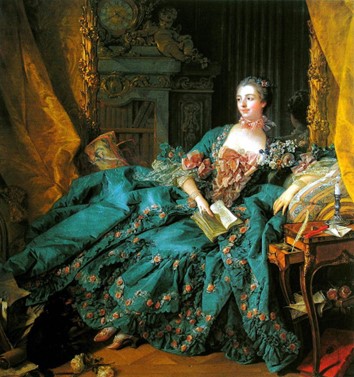
Nevertheless, new aesthetic canons marked by a taste for simplicity and comfort were simultaneously emerging among urban elites under the influence of English fashions in particular. In the 1780s, paniers disappeared completely from urban areas while muslin, a fine, lightweight white cotton fabric, became the new fashionable material. The new style from England rapidly conquered even the French court. In 1783, to great scandal, Marie Antoinette chose to be portrayed in one of these new dresses.
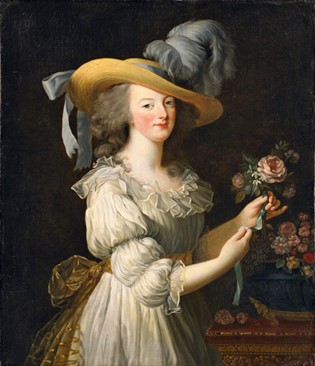
In 1789, famous pamphleteer L. A. Caraccioli made the striking observation that “a gathering of French women was once a magnificent spectacle, where one could see enamel in every colour. Now it is nothing more than a monotonous scene, offering nothing but white and white to the eye”1.
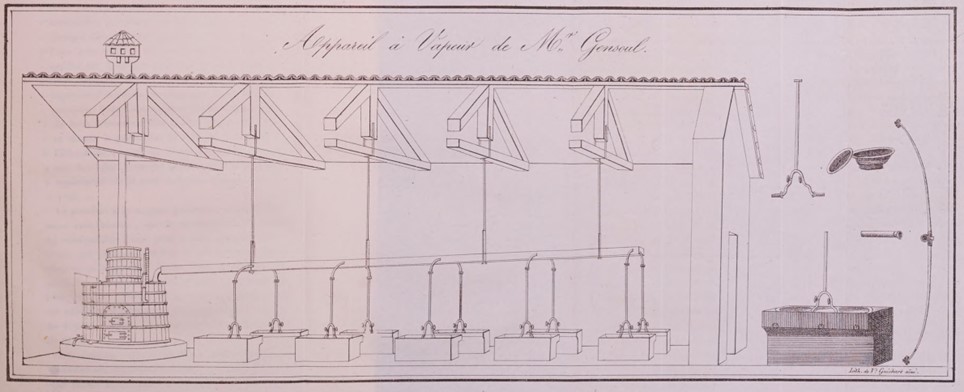
This change in fashion had profound yet overlooked implications. In a new Fabric of Profit working paper presented at the last World Economic History Congress in Lund in July 2025, we claim that the new aesthetic sensibility that emerged during the ‘Age of Revolutions’ triggered an unprecedented demand for silk reeled from white cocoons that were imported exclusively from China. The increasing demand for white silk gave the English tremendous commercial advantages over the French as the East India Company controlled most of the trade of this stronger and more lustrous silk, which required less bleaching than the average yellow European cocoon. We claim that French attempts to increase the production of white cocoons in France to counteract England’s dominant position led to the diffusion of a new technological paradigm based on the introduction of steam engines in the silk industry through the region of the Cévennes.
The analysis includes China, the Vice-royalty of Peru, England and France, encompassing all the silk commodity chain, from cocoons to fabrics. Isolating shocks both in terms of trends in fashion and the global supply of raw materials, we show how they impacted profitability and let to reactions to these shocks that reshaped the European silk market, giving France longtime sought full supremacy in the trade.
FOOT NOTES
1 As quoted in Carlo Poni, « Mode et innovation: les stratégies des marchands en soir de Lyon au XVIIIe siècle », Revue d’histoire moderne & contemporaine, 1998, vol. 45‑3, no 3, p. 623.
Lorenzo Avellino (The Fabric of Profit – University of Geneva), Roberto Tolaini (University of Genoa) and Jean-Baptiste Vérot (University Marie & Louis Pasteur)
Coming soon as Fabric of Profit working paper, #6
Feb 5, 2025