 The 4EU+ Student Climate Action Network (SCAN) is a student-led, interdisciplinary initiative committed to helping the student community of the 8 universities of the 4EU+ alliance address climate issues and build a sustainable future. We are a network of motivated individuals that want to take action against the climate crisis and turn eco-anxiety(1) into a coordinated plan to build that future. Created collectively by and for students, our network serves not only as a space for discussion, but a real incubator for concrete and sustainable initiatives. We hope to go beyond simply raising awareness within the university community to creating effective, measurable, and inspiring engagement that shows the capacity of students to be major actors in fighting climate change.
Researchers from the 8 universities and administrative staff play a supportive role in the network and help students with scientific or organizational questions to help bring their projects to life. Relationships with international organizations and NGOs further give students the opportunity to better understand what is happening at the international level and help them become more involved in decisions about their future.
Our members do not just hope for a better world,
they actively create it.
Through various projects, SCAN aims to:
- create a strong student community at the European scale around the issue of climate action and strengthen ties with climate-related student associations across the 4EU+ alliance. This community will be provided with the necessary resources to facilitate knowledge sharing among students and beyond to heighten individual and collective awareness of climate and sustainability issues
- improve university education in the fields of sustainability, environment, and climate issues, because we believe that such topics should be integrated into all disciplines, not just environmental science programs
- facilitate students' engagement with decision-making bodies, such as international organizations, NGOs, and goverments at various levels to enhance youth representation in decision-making on multi-level climate action.
We see a future where climate literacy and sustainability are no longer elective, but integrated into all academic programs--effectively transcending the boundaries of arts and sciences. When students leave university, they know how they can create a more climate-friendly and sustainable future in their respective fields and beyond.
In our future, our network has become an ecosystem where students exchange ideas, resources, and solutions, and where our members are confident knowing that they have the tools, connections, and institutional backing to turn anxieties into concrete, resilient projects. We have become known as a network of ambitious changemakers that will lead us to a more sustainable future and who are sought after by decision-making organizations who recognize that no climate or sustainability policy can be written without the endorsement and insight of the younger generations.
Our values inform our work and give us a basis for how we want to go about creating a sustainable future.
- Interdisciplinarity: We each have a unique background and ideas for how to create a better future, so we value diversity to help us in our missions.
- Foresight: Our work is based on envisioning a better future that is more climate-friendly and sustainable. We thus encourage keeping that future in mind while working towards it in the present.
- Creativity and Ambition: The future has not yet been written and challenging problems require creative solutions. We thus encourage thinking outside the box and proposing ambitious projects.
- Science-based Approach: As university students, we believe that listening to and acting on scientific evidence is a key component in constructing a sustainable future.
- Empathy and Positivity: The future is uncertain. Empathy is key for us to stick together and help each other to maintain a positive outlook during these challenging times.
We define climate action as any initiative large or small, individual or collective, aimed at slowing down or mitigating climate change, and protecting those most vulnerable to its effects, notably nature, animals, babies, unborn generations, or any other parties who lack a voice in our society.
This collective definition emerged during our launch event in November 2025 and reflects the ideas and perspectives of 15 of our members. It acts as a guiding light for our work and does not claim to be universal.
Beyond this overarching definition, we found that climate action is highly dependent on factors including individual priorities, the scope, the available resources, who or what we are protecting, and our degree of consensus. While some climate actions may be local such as protecting the habitat of a certain species, others may prioritize the global scale and want to focus on transitioning to food systems that respect planetary boundaries. Still others set their sights on expanding the voice of youth in global climate discussions. Each of these actions will have different approaches and require different resources, but they all contribute to a sustainable future and must be given room for development.
Climate action also does not exist in a vacuum and must involve reflections on justice and equitability in terms of historical responsibilities and other power dynamics, including societal trends. Measures aimed at limiting climate change should be in line with creating a mature society that learns to slow down and think about the consequences of its actions in the long term rather than chase short-term benefits at the expense of the future. We ultimately find that climate action takes place simultaneously at the individual and collective levels, and that coordinated action by both institutions and individuals is crucial. However, we must not put too much pressure on the individual, as they have limited responsibility and therefore a more modest role to play. A clear understanding that these different levels of action need to be closely interconnected allows us to follow a path that will enable our society to become more respectful of planetary boundaries and believe in a brighter future.
Across the world, we are currently experiencing a surge of misinformation and anti-science movements trying to deny the evidence that climate change is accelerating at an alarming rate, causing a series of negative effects from increased natural disasters and deadly heatwaves to biodiversity loss and crop failures. We are already experiencing these effects today that threaten not only our future but that of generations to come. We also know that the climate emergency we face today is human-made, so it is collectively up to us to avoid the worst effects by taking strong action today.
Unfortunately, at the same time, many students today suffer from eco-anxiety and feel hopeless in the face of the mounting crises. In a 2021 survey of 10,000 16-25-year-olds across 10 countries, nearly 76% thought that the future is frightening and 56% believed that humanity is doomed(3). Across the media, the narrative that we are doomed and that an individual can’t make a difference is still being widely perpetuated, even though scientific evidence shows that a sustainable future is possible. While we are currently not on track to reach the Sustainable Development Goals, it is important to remember that, collectively, we have made significant progress in crucial areas. We are breathing cleaner air than our parents' and grandparents' generations, energy from solar photovoltaic is now the cheapest option, and global deforestation rates peaked years ago(2). Still, things could certainly be better and there is much to be done to create a sustainable future. To do this, however, we need this information to be much more visible so that it can encourage students (and others) to rise out of eco-anxiety and help us build it.
From an institutional perspective, this network further shows that our universities are committed to advancing youth engagement and showcasing students' work in science communication.
Join us
Are you a student who wants to do more to fight against the climate crisis but are not sure where to begin? Do you have big ideas for a sustainable future, but are not sure how to realize them? Are you a researcher who wants to lend their knowledge to impactful projects? If you are affiliated with of one of the 4EU+ universities, you are eligible to join us! Please check out our current projects and contact our network coordinater Tinka Stössel at tinka.stoessel(at)unige.ch for more information on how to get started.
If you are not affiliated with 4EU+ or simply want to receive updates, contact our coordinator to sign up for news from SCAN. Feel free to also follow us on Linkedin!
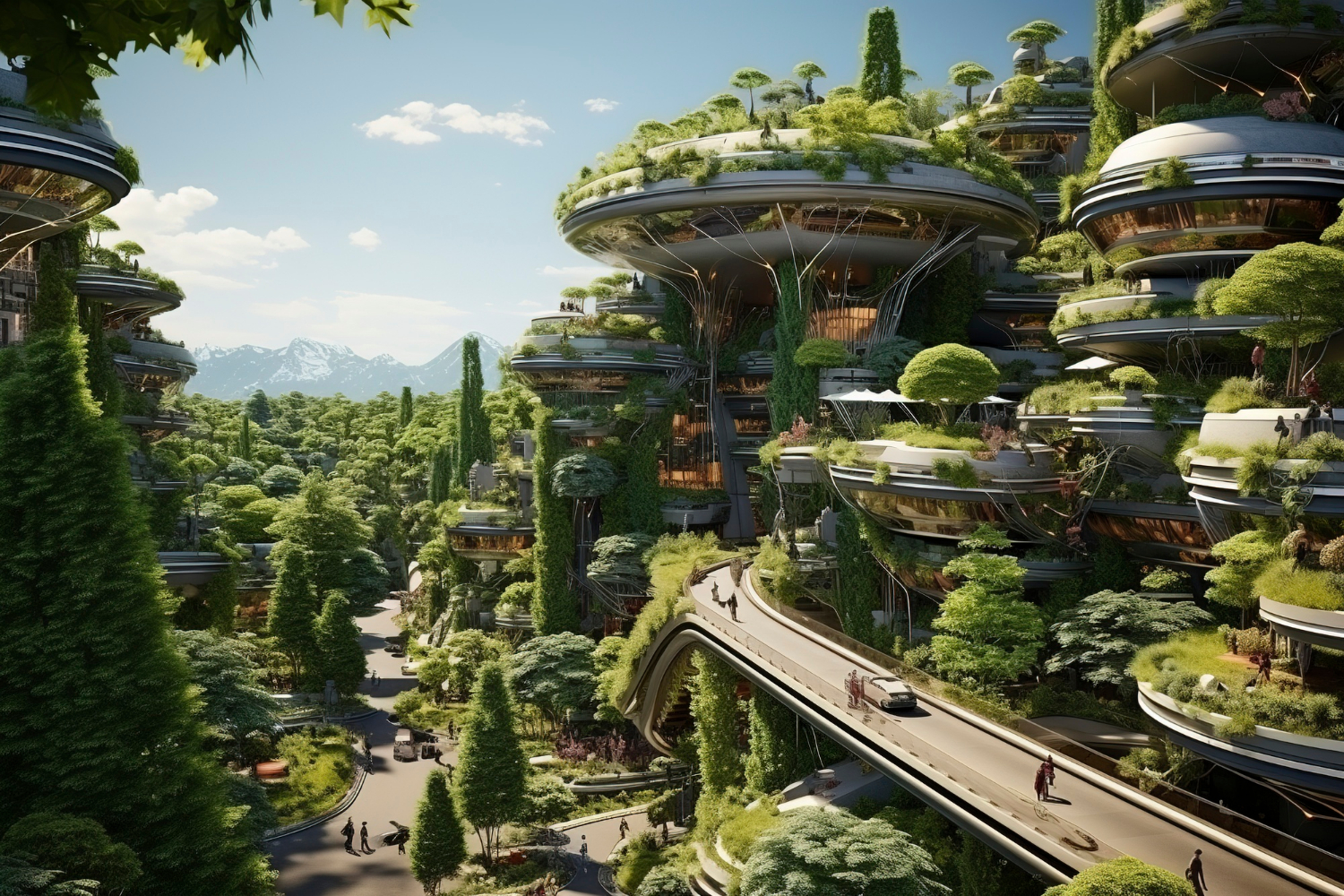
AI-generated image designed by Freepik showing a futuristic city full of vegetation
(1)Eco-anxiety is a feeling of despair and hopelessness towards the changing climate fueled by the belief that we are too young, too inexperienced, or only one person against the world and thus unable to make a difference.
(2)See Not the End of the World: How We Can Be the First Generation to Build a Sustainable Planet by Hannah Ritchie
(3) Hickman et al. (2021). Climate anxiety in children and young people and their beliefs about government responses to climate change: a global survey. Lancet Planetary Health 5: e863-73: https://www.thelancet.com/action/showPdf?pii=S2542-5196%2821%2900278-3

