
Small Animal Preclinical Imaging Platform (PIPPA/CIBM)
Non-invasive preclinical imaging is a helpful tool for biomedical research due to its capability of obtaining longitudinal data in an increasing number of reliable small animal models of diseases.
Small animal imaging is a perfect bridge between the “bench and the bedside” and is thus an invaluable method to increase the power of translational research.
Also, in line with the 3R principle, non-invasive anatomical and/or molecular imaging allows to obtain large amounts of data from a single animal thus reducing the number of animals needed for a given experiment, alternative models (e.g. zebra fish, fertilized eggs assay-CAM) can be imaged to replace rodent experiments, and experiments can be refined by monitoring animal health and diseases progression by imaging.
The Small animal preclinical imaging platform of the UNIGE Faculty complies with the OFSP radiation protection safety rules and the specific-pathogen-free (SPF)-like animal housing procedures of the Faculty animal production facility, allowing longitudinal imaging with intermediate housing.
The mission of the small animal preclinical imaging platform is to provide state-of-the-art in vivo imaging to researchers of the University of Geneva and to external collaborators upon request.
Thanks to a wide range of imaging modalities dedicated to small animals (e.g. rodents, rabbits), we aim to support translational and preclinical research projects.
Thematics
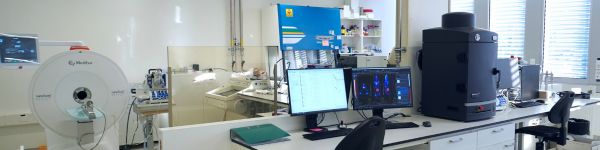
Equipment
- High resolution CT scanner (Quantum GX, Revvity)
- 3T MRI scanner (Nanoscan, Mediso)
- Optical Imaging (IVIS Lumina 3, Revvity)
- PET-SPECT-CT (Triumph, Trifoil)
- PET-CT (122S, Mediso
Services
- Before the experiments
- Provide guidance for the design of imaging studies
- Assistance in grants preparation
- Help in FormA writing
- During experiments
- Animal and radiotracers transport logistic
- Animal surgery, injections, interventions
- Training for self-service use of scanners
- On-demand full-service acquisition
- Following the experiments
- Standard or advanced image analyses training (self service)
- Images analyses (full service)
- Guidance for images and data presentation