
Speakers
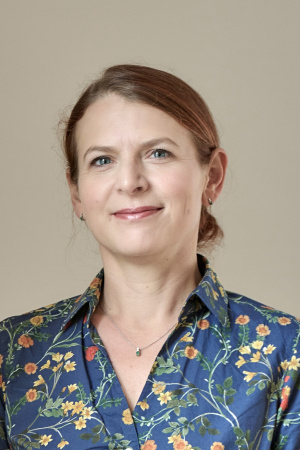
Prof. Dr. Eva Ringler
🧠 Fields of Expertise
Behavioural ecology, evolutionary biology, amphibian and reptile behavior, parental care strategies, animal movement, site fidelity, mating systems, ecological adaptation, field experimentation, interdisciplinary research
📚 Biography
Prof. Dr. Eva Ringler is Head of the Division of Behavioural Ecology at the Institute of Ecology and Evolution, University of Bern. She studied Biology and Mathematics at the University of Vienna, completing her diploma with honors in 2007. Her doctoral research in evolutionary biology focused on amphibian behavior and was awarded with distinction in 2011. Following her Ph.D., she conducted postdoctoral research at the Messerli Research Institute in Vienna and at the University of California, Los Angeles (UCLA), expanding her work on animal cognition and behavioral strategies.
In 2020, she was appointed Assistant Professor (tenure track) at the University of Bern, where she leads a dynamic research group investigating the ecological and evolutionary drivers of animal behavior. Her work integrates field studies, experimental approaches, and quantitative analysis to explore complex behaviors such as polygynandry, parental care logistics, and movement patterns in Neotropical frogs. She has published extensively on strategic planning in tadpole transport, male competition, and adaptive plasticity in amphibians.
Prof. Ringler’s research is distinguished by its interdisciplinary nature, combining behavioral ecology with evolutionary theory and conservation biology. She is committed to mentoring young scientists and promoting diversity in science.
Prof. Dr. Andrew Charles Oates
🧠 Fields of Expertise
Developmental biology, embryology, patterning, oscillators, synchronisation, biological timing, segmentation, morphogenesis, gene regulatory networks, intercellular signalling, single-cell imaging, microscopy, image processing, physics of biology, mathematical modelling, collective processes
📚 Biography
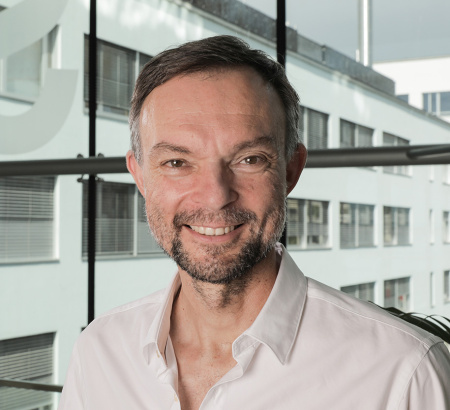
Prof. Andrew Charles Oates is a developmental biologist whose research explores the mechanisms of biological timing and pattern formation in vertebrate embryos. He earned his undergraduate degree in Biochemistry at the University of Adelaide, followed by a Ph.D. at the Ludwig Institute for Cancer Research and the University of Melbourne, where he studied signal transduction in the lab of Andrew Wilks.
His postdoctoral research at Princeton University and the University of Chicago in Robert Ho’s lab marked the beginning of his work on the segmentation clock in zebrafish. In 2003, he established his own research group at the Max Planck Institute for Molecular Cell Biology and Genetics in Dresden, Germany. He later held a professorship at University College London and led a group at the MRC-National Institute for Medical Research.
Since 2016, Prof. Oates has been based at École polytechnique fédérale de Lausanne (EPFL), where he heads the Timing, Oscillation, Patterns Laboratory. His interdisciplinary team of biologists, engineers, and physicists uses molecular genetics, quantitative imaging, and theoretical analysis to study coupled genetic oscillators that drive rhythmic and precise segment formation in embryos. From 2018 to 2020, he served as Director of the Institute of Bioengineering, and in 2021, he was appointed Dean of the School of Life Sciences at EPFL.
Prof. Oates’s work bridges biology and physics, offering deep insights into how dynamic processes shape living systems across scales.
Dr. Mathilda Fatton

🧠 Fields of Expertise
Microbiology, origin of life, extremophiles, biosignatures, astrobiology, spectro-polarimetry, homochirality, planetary habitability, life detection technologies
📚 Biography
Dr. Mathilda Fatton is a postdoctoral researcher at the Center for Space and Habitability (CSH) at the University of Bern, currently contributing to the EU-funded project SenseLife. Her research focuses on the earliest forms of life and the extremophiles that thrive in harsh environments, both on Earth and in extraterrestrial contexts. She investigates biosignatures — measurable indicators of life — with a particular emphasis on homochirality, a molecular asymmetry considered a hallmark of biological processes.
Dr. Fatton is developing a biosignature database that leverages spectro-polarimetry, a cutting-edge technique that uses polarized light to detect molecular patterns associated with life. Her interdisciplinary work bridges microbiology, planetary science, and remote sensing, contributing to the advancement of life detection strategies for future space missions.
Her office is located at the University of Bern’s CSH, where she collaborates with scientists across Europe to refine tools and frameworks for identifying life beyond Earth. Dr. Fatton’s research plays a vital role in shaping our understanding of habitability and the conditions that support life in the universe.
Prof. Dr. Michael N. Hall

🧠 Fields of Expertise
TOR signaling, cell growth control, metabolism, signal transduction, molecular biology, biochemistry, cancer biology, aging, translational research, nutrient sensing, protein kinase regulation, therapeutic target discovery
📚 Biography
Prof. Dr. Michael N. Hall is Professor and former Chair of Biochemistry at the Biozentrum, University of Basel. Born in Puerto Rico and raised in South America, he earned his BSc in Zoology from the University of North Carolina at Chapel Hill in 1976 and his PhD from Harvard University in 1981. He conducted postdoctoral research at the Institut Pasteur in Paris and the University of California, San Francisco, before joining the University of Basel in 1987.
In 1991, Prof. Hall and colleagues made the groundbreaking discovery of TOR (Target of Rapamycin), revolutionizing understanding of cell growth as a highly regulated process. His group subsequently identified the two TOR complexes (TORC1 and TORC2) and elucidated their roles in controlling cell growth, metabolism, and disease—work with profound implications for cancer, diabetes, obesity, and aging research.
Prof. Hall is a member of the US National Academy of Sciences and has received numerous prestigious awards, including the Louis-Jeantet Prize for Medicine (2009), the Breakthrough Prize in Life Sciences (2014), the Canada Gairdner International Award (2015), the Albert Lasker Award for Basic Medical Research (2017), and the Balzan Prize for Biological Mechanisms of Ageing (2024).