
Prof. Paltani
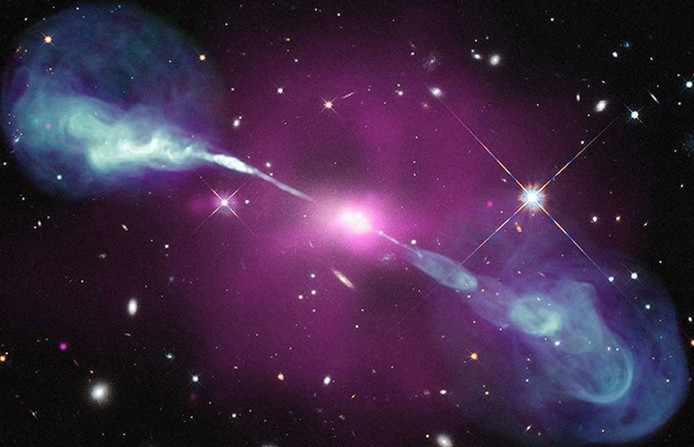
The group of Prof. Paltani focuses on two main areas. As part of the Euclid mission, it is responsible for the computation of photometric redshifts and physical parameters of galaxies as a contribution to the main science of Euclid, which are the equation of state of dark energy, the laws of gravity, and the nature of dark matter. This involves significant algorithmic development and their implementation in the Euclid pipeline, thanks to a team of software engineers attached to this project. These tools deployed in the Euclid pipeline have already produced the largest catalogue of physical parameters with multi-dimensional posteriors. These physical parameters will be used to retrace the evolution of star formation and the build-up of galaxy masses throughout the history of the Universe. New methods for determining photometric redshifts and physical parameters are being developed based on deep learning. The other major interest of the group is the understanding of the physical processes and the geometry of accreting SMBHs, or active galactic nuclei (AGN). A large effort is made on the development of the RefleX simulation tool that can model the spectra and images of accreting objects surrounded by arbitrary distributions of matter. The group is involved in the Japanese XRISM mission, which provides high-resolution X-ray spectra that are important diagnostics of the distribution of matter around the black hole. The group also studies the evolution of the AGN population, e.g. using the FornaX survey of the Euclid Deep Field Fornax by XMM-Newton. Combining all three approaches, the group is pioneering a physics-driven approach using RefleX to understand the structure of AGN by attempting to reproduce directly the observed population of AGN in X-rays.