
Discover innoLIFE awarded projects
Projects funded in 2025
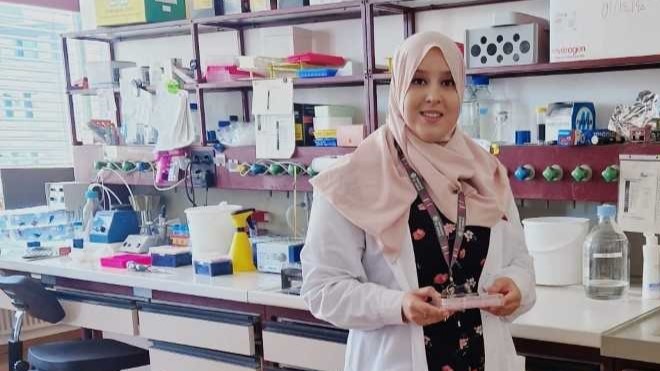
Dre Sanae El Harane, Department of medicine, Faculty of Medicine, UNIGE
Building on the successful development of Airliwell technology, soon to be commercialized through the spin-off Harantech, the team is now taking the project a step further by addressing a new challenge: the reliable shipment of pre-seeded organoid plates.
Organoids are transforming biomedical research and drug discovery, but their widespread adoption is hindered by the lack of efficient transport solutions that ensure their viability and functionality upon arrival. This project focuses on developing innovative organoid shipping methods, enabling researchers and industry partners to receive ready-to-use organoid cultures without the need for additional handling.
By overcoming current logistical barriers, this initiative will enhance the accessibility, reproducibility, and scalability of organoid-based models, ultimately accelerating scientific progress and industrial applications in the field.
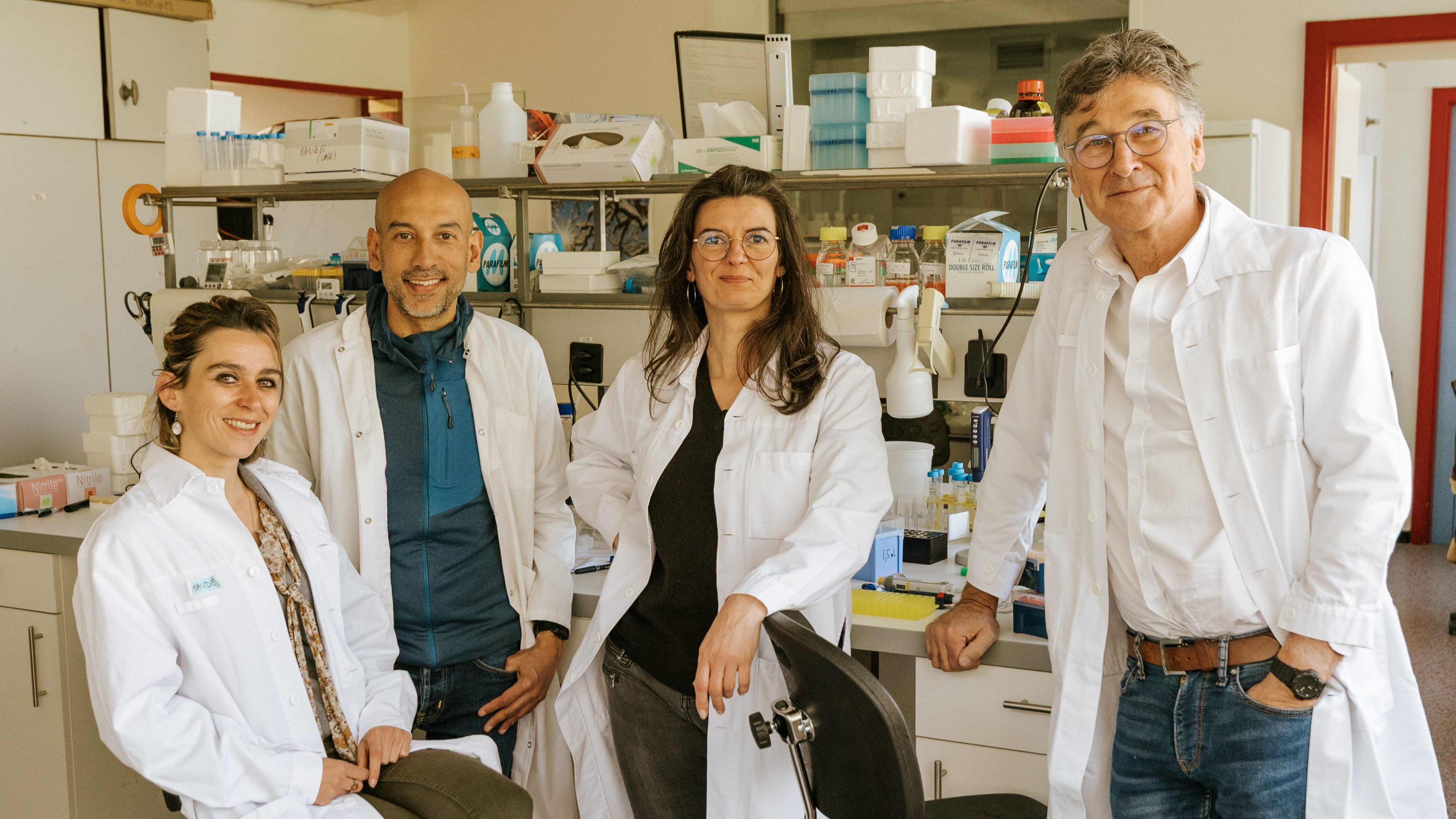 From left to right: Dre Maude Rolland, Dr Fabien Abdul, Dre Pascale Ribaux and Honorary Pr Karl-Heinz Krause.
Packaging cell line for efficient production of gene therapy vectors
Dre Maude Rolland, Department of surgery, Faculty of Medicine, UNIGE
Gene therapy is becoming an increasingly important medical treatment, relying on gene therapy vectors—specialized carriers that deliver therapeutic genetic material into cells. However, producing these vectors remains costly, slow and inconsistent, creating a major bottleneck in the manufacturing of innovative gene therapies.
A promising solution involves developing packaging cell lines: specialized cells that stably express all the components needed to efficiently produce these vectors. Despite their potential, technical challenges have hindered their implementation. By leveraging innovative strategies to overcome these hurdles, the team aims to create the first high-efficiency packaging cell line—a reliable, cost-effective, and scalable solution for vector production. This breakthrough could accelerate the development of gene therapies, enabling more patients to benefit from these life-changing treatments.
Projects funded in 2024
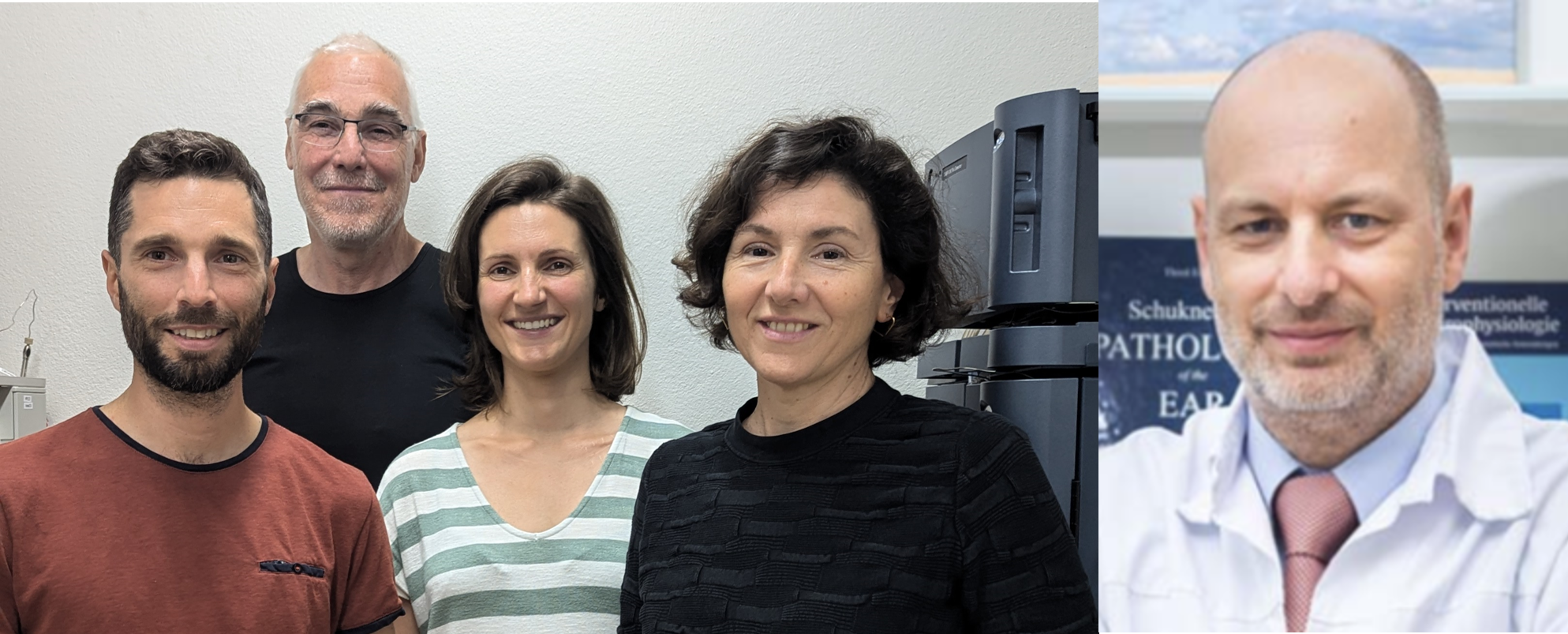
De gauche à droite: Dr. Francis Rousset, département des neurosciences cliniques, Faculté de médecine, UNIGE, ; Vincent Jacquet, responsable de la plateforme de screening, Faculté de médecine, UNIGE; Lucie Oberhauser, Stéphanie Sgroi, département des neurosciences cliniques, Faculté de médecine, UNIGE. Pr. Pascal Senn, chef de groupe, département des neurosciences cliniques, UNIGE et. chef du service d'ORL et de chirurgie cervico-faciale, HUG.
La Plateforme PHOENIX
La plateforme PHOENIX développée par l’équipe du Dr. Francis Rousset est un modèle in vitro de la cochlée, qui a pour but d’accélérer le développement des thérapies futures contre la perte auditive. Ce modèle, basé sur les cellules souches, représente une solution de criblage à grande échelle de candidats médicaments, tout en remplaçant avantageusement les modèles animaux. Dans le cadre du projet financé par innoLIFE, les chercheurs vont utiliser la plateforme PHOENIX pour identifier de nouvelles molécules stimulant la neurogenèse, la neuroprotection et la régénération neuronale, validant ainsi l’utilité du modèle pour effectuer des criblages moléculaires. Les molécules identifiées pourront ensuite être ensuite développées comme médicaments contre la perte auditive.
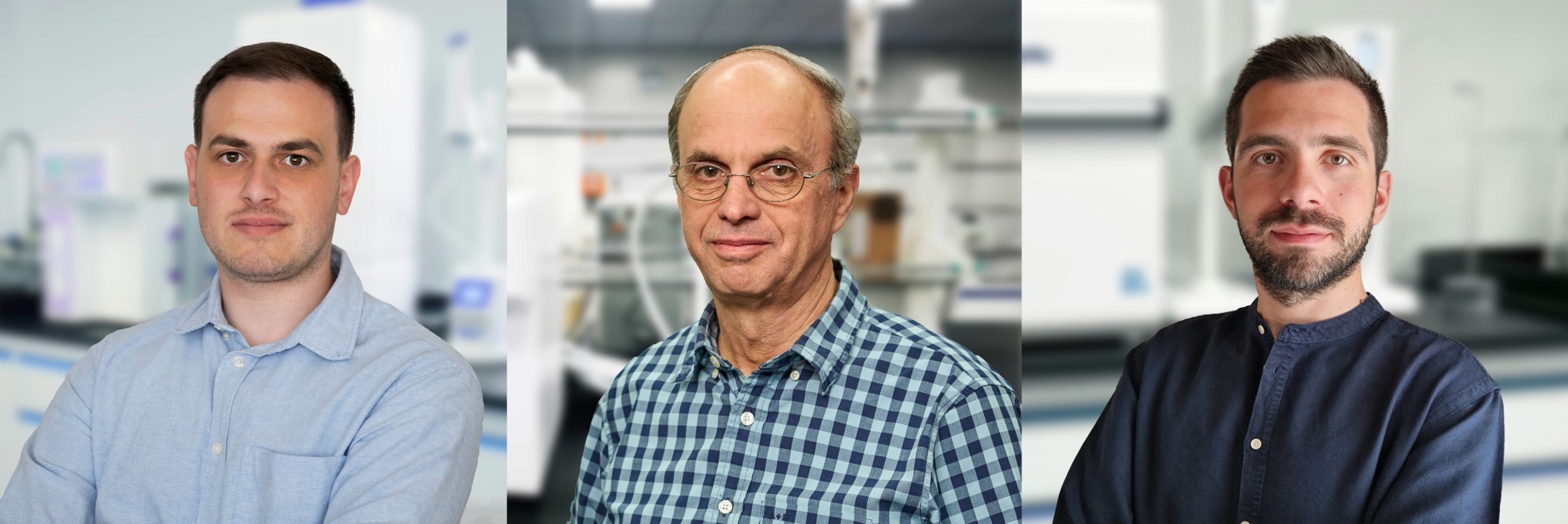
De gauche à droite: Dr Michalis Petropoulos, Pr Thanos Halazonetis, Dr Giacomo Rosetti, département de Biologie moléculaire et cellulaire, Faculté des sciences, UNIGE.
Conjugués anticorps-médicament d’un nouveau type
L’équipe du Pr. Thanos Halazonetis propose de développer de nouveaux conjugués anticorps-médicament (ADC, antibody-drug conjugate en anglais) comme thérapie ciblée pour le traitement des cancers. Les ADC combinent les capacités de ciblage des anticorps et la capacité de destruction du cancer des médicaments cytotoxiques. Malheureusement, les médicaments actuellement utilisés sont parfois aussi toxiques pour des cellules saines, ce qui peut causer des effets secondaires importants et mener à des interruptions de traitement. Le projet financé par innoLIFE a pour but de développer des ADC dont le médicament conjugué est spécifique aux cancers. Les ADC obtenus de cette manière auront une spécificité double pour les cellules cancéreuses évitant ainsi la toxicité systémique et offrant une alternative à la chimiothérapie.
17 Sept 2024