Activity Report 2024

AFFECT LEARNING AND DECISIONS LAB

Prof. Eva Pool
Website

PRESENTATION
At the Affect, Learning, and Decisions Laboratory, we study the role of affect in learning and decision making. We also explore individual differences in these mechanisms and examine how these processes contribute to vulnerabilities and resiliences to mental health problems, such as addictive behaviors and anxiety.

To this aim, we use psychophysiological, behavioral, and neuroimaging techniques, including functional magnetic resonance imaging (fMRI). We are based at the Faculty of Psychology and Educational Sciences and the Swiss Center for Affective Sciences at the University of Geneva.


CLINICAL AND EXPERIMENTAL NEUROPSYCHOLOGY LABORATORY

Prof. Julie Anne Péron
Website

PRESENTATION
More than half of the European population suffers from a neurological condition, such as stroke, dementia or multiple sclerosis (European Academy of Neurology, 2019). Worldwide, neurological disorders are the leading cause of disability and the second leading cause of death (Lancet Neurology, 2019).
The objective of the Clinical and Experimental Neuropsychology laboratory is to improve the quality of life of people living with these diseases. To do so, we pursue two lines of research: i) to increase knowledge of the cerebral bases of cognition, emotion and behavior, and (ii) improve the evaluation and rehabilitation of these processes.
The laboratory is currently attached to the Faculty of Psychology and Educational Sciences at the University of Geneva, and enjoys close ties with the Neuropsychology Unit of the Neurology Department at University Hospitals of Geneva (HUG). Moreover, the laboratory is affiliated with two interfaculty centers, the Swiss Center for Affective Sciences and the Swiss Center for the Interdisciplinary Study of Gerontology and Vulnerability.
The Unit’s research program gives students an opportunity to hone their clinical neuropsychology skills and gain experience with clinical populations (primarily adults), while at the same time exploring research questions relating mainly to neuropsychological syndromes and their neuroanatomical substrates – questions that have both theoretical and applied implications.


DIRECTOR(S)
Prof. Julie Anne Péron is currently associate professor of clinical neuropsychology and director of the Clinical and Experimental Neuropsychology Laboratory at the Faculty of Psychology and Educational Sciences of the University of Geneva.

After obtaining a Diploma of Specialized Higher Studies in 2002 and a Diploma of Advanced Studies in 2004 in the field of neuropsychology, Julie Péron defended her doctoral thesis in Health Sciences at the University of Rennes 1 in 2008, under the supervision of Prof. Vérin, for which she was awarded the Brittany Young Researchers Prize from the Brittany Region Council, as well as the Alain Agniel Prize from the French Language Neuropsychology Society. Wishing to anchor her scientific research in practice, in parallel with this training, she practiced clinical neuropsychology at the University Hospital of Rennes first in the memory clinic (CMRR), and then in the Adult Neurology Department, and finally in the ‘Highly Specialized Medicine Unit’ in movement disorders.

From 2009 to 2013, she carried out a postdoctoral stay at the Swiss Center for Affective Sciences at the University of Geneva, where she developed her work on the links between motor skills and emotions with people living with central nervous system dysfunction such as Parkinson’s disease, obsessive-compulsive disorders, or major and resistant depression. In 2014, she was appointed senior researcher at the Faculty of Psychology and Educational Sciences of the University of Geneva. At the same time, she resumed her clinical activity in the Adult Neurology Department at the University Hospitals of Geneva, where she was promoted to head neuropsychologist of the Neuropsychology Unit in 2019. She then created the Clinical and Experimental Neuropsychology Laboratory, continuing, with her team, her work in the field of ‘neuropsychology of habit’ and pathological repetitive behaviors linked to cerebral affection. One of her major research interests consists in going beyond the cortico-centric bias in clinical neuropsychology by integrating the notion of functional integration and large-scale brain networks on both the theoretical and the practical level. Since 2022, Julie is also head of the Adult Clinical Neuropsychology Unit at the Faculty of Psychology and Educational Sciences, University of Geneva.

She was an active member of the Swiss Association of Neuropsychologists from 2015 to 2019, where she had undertaken roles in the committee (2015-2016) and the continuing education committee (2015-2019). She also served as a member of the scientific committee of the Humanities Division within the France Parkinson non-profit organization from 2016 to 2023. As of 2023, she holds the position of Associate Editor at the journal Cortex. In recognition of her contributions to understanding the neuropsychological effects of SARS-CoV-2, she was awarded the prestigious Nelson Butters Award by the American Neuropsychological Association in 2024.


COGNITIVE AFFECTIVE AND NEURAL ECONOMICS LAB

Prof. Maël Lebreton
Website

PRESENTATION
Prof. Maël Lebreton is Assistant Professor in Psychology, based at the Swiss Center for Affective Science (CISA), at the University of Geneva (UNIGE), in Switzerland.
His main focus has been the investigation of the computational and biological basis of economic behavior (choices, preferences, beliefs) - a recent disciplinary field called Neuroeconomics. He tries to combine cognitive neurosciences, behavioral economics, and reinforcement learning to provide new hints about our (often irrational) behavior, by associating behavioral experiments, computational models and functional neuroimaging.

Comparative Psychology Laboratory (LPC)

Prof. Thibaud Gruber
Website

PRESENTATION

The Comparative Psychology Laboratory focusses on the evolutionary roots of cognition, affect and social behaviour, studying the evolution of complex behaviour such as culture and communication to explain the unique characteristics that define humans as a species. Members of the laboratory use techniques and paradigms from comparative and developmental psychology, ethology and behavioral ecology, and neurosciences to investigate various research questions.

The first research question is concerned with understanding differences between human and chimpanzee cultures. To do so, we work in the forests of Western Uganda to describe the unknown cultures, particuarly the tool-using abilities of wild Eastern chimpanzees (Pan troglodytes schweinfurthii). We use both observational and experimental methods where we modify the environment an animal encounters in its daily activities. We also investigate the vocal communication of wild chimpanzees, as well as another endemic species, the grey-cheeked mangabey. 

Our second research question aims to investigate the ontogeny of learning processes in  children, in comparison to other apes. To do so, we conduct cognitive experiments in various settings around the planet (Switzerland, France, Croatia, China, Uganda) to understand the mechanisms of social learning. We compare our results with similar experiments conducted with non-human apes.

A final research question is concerned with emotional communication in humans and other great apes. We use experimental and neuroscientific non-invasive paradigms (e.g. fMRI, fNIRS) to understand the brain mechanisms that allow the processing of emotional auditory signals across species. We are particularly interested in the impact of affect on social transmission.


DIRECTOR(S)
Prof. Thibaud Gruber received his PhD in Psychology in 2011 from the University of St Andrews, UK after undergraduate studies in Biology and a master in Cognitive Sciences. In 2018, he received his Habilitation from the ENS Paris in Cognitive Sciences.
He is a comparative psychologist with broad interests ranging from cognitive anthropology and developmental science to behavioural ecology. He uses different approaches in the field and the lab (observational, experimental, neuroscientific) to tackle the question of the evolution of culture and language in great apes, including humans. His ultimate goal is to understand how our early ancestors launched their cultures from a chimpanzee-like state on a path to what they are now.
In particular, he has investigated the cognitive, social and ecological underpinnings of tool use in wild Ugandan chimpanzees. During his PhD, he also developed a strong interest for the evolution of language by studying primate vocalizations. After joining the Cognitive Science Center at the University of Neuchâtel, he developed a human aspect to his work, investigating social learning processes in children.
In 2015, he joined the laboratory of Prof Didier Grandjean as a Scientific Collaborator on a project aiming at developing non-invasive neuroscientific tools to study vocal perception in non-human primates, which resulted in the establishment of a long-term collaboration with Dr Adrien Meguerditchian from the CNRS and complemented his study species with baboons.
In 2019, he was awarded an Eccellenza Professorial fellowship by the Swiss National Science Foundation, allowing him to establish the eccePAN lab at the Faculty of Psychology and Educational Sciences. For this project, he is particularly interested in drivers of tool use, whether social or internal, and has started to investigate the physiological aspects of tool use.
In 2023, he was awarded an ERC Consolidator Grant, which he transferred to Switzerland funded by SEFRI.

CONSUMER DECISION & SUSTAINABLE BEHAVIOR LAB

Prof. Tobias Brosch
Website

PRESENTATION
The climatic changes that have been increasingly observed in recent years are to a large extent driven by human activities linked to resource overconsumption and overreliance on fossil energy sources. Developing a more sustainable lifestyle is one of the most pressing tasks facing our planet and its inhabitants.

Using an interdisciplinary approach that combines psychology, affective sciences, behavioral economics, and neuroscience, our research group aims to contribute to this challenge by trying to understand the factors and mechanisms that drive decisions and behaviors related to sustainability, and to develop intervention strategies to promote a more sustainable lifestyle.

DIRECTOR(S)
Prof. Tobias Brosch is Full Professor at the University of Geneva, where he holds the chair in Psychology of Sustainable Development. In his research, Tobias is interested in understanding how cognitive, affective, and social processes influence our environmentally relevant choices, and how this knowledge can be used to promote sustainable decisions and behaviors. 

His research has been published in more than 90 peer-reviewed articles in journals such as PNAS, Nature Energy, Nature Climate Change, and Nature Human Behaviour. He is associate editor for the Journal of Environmental Psychology, and he actively engages with policy makers in the sustainability domain to bring insights from behavioral science into their work and to promote science-policy collaborations.

He is lead author for the AR7 report of the Intergovernmental Panel on Climate Change (IPCC) and member of ProClim, the Forum for Climate and Global change of the Swiss Academy of Sciences. He moreover acts as representative of the American Psychological Association (APA), the European Federation of Psychologists' Associations (EFPA), and the Swiss Federation of Psychologists (SFP) to the United Nations in Geneva, and regularly consults for institutions such as the World Economic Forum, the Swiss Federal Office of Energy, or the Office of the High Commissioner for Human Rights.


CREATIVITY, IMAGINATION, AND TRADITION

Prof. Julia Langkau
Website

PRESENTATION
SNSF PRIMA Project 2022-2027: Creativity, Imagination and Tradition

Creativity is often defined as the ability of humans to come up with ideas or products that are original and valuable. However, sometimes we call ideas and products creative even though they are not original in any interesting sense, and some cases suggest that creative ideas are not necessarily valuable. Philosophers have proposed various distinctions to account for different levels and kinds of novelty, but the question whether creativity involves value remains disputed.

This project aims to introduce a new way to account for conflicting intuitions by distinguishing two genuinely different notions of creativity: process creativity and product creativity. A special focus lies on creativity in the arts, the role of imagination in creative processes and the role of tradition in product creativity. When it comes to creativity in the arts as well as in everyday life, our main interest is often a conscious and valuable imaginative process, which seemingly can only be ascribed to autonomous agents. This will be investigated as process creativity. However, there is a sense in which non-human animals and artificial intelligence (AI) systems can be creative: when we are concerned with creative ideas or objects, the novelty of the product relative to a tradition is in the center of our interest. This will be investigated as product creativity.


DIRECTOR(S)
Prof. Julia Langkau is an SNSF Assistant Professor in philosophy at the University of Geneva (Switzerland). She received her masters degree in philosophy, linguistics and psychology from the University of Zurich (Switzerland) and her PhD degree from the University of St Andrews (Scotland).
Her work within the project "Creativity, Imagination and Tradition" addresses creativity with a special focus on literary writing and explores general implications of the distinction between process creativity and product creativity for the notions of imagination and creativity. One of the main aims is to further develop the concept of creative imagination and to explore the involvement of emotions in artistic creative processes.

EMOTION AND MEMORY LAB

Prof. Ulrike Rimmele
Website

PRESENTATION
Our research aims to understand how emotion and stress influence learning and memory in humans. We aim to characterize this interaction between emotion and memory across the life span to get a better understanding of how emotion modulates memory at different ages. We also examine how humans can regulate and thus modify emotion and stress’s influences on learning and memory processes.

DIRECTOR(S)
Prof. Ulrike Rimmele received a Master in Neural and Behavioral Sciences from the University of Tübingen and a PhD in Psychology from the University of Zürich. A post-doc at New York University followed where she studied emotion and memory. With an FNS Ambizione, she then examined the modulation of emotion on multiple memory phases at the Dept. of Basic Neurosciences at the University of Geneva.
In 2020, she joined the Faculty of Psychology and Educational Sciences at the University of Geneva with an FNS Eccellenza Professorial Fellowship that aims to examine how emotion, stress and their regulation affects memory processes across the life span.

EUDAIMONIC EMOTIONS AND THE (META)PHILOSOPHY OF WELL-BEING

Prof. Florian Cova
Website

PRESENTATION
Is happiness the same as well-being?
Philosophers have argued that it is not, since well-being requires one's life not only to be happy, but also to be meaningful. However, little is known about our conception of meaningfulness and its psychological roots, which gets in the way of an adequate account of well-being. In this project, we will approach meaningfulness through the study of emotions. Indeed, one particular class of emotions, eudaimonic emotions, have a distinct connection to our experience and intuitions about meaningfulness.
The project will combine the theoretical tools of philosophy with the empirical methods of psychology, opening the possibility for an experimental philosophy of meaningfulness and well-being.
It will begin with (i) an examination of the nature, motivational role, and diversity of such eudaimonic emotions. We will then (ii) investigate how these emotions shape our intuitions and judgments about meaningfulness and well-being.
Finally, we will (iii) use this newly acquired insight to put forward a novel account of well-being that integrates the notion of eudaimonic emotions and makes room for meaningfulness without losing the link between happiness and well-being.

DIRECTOR(S)
Florian Cova is Assistant Professor at the Department of Philosophy of the University of Geneva and member of the Centre Interfacultaire en Sciences Affectives (CISA). His research on happiness and the meaning of life is funded by an Eccellenza grant from the Swiss National Fund (2019-2024).
Her research lies at the intersection of philosophy and cognitive science and covers areas as diverse as philosophy of action, ethics, aesthetics, philosophy of mind, psychology of emotions, and moral psychology. His research has been published in leading scientific journals in philosophy, psychology, neuroscience and linguistics.
In addition to his research project Eccellenza, he is also the coordinator of a research project on the role of positive emotions in philanthropic behavior, in collaboration with the Center in Philanthropy of the University of Geneva (2019-2020).
In addition to research and teaching, he has a strong interest in scientific popularization and knowledge dissemination. Some of his interventions in the Swiss media (RTS) can be heard here.

LABORATORY FOR BEHAVIORAL NEUROLOGY AND IMAGING OF COGNITION

Prof. Patrik Vuilleumier
Website

PRESENTATION
Our group investigates the cerebral mechanisms of cognition, including perception, emotion, and consciousness. We use neuroimaging techniques such as functional resonance magnetic imaging (fMRI) and event-related potentials (ERPs). Major questions of our current research concern the neural systems engaged during the generation and experience of emotions, particularly how multiple and distributed brain networks coordinate their activity and interact with each other in response to emotion-eliciting events; how these responses overlap or vary across a range of different emotions such as fear, anger, joy, pride, regard, sadness, and so forth; and how the underlying neural processes emerge dynamically over time duriong and after emotional episodes. Our research also investigates how the human visual system can recognize objects and faces, how we identify sounds and voices, and how we perceive and respond to emotions and social signals, such as facial expressions or eye gaze. 
We are particularly interested by the role of the amygdala in emotion and social processes. In parallel, we aim to dissect the neural circuits by which emotions can influence perception and behavior, for example in response to fear, anger, or reward. Our work also investigates the impact of neurological and psychiatry diseases on cognitive and affective functions (after stroke or other brain diseases), with the aim to better understand how different brain areas interact to produce normal conscious awareness of external sensory space or internal self states, and to develop new therapeutic approaches to improve impaired functions.


DIRECTOR(S)
Prof. Patrik Vuilleumier is a neurologist who uses brain imaging techniques (such as functional magnetic resonance imaging, fMRI) to study the brain mechanisms controlling emotion, perception, and action, as well as their links with consciousness.

After an initial training in neurology and neuropsychology in Geneva and Lausanne, he continued his research in cognitive neuroscience at the University of California at Davis (1997-1999), then in neuroimaging at University College London (1999-2002). 

He is now the director of the Laboratory of Neurology and Cognitive Imaging at the University Medical Center of Geneva, in connection with the Neurology Department of the University Hospital of Geneva. 

His current research focuses on the neural circuits in the human brain that allow emotional signals to influence attention and behavior, as well as the effect of brain damage and psychiatric illness on emotion, perception, and consciousness.

LABORATORY FOR THE STUDY OF EMOTION ELICITATION AND EXPRESSION

Prof. David Sander
Website

PRESENTATION
Research in the Laboratory for the study of Emotion Elicitation and Expression (E3 Lab) investigates the cognitive and brain mechanisms involved in the appraisal of relevant stimuli, and how these processes elicit emotions, and modulate attention, learning, memory, and decision-making.
The Laboratory for the study of Emotion Elicitation and Expression conduct their experiments on the sites of the Brain and Behaviour Laboratory, of Uni Mail, and of the Swiss Center for Affective Sciences at the Campus Biotech.

DIRECTOR(S)
David Sander is professor at the University of Geneva where he holds the Chair for the psychology of emotion. He studied mathematics and psychology at the University René Descartes (Paris, France), and received a PhD in Cognitive Sciences from the University Louis Lumière (Lyon, France).

In 2002, he joined the Department of Psychology at the University of Geneva (Switzerland). He is now full professor in this Department where he directs the Laboratory for the study of Emotion Elicitation and Expression. 

In 2012, he has been appointed Director of the Centre Interfacultaire en Sciences Affectives (CISA), and of the National Center of Competence in Research (NCCR) in Affective Sciences, which is located at the Campus Biotech. He directed the CISA between 2012 and 2024 when he became vice-dean of the Faculty of Psychology and Sciences of Education.

He is mainly interested in the brain and cognitive mechanisms involved in emotion elicitation, and how these mechanisms modulate attention, memory, and decision-making. He has published more than 150 articles and edited 6 books on these topics. For his work, he was awarded the 2013 National Latsis Prize.

NEUROECONOMICS AND NEUROFINANCE NIFE LABORATORY

Prof. Kerstin Preuschoff
Website

PRESENTATION
Our research in Neuroeconomics and Neurofinance focuses on decision making under uncertainty. This highly interdisciplinary work covers theoretical and experimental aspects of decision making and risk taking and unites neuroscience, financial economics, computational neuroscience and psychology. We primarily employ behavioral studies, computational modelling and functional MRI to study how humans make (financial) decisions in an uncertain world.

DIRECTOR(S)
Prof. Kerstin Preuschoff is a multi-disciplinary scientist and educator with a passion for communicating science across disciplines and audiences. She first studied electrical engineering in Berlin before obtaining her PhD in computation and neural systems from Caltech. She is currently an associate professor of neurofinance at the University of Geneva. Her research includes all aspects of decision-making - from the neuroscience behind it, to its impact on financial markets. Her primary research focus is the neural basis of decision making under risk and combines theoretical and experimental approaches from neuroscience, financial economics, and psychology.

NEUROSCIENCE OF EMOTIONS AND AFFECTIVE DYNAMICS

Prof. Didier Grandjean
Website

PRESENTATION
The researchers of the NEAD group conduct their experiments using different kinds of methods able to investigate the brain processes related to emotional processes. The facilities including functional Magnetic Resonance Imaging (fMRI), electroencephalography, and peripheral measures such as electromyography and skin conductance are located to the Faculty of Psychology and Educational sciences and at the Central Medical University at the Brain and Behaviour Laboratory.

RESEARCH FOCI

  • Emotional prosody perception and production
  • Appraisal processes
  • Emergence of feelings and neuronal synchronizations
  • Music and emotion
  • Olfaction and emotion
  • Emotional facial expression recognition and production


DIRECTOR(S)
Didier Grandjean is full professor at the Department of Psychology and Educational Sciences and at the Swiss Center for Affective Sciences at the University of Geneva.
He achieved his thesis in 2005 under the direction of Klaus Scherer about the dynamic of appraisal processes using electroencephalographic methods.
He published more than 150 peer reviewed articles in international scientific journals in psychology and neuroscience about emotional processes related to emotional prosody perception and production, appraisal processes, the emergence of feelings, music and emotion, olfaction and emotion, and emotional facial expression perception and production.


SENSORIMOTOR, AFFECTIVE AND SOCIAL DEVELOPMENT PSYCHOLOGY

Prof. Edouard Gentaz
Website

PRESENTATION

The main objective of our research is to better understand the development of sensory-motor, affective and social skills in typical and atypical individuals from birth to late adolescence. Our research has not only theoretical but also practical interests (booklets for parents, pedagogical methods, etc.).

Here are some of the questions our research group is currently addressing:
 
  • In babies and very young children: Visit our Babylab website
    Are babies a few months old able to perceive emotions? Do young children between the ages of 2 and 4 prefer to watch certain types of movements as "biological movements"?
  • In pre-school and school-aged children
    Do children between 5 and 12 take into account (and how) the contextual situation (social or not) when identifying emotional expressions? What factors (listening comprehension, decoding, and vocabulary) support 6-year-olds' learning to read? Does multisensory training promote academic learning such as reading, writing, and math? What are the effects of Montessori pedagogy on the neurocognitive and emotional development of children between the ages of 5 and 12? What are the effects of prematurity on the psychological development of children born prematurely? What can be done about it? How can emotional skills be trained at school?
  • The skills of blind children and adolescents
    How to promote the recognition of tactile images by visually impaired children? How to promote access to art and culture for visually impaired people?

DIRECTOR(S)
Prof. Edouard Gentaz
During his academic career at CNRS, France (1999-212) and at the University of Geneva (since 2012), Prof. Edouard Gentaz has developed several research programs to design and evaluate several types of interventions for young children, involving collaborations with other scientific disciplines. Prof. Gentaz has designed specific interventions to increase children's academic performance. He has also evaluated their effects. He has shown that an effective method to prepare kindergarten children from low and middle socioeconomic status families for reading (Gentaz, Colé, and Bara, 2003; Bara, Gentaz, and Colé, 2007), writing (e.g., Palluel-Germain, Hillairet de Boisferon, Hennion, Gouagout,& Gentaz, 2007; Jolly, Palluel-Germain, & Gentaz, 2010), and mathematics (Pinet & Gentaz, 2007, 2008; Kalénine, Pinet, and Gentaz 2011; Gimbert, Gentaz & Mazens, 2019) consists of the addition of tactile-visual and haptic exploration of geometric letterforms or an approximate number system to the traditional instructional methods.

SLEEP AND COGNITION NEUROIMAGING LABORATORY

Prof. Sophie Schwartz
Website

PRESENTATION
Our lab is interested in understanding the neural mechanisms underlying experience-dependent changes in the adult human brain. We also propose that models of learning and neural plasticity should account for important variations in behavioral and brain-states, such as those occurring during sleep. Our research focuses on distinct facets of neural plasticity: perceptual and emotional learning, offline replay of neural activity, and brain processes contributing to the selection of information (feedforward vs feedback effects). We also investigate dream reports because dreams provide important information about brain and mind functions during sleep. We study brain functions at the macroscopic systems level in healthy adult volunteers and in neurological patients. Our experimental approach includes the development of novel behavioral tasks, as well as measures of brain activity using functional MRI (fMRI) and high-density electroencephalography (EEG).

THUMOS

Profs. Julien A. Deonna Fabrice Teroni
Website

PRESENTATION
The Genevan Research group on Emotions, Values and Norms was founded in the summer 2005 by Prof. Kevin Mulligan (Department of philosophy, Geneva), who presided as its head until the summer of 2012. It was created with the aim of concentrating all the research activities of the philosophical wing of the SNF-funded NCCR in the Affective Sciences.
The circumstances of its birth explain its unique nature: the group’s research is first and foremost philosophical, yet this research is conducted in close collaboration with other disciplines, most of them represented in the Swiss Center for Affective Science (CISA). The original members of the group are Otto Bruun, Julien Deonna, Raffaele Rodogno, Fabrice Teroni, and they were joined soon afterward by Olivier Massin. From day one, group members would meet at four o’clock on Thursdays for two hours of discussion about their work and material related to it. This schedule remains to this day. Initially, given its main focus, the group was called the Shame and Guilt Club. It became the I-club when the group’s interests shifted to issues related to emotions and identity.
Since 2008, the group is known under the name of Thumos, which we hope reflects the spirit with which we do philosophy. Many students of all kinds have joined Thumos, and the group has hosted many different research projects, seminars and workshops. It has produced, we hope, some good philosophy.

DIRECTOR(S)
Prof. Julien A. Deonna is associate professor in philosophy at the University of Geneva and project leader at the Swiss Centre in Affective Sciences. He currently benefits from a FNS Professorship. He is co-director of Thumos, the Genevan Research Group on Emotions, Values and Norms.

Prof. Fabrice Teroni. I work in the philosophy of mind and epistemology. I have been part of the philosophy project within the NCCR since its inception, and will during the next phase co-lead the project entitled “Emotion, Attention and Value”.

  • Joffrey FUHRER successfully defended the PhD thesis “A Quest for a Meaningful Life. An Empirical and Theoretical Investigation of Meaning in Life: Conceptualizations, Operationalizations, and New Perspectives“ on April 9th, 2024 under the supervision of Prof. Florian Cova (UNIGE) and Prof. Fabrice Teroni (UNIGE).
  • Tobia SPAMPATTI successfully defended the PhD thesis “Persuasion at the frontline of climate change mitigation: socioaffective strategies to inform about mitigation policies and fight climate misinformation“ on June 24th, 2024 under the supervision of Prof. Tobias Brosch (University of Geneva) and Dr. Ulf Hahnel (University of Geneva).
  • Garance SELOSSE successfully defended the PhD thesis “Feel the vibes: exploring behavioral and neural correlates of interoceptive mechanisms in vocal emotion communication“ on September 2nd, 2024 under the supervision of Prof. Didier Grandjean (University of Geneva).
  • Nils Robin SOMMER successfully defended the PhD thesis “Emotion Recognition Ability and Well-Being: An Investigation of the Underlying Mechanisms“ on December 17th, 2024 under the supervision of Dr. Katja Schlegel (University of Bern).
  • Mi Xue TAN successfully defended the PhD thesis “Dissecting Componential Emotion Representations Through a Video Game Paradigm“ on December 18th, 2024 under the supervision of Prof. Patrik Vuilleumier (University of Geneva).

Doctoral students supervised by UNIGE professors at the Swiss Center of Affective Sciences:

  • Angela ABATISTA, “Emotions eudémoniques et philosophie du bien-être“ supervised by Prof. Florian Cova (University of Geneva).
  • Sam AHMAD, “Interpersonal Emotion Regulation in Neurodevelopmental Conditions“ supervised by Prof. Andrea Samson and Prof. Carmen Zurbrigge.
  • Agnès BAEHNI, “Relating Morally to Oneself“ supervised by Prof. Julien Deonna (University of Geneva) and Fabrice Teroni (University of Geneva).
  • Béatrice BELLA, “A Normative Framework for Dirty Hands Politics“ supervised by Emanuela Cev.
  • Mathilde CAPPELLI, “On Sexual Desire“ supervised by Prof. Fabrice Teroni (University of Geneva).
  • Elena COMINCIOLI, “How can we improve the way we design services for older adults in the business context of industry 4.0?“ supervised by Masood Masoodi.
  • Chloé DESCHANET, “Attention, Behavior, and Curiosity in Virtual Reality Space“ supervised by Prof. Patrik Vuilleumier and Dr. Joan Llober.
  • Mai ELBASSIOUNY , “Modulation of Emotional Memory“ supervised by Prof. Ulrike Rimmele (University of Geneva).
  • Asli ERDEMLI, “Appraisals and Neural Representation of Epistemic Emotions: A Focus on Curiosity “ supervised by Prof. David Sander (University of Geneva).
  • Jie GAO, “Cultivating Emotional Capabilities for Sustainability via a Contemplative Dialogue Game“ supervised by Roland Tormey (EPFL) and Nadia Mazouz (ETH).
  • Anaïs GIANNUZZO, “Narratives and the Creative Person“ supervised by Prof. Julia Langkau (University of Geneva).
  • Alessio GIARRIZZO, “Apprentissage et compétences au travail, en formation et dans les organisations“ supervised by Prof. Nathalie Delobbe (University of Geneva).
  • Naïma GRADI, “Effectiveness of a 6-week in-home gamified attentional control training versus casual video game training on typically-developing adolescents with high anxiety“ supervised by Prof. Daphne Bavelier (University of Geneva) & Prof. Swann Pichon (HEdS Geneva).
  • Xinyi GUAN, “Investigating the perception of musical motifs“ supervised by Prof. Martin Rohrmeier.
  • Gabriel HINNEN, “Healing sleep to enhance cognition & emotional regulation in adolescents: a workshop-based intervention.“ supervised by Dr. Virginie Sterpenich.
  • Emilie JEANNERET, “The Role of Emotions in Children’s Acquisition of Social norms. Toward an Affective Social Learning Model.“ supervised by Prof. Fabrice Clément.
  • Roberto KELLER, “Corrective Concepts“ supervised by Prof. Fabrice Teroni (University of Geneva) and Prof. Conor McHugh (University of Southampton).
  • Morris KRAINZ, “Cognitive and Affective predictors of renewable energy policy support“ supervised by Prof. Tobias Brosch (University of Geneva).
  • Silvio LALOLI, “Implicit Social Motives and their Impact on the direction and intensity of Behavior“ supervised by Dr. Kerstin Brinkmann and Dr. Michael Richter.
  • Laura LAVEZZO, “Multivariate assessment of autonomic signals“ supervised by Dr. Manuela Filipp.
  • Kevin MAMMERI, “Imagery rescripting and targeted memory reactivation in insomnia disorder.“ supervised by Prof. Lampros Perogamvros (University of Geneva).
  • Kelly MANNION, “Investigating Drivers of Tool Use Behavior in Bugoma Forest Chimpanzees“ supervised by Prof. Thibaud Gruber.
  • Bruno MARCOS, “On one hand, I investigate the ability of humans to recognize affective cues in the voice of other humans and other species in the animal kingdom. On the other hand, I aim to develop “ supervised by Prof. Thibaud Gruber.
  • Elodie MASCITTI, “Usage de la métaphore et régulation émotionnelle à l'adolescence en contexte scolaire “ supervised by Dr. Nathalie Mella and Dr. Jean-Marc Gomez.
  • Alicia MILLOZ, “High-resolution imaging of hippocampal–cortical memory replay during sleep.“ supervised by Dr. Virginie Sterpenich.
  • Teerawat MONNOR, “Investigation of interpersonal-affective motivation for prosocial behavior“ supervised by Prof. Giuseppe Ugazio(University of Geneva) and Prof. Kerstin Preuschoff (University of Geneva).
  • Laura MORENO , “Mieux comprendre les émotions positives dans l'autisme “ supervised by Prof. Andrea Samso.
  • Maroussia NICOLET-DIT-FELIX, “Exploration of the mechanisms mediating the relationship between emotional intelligence and subjective well-being“ supervised by Prof Fabrice Clément (University of Neuchâtel) and Prof. Marina Fiori (HEFP).
  • Jean-Paul NOHRA, “Sustainable Mindset and Factors impacting sustainable decision-making“ supervised by Prof. Kerstin Preuschoff.
  • Martina NONNI, “Emotion components and brain networks in VR and fMRI“ supervised by Prof. Patrik Vuilleumier (University of Geneva).
  • Neslihan ÖNAY, “The Effect of Emotion on Episodic Memory at Different Ages “ supervised by Prof. Ulrike Rimmele.
  • Nicolas PAUL, “The Impact of Trait and State Dissociation on Emotional Awareness“ supervised by Prof. Ueli Kramer and Prof. Andreas Maercker.
  • Adrian PETSCHEN, “A study of the structural causes of human curiosity“ supervised by Prof. Fabrice Clément (University of Neuchatel).
  • Bruno POLI, “The valence of sensory pleasure and pain “ supervised by Prof. Fabrice Teroni.
  • Isabelle RAMBOSSON, “How does early neural entrainment induce by rhythmic emotional vocal and motor stimulation impact anticipatory processes in preterm and full-term infants?“ supervised by Prof. Didier Grandjean and Dr. Manuela Filippa (University of Geneva).
  • Jeanne RICHARD, “Characterizing the impact of emotion regulation and inhibitory control on food valuation“ supervised by Prof. Géraldine Coppin (Swiss Distance University Institute) and Prof. David Sander (University of Geneva).
  • Désirée SCHMID, “A refinement of the value approach in the environmental domain (REVALUE)“ supervised by Dr. Nadja Contzen (EAWAG) and Prof. Tobias Brosch (University of Geneva).
  • Céline SCHÖPFER, “The different philosophical and psychological conceptions of “critical thinking” (University of Geneva)“ supervised by Prof. Florian Cova (University of Geneva).
  • Chunyan SHI , “The temporal dynamics and brain networks of emotion regulation“ supervised by Prof. Patrik Vuilleumier.
  • Nina Marie SOOTER, “Stress, Honesty and Decision-Making: Investigating if and how stress impacts compliance with moral codes of conduct in favor of selfish interests“ supervised by Prof. Didier Grandjean (University of Geneva).
  • Lina STALLMANN, “Social Emotion Regulation in People with Autism Spectrum Disorder and the Use of Virtual Reality“ supervised by Prof. Andrea Samson (University of Fribourg).
  • Nils TRITSCHLER, “Reciprocal Relations Between Strain and Job Characteristics“ supervised by Prof. Achim Elfering and Prof. Laurenz L. Meier.
  • Sabiha ÜZÜM, “Multi-agent Emotion Socialization Profiles in Predicting Emotional Competence via Child Temperament in Early Childhood“ supervised by Prof. Hasibe Özlen Demirc.
  • Izia VALLAEYS, “Emotions, normes émotionnelles et comportements pro-environnementaux.“ supervised by Prof. Tobias Brosch.
  • Adrien WITTMANN, “Investigating the cerebral integration of affective prosodic and semantic information in verbal“ supervised by Prof. Didier Grandjean (University of Geneva).
  • Lavinia WUENSCH, “Individual differences in reward-seeking behaviors“ supervised by Prof. David Sander (University of Geneva).
  • Ting XU, “Hope You “Tube” Well: How Therapist Creators in Mental Health Approach Emotion On YouTube“ supervised by Prof. Karina van Dalen-Oskam and Prof. Christine Parsons and Dr. Aylin Kuryel.
  • Alexandra ZAHARIA, “Board games focused on emotional competences: promoting positive emotions and emotion regulation skills in adolescents“ supervised by Prof. Andrea Samson (University of Fribourg) and Prof. David Sander (University of Geneva).

Society for NeuroEconomics (SNE) Mid-Career Award 2024

Awards Website 01.01.24 - 31.12.24

Mael Lebreton

Dr Mael Lebreton has been awarded the 2024 SNE mid-Career Award.
The Society for NeuroEconomics (SNE) awards each year a mid-Career researcher for his/her significant contributions to understanding the neural basis of decision making or the impact of this knowledge on formal understanding of decision behavior.

Third Jury Prize My thesis in 180 Seconds

Awards Website 02.05.24
Philippe Voruz, neuropsychologist, won 3rd place in the Geneva final of My thesis in 180 seconds. He presented his thesis on Parkinson's disease: “De gauche ou de droite - La maladie de Parkinson à la croisée des chemins - Impact de la latéralisation motrice de la maladie de Parkinson sur les symptômes non-moteurs”.

Finalist - My Thesis in 180 Seconds

Awards Website 02.05.24

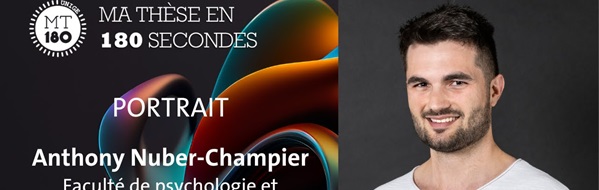
Anthony Nuber-Champier

Anthony Nuber-Champier, neuropsychologist, finalist in the Geneva final of My Thesis in 180 seconds. He presented his thesis: Investigation of neuro-immune predictors of neuropsychological post-COVID syndrome.

Prof Julie Peron winner ot the Nelson Butters Prize

Awards Website 24.05.24

Julie Anne Peron

Professor Julie Péron and her research team are winners of the 2024 Nelson Butters Prize awarded by the American Academy of Clinical Neuropsychology (NAN) for their article entitled "Frequency of Abnormally Low Neuropsychological Scores in Post-COVID-19 Syndrome: the Geneva COVID-COG Cohort", published in Archives of Clinical Neuropsychology.

Julie Peron - SNSF nomination AcademiaNet

Awards Website 11.07.24

Julie Anne Peron

Prof Julie Peron, professor at the Swiss Center for Affective Sciences, was listed in AcademiaNet, an international database of highly qualified female researchers.

Share your song, guess my emotion

OTHER Website 01.12.24 - 30.06.25

Didier Maurice Grandjean

From January to May 2025, the Maison de l'enfance et de l'adolescence (MEA-HUG) in Geneva has become a space for exploration and creativity around emotions.

Conferences, interactive workshops and original activities were proposed by CISA in collaboration with the Fondation Convergences to learn how to better recognize, understand and manage emotions through music.

The project Share your song, Guess my Emotion was supported by the Fondation Convergences.

Share your song, guess my emotion

OTHER Website 01.12.24 - 30.09.25

Didier Maurice Grandjean

From January to May 2025, the Maison de l'enfance et de l'adolescence (MEA-HUG) in Geneva has become a space for exploration and creativity around emotions.

Conferences, interactive workshops and original activities were proposed by CISA in collaboration with the Fondation Convergences to learn how to better recognize, understand and manage emotions through music.

The project Share your song, Guess my Emotion was supported by the Fondation privée des HUG.

ENERGYPULSE: Understanding Consumer Behaviour in Rapidly Changing Energy Contexts

OTHER 01.11.24 - 31.01.28

Tobias Brosch

This project explores the psychological factors influencing consumer energy behavior amid rising prices, supply risks, and climate change awareness. A long-term citizen panel will examine how perceptions of these issues affect energy choices, lifestyles, and social norms. Targeted communication interventions will inform panel members, helping to create informed public groups. The findings will support policymakers in understanding public concerns and promoting informed, empowered energy decisions.

Long-term impact of intergroup interventions on resilience to ethnic polarisation in a post-conflict setting

OTHER Website 01.10.24 - 30.09.27

Sandra Penic

Post-conflict commemorations often reignite ethnic polarization and intergroup animosity, yet the real-world efficacy of psychological interventions in these volatile settings remains largely untested. This project addresses this gap by evaluating the effectiveness and durability of strategies like moral exemplars, social norms, and meta-perceptions within the context of the Srebrenica genocide. Using a multidisciplinary approach, the research will conduct longitudinal surveys and experiments with 8,000 participants to see how these interventions interact with ethnic affiliation and local segregation. By determining if such methods can foster long-term resilience and prevent political mobilization of tension, the study aims to provide practitioners with tools to promote lasting social cohesion.

Fostering Resilience: Evaluating Intergroup Interventions in Preventing Ethnic Polarization in Post-Conflict Contexts

SNF Website 01.10.24 - 31.12.26

Sandra Penic

In July 2025, Bosnia and Herzegovina will mark the 30th anniversary of the Srebrenica genocide. Despite the International Criminal Court of Justice's ruling, many in Republika Srpska deny the genocide, leading to ethnic polarization during commemorations. This project examines the impact of politicized war victimization commemoration on intergroup relations and evaluates psychological interventions to build resilience against ethnic polarization. Using experimental design and a longitudinal survey, the study will test five intergroup interventions and their effectiveness in preventing conflict escalation. The project aims to advance understanding of commemorative rituals' social-psychological effects and provide evidence-based tools for practitioners to promote reconciliation in divided societies.

The origins of vocal emotions: Workshop on Infant's Affective Vocalizations

SNF Website 01.09.24 - 30.11.24

Manuela Filippa

This workshop dedicated on the origins of vocal emotions aims to explore the fascinating realm of infant's affective vocalizations. Despite the profound interest in understanding infant language development, preverbal vocalizations and their rich affective content have often been overshadowed.While there has been significant research focus on deciphering the intricacies of infant language, the emotional nuances embedded in preverbal vocalizations, both in terms of infant’s production and on listener’s perception, have received comparatively less attention. These early vocal expressions, rich in affective content, hold the key to unravelling the complex origins and development of infant emotions.

High-Resolution Imaging of Coordinated Replay of Memory Episodes across Hippocampal and Cortical Circuits during Sleep

SNF Website 01.09.24 - 31.08.28

Virginie Sterpenich

This project investigates how the human brain consolidates memories during sleep, focusing on synchronized neural reactivations in the hippocampus and cortex. Using immersive virtual reality and high-field brain imaging (7T MRI), the study will record EEG/fMRI data to analyze memory patterns during post-learning sleep. The goal is to demonstrate the co-emergence of hippocampal and cortical memory patterns and their correlation with memory consolidation. The research aims to advance understanding of memory processes, potentially informing therapies for memory-related disorders. The project leverages advanced technology and previous achievements to explore the functional interactions between brain regions during NREM sleep, predicting memory performance based on synchronized reactivations.

Does culture influence the presence of a racial bias in emotion perception?

SNF Website 01.09.24 - 31.12.24

Marcello Mortillaro

This research project examines how contextual factors, particularly the emoter's race, impact emotion perception. Despite progress in the field, race's role has been underexplored. The study aims to identify differences in emotion processing based on the emoter's race, predictors of the cross-race context effect, and interventions for racially equitable outcomes. Conducted in the USA and Switzerland, the study will involve 120 Swiss adults evaluating emotional expressions from actors of different racial backgrounds. The findings will enhance understanding of racial disparities in social outcomes due to structural racism. This research aims to inform policies and interventions to address racial discrimination, contributing to global sustainability.

Understanding and promoting public biodiversity valuation and engagement

SNF 01.08.24 - 31.01.25

Tobias Brosch

NFP 82 - Biodiversity and Ecosystem Services
Preparatory phase request: “Understanding and promoting public engagement and assessment in relation to biodiversity”

Longitudinal evolution of cognitive functions following SARS-CoV-2 infection: factors of chronicization

SNF Website 01.05.24 - 30.04.28

Julie Anne Peron

The COVID-COG team identified persistent cognitive disorders post-COVID-19, unrelated to the severity of the initial respiratory symptoms. Studies show 35.4% of people have cognitive impairment and 53% have chronic fatigue six months post-infection, termed post-COVID syndrome. The Trajectory project will follow patients from the COVID-COG cohort, assessing cognitive, emotional, and brain function changes at 3 and 5 years post-infection. It aims to understand the long-term impact of fatigue, neuropsychiatric symptoms, and brain connectivity on cognitive functions. The project, involving experts from the University of Geneva and Ecole Polytechnique de Lausanne, seeks to provide targeted support for patients and advance research on post-COVID neuropsychological disorders.

Issues in Philosophy of Memory 4

SNF Website 01.05.24 - 31.07.24

Fabrice Teroni

“Issues in Philosophy of Memory 4” (IPM 4) is the fourth iteration of Issues in Philosophy of Memory, which is a biannual in-person meeting dedicated to promoting philosophical work on memory. Previous meetings were held in Cologne (Germany) in 2017, Grenoble (France) in 2019, and Durham, NC (USA) in 2022. IPM meetings are sponsored by the Philosophy of Memory Organization (phomo.org). IPM 4 will be held at the University of Geneva on June 25-28, 2024.

Regulation of stress and early-life brain Development

OTHER 01.03.24 - 30.09.25

Argyro-Despoina Antypa

The ROSEBuD project investigates how early-life stress and caregiver presence influence long-term stress resilience, mental health, and brain development. Unlike past studies, it examines real-time stress responses and integrates multiple physiological, hormonal, and neurological measures. Using a naturalistic setting with mild stressors, cutting-edge neuroimaging (DTI-MRI, MEG), and advanced analytics, the project explores three key areas: stress synchrony (O1), brain connectivity (O2), and memory effects (O3). Conducted across top institutions in Geneva and Heraklion, ROSEBuD aims to advance basic and applied research on early-life stress regulation, while also supporting the researcher’s professional development.

From Emotion to Action: The Affective Capital of Oppressed Groups

SNF Website 01.02.24 - 30.04.24

Sandra Penic

Research on contentious politics highlights the crucial role of emotions in motivating political action. Studies show that emotions like anger, empathy, and fear drive participation in protests and support for various causes. While most research focuses on nonviolent actions in peaceful contexts, emotions in conflict situations with repression and violence can differ significantly. Negative emotions like shame and anger may have destructive consequences, but positive emotions like pride and hope can foster resilience and resistance among the oppressed. This workshop aims to explore how political repression affects the emotional capital of oppressed groups and how these affective processes shape political actions. It will bring together experts to discuss the impact of emotions on political violence and repression, emphasizing the perspective of oppressed groups.

lmproving Cognition and Mental Health in School-Age Adolescents: A Classroom Sleep Intervention

OTHER 01.01.24 - 31.12.24

Virginie Sterpenich

Uncovering the role of emotion norms for conflict transformation

SNF Website 01.10.23 - 31.12.26

Sandra Penic

This project explores the role of emotion norms—people's perceptions of prevalent or desirable emotions within their groups—in shaping support for conflict-related policies. It aims to fill the gap in understanding how these norms influence intergroup conflicts, using a comparative research design across eleven conflict-affected societies. The study will examine how emotion norms relate to personal emotions and policy support, their development over time, and the impact of changing perceptions of these norms. The project has the potential to pioneer new research on emotion norms and conflict resolution, establish a network of scholars, and inspire emotion-based interventions for conflict transformation, leveraging the social nature of emotions.

Neuromodulation of episodic memory - how stress influences Time In MEmory and perception

OTHER 01.10.23 - 31.07.25

Monika Riegel

The TIME project investigates how stress impacts memory and time perception, addressing gaps in past research that overlooked neuromodulators, memory stages, and real-life contexts. Using fMRI, pharmacological methods, and virtual reality, the study aims to build the first comprehensive model of how stress affects event memory and time perception. It hypothesizes that cortisol disrupts memory segmentation and that stress alters sensory processing, distorting time perception. Research will be conducted in Geneva, Trieste, and with short visits to Columbia University, combining neuroscience, neuropharmacology, and psychophysics. TIME will advance scientific understanding and enhance the researcher’s career prospects.

EMODOR

THIRD-PARTY Website 01.09.23 - 31.08.27

David Sander

While the nexus between olfaction and emotion is empirically supported—particularly regarding mood modulation and mnemonic potency—the underlying mechanisms remain under-researched compared to visual or auditory modalities. The EmOdor project, a collaboration between DSM-Firmenich and the Brain and Behaviour Laboratory (CISA), employs an empirical, transdisciplinary approach to investigate these processes. Key research objectives include determining the universality of scent-triggered emotions, mapping their neural generation, and quantifying physical responses. Furthermore, the project utilizes implicit measures to evaluate olfactory preferences and seeks to psychologically dissociate the constructs of "wanting" versus "liking," providing a rigorous framework for understanding how aromas influence human affect.

Compassion and self-compassion and their role on psychological and social wellbeing in school children

SNF Website 01.09.23 - 31.07.24

Patricia Cernadas Curotto

This research project investigates the impact of compassion and self-compassion on young children's psychological, social, and school wellbeing. While these benefits are well-documented in adults, few studies focus on children. The project aims to test the relationships between compassion, self-compassion, and wellbeing in children aged 9-12, including prosocial behaviors, aggression, sense of belonging, and social acceptance. It will also explore whether motivation, norms, and beliefs moderate these relationships. Expected outcomes include a better understanding of the positive effects of compassion and self-compassion in children and insights into effective compassion-based interventions. The study will be conducted in Montreal, leveraging its rich educational research environment.

Influence of top-down mechanisms on cerebellar activity during vocal emotion decoding

SNF Website 01.07.23 - 31.12.26

Julie Anne Peron

The cerebellum, through its connections with the cerebral neocortex and subcortical regions, modulates timed sequence patterns using prediction error feedback in tasks like recognizing auditory emotion (emotional prosody). Emotional prosody involves segmental and suprasegmental changes during speech, transmitted from the speaker to the listener. Recent research has advanced understanding of the cerebellum's role in vocal emotion recognition, particularly in top-down processes like attentional focus. This project aims to test how attentional modulation affects vocal emotion recognition in chronic cerebellar stroke patients compared to healthy controls, using fMRI. It combines affective neuropsychology, cognitive psychology, and neuroimaging to explore the cerebellum's role in emotion processing, building on previous FNRS project findings.

THIRD-PARTY 01.06.23 - 30.11.24

Tobias Brosch

How early neural entrainment induced by rhythmic emotional vocal and motor stimulation impacts on anticipatory processes in prematurely and term born infants

SNF Website 01.12.22 - 30.11.26

Didier Maurice Grandjean

The research plan focuses on understanding the mechanisms of anticipation and prediction, crucial for adapting behaviors to others. These capacities develop early in life and are linked to neural entrainment by rhythmical patterns in language and motor actions. The project aims to investigate the neural mechanisms of short-term anticipatory processes in preterm and term infants, the role of multisensory training on prediction abilities, and the impact of emotional intonation profiles. Expected results include demonstrating the influence of delta rhythmic patterns on brain rhythms and prediction abilities. The findings will enhance understanding of early brain processes and inform interventions for at-risk populations, such as preterm infants.

Emotion and Mental Imagery

SNF Website 01.09.22 - 31.08.26

Fabrice Teroni

Emotions and mental imagery are crucial in our mental life, yet their interaction has been largely unexplored in philosophy. This project aims to investigate how these two phenomena influence each other. Imagery affects emotions, and emotions shape the content and control of imagery. The project posits that focusing on imagery can resolve key issues in emotion research, and vice versa. It involves two subprojects: one on how imagery impacts emotions, and another on how emotions influence imagery. The research combines insights from psychology, cognitive science, and clinical practices, aiming to develop a comprehensive understanding of the interplay between emotions and imagery, and its implications for various fields.

Characterizing information integration in reinforcement learning: a neuro-computational investigation

EUROPEEN Website 01.09.21 - 31.08.26

Mael Lebreton

Reinforcement learning (RL) characterizes how we adaptively learn, by trial and errors, to repeat actions that maximize the occurrence of rewards, and minimize the occurrence of punishments. Traditionally, the decision outcomes in RL are conceived as instrumental reinforcers, whose consumption mechanically increases the probability of repeating decisions and actions that lead to them. This low-level reinforcing process typically overshadows the fact that outcomes also carry information ‒even when they are not consumed‒, which can be used to build representations of decision variables that can guide future behavior. Using a combination of behavioral, computational and neurobiological experiments in human participants, this project will investigate how bounded computational capacities and affective biases impose cost-benefit tradeoffs in information integration, fueling and explaining apparent behavioral anomalies.

On the Normativity of Correctness

SNF Website 01.09.20 - 31.08.24

Roberto Keller

Correctness is a normative concept applied to items, methods, actions, and mental states, indicating whether they meet specific standards. This project aims to systematically understand the nature and normativity of correctness by addressing two key questions: the source of correctness conditions and the normative impact of correctness on reasoning and actions. The findings will clarify how correctness standards are set and how they guide behavior, contributing to debates in epistemology, philosophy of emotions, and moral psychology. For example, beliefs are deemed correct if true, and fear is correct if the object is dangerous. This analysis will enhance understanding of correctness across various domains.

Why do we use tools? Investigating the drivers of tool use in non-humans and humans

SNF Website 01.08.20 - 31.08.25

Thibaud Gruber

Humans are unique among animals, particularly in their use of tools, a key aspect of human and animal cultures. This project investigates the drivers of tool use in humans and chimpanzees, focusing on emotional and energetic factors. It will study how emotional bonds with caregivers influence innovation and imitation in children and chimpanzees, and how energetic variations affect tool use and problem-solving. Experiments will be conducted in various cultural settings and environments, including Western schools and Ugandan rural areas. The project aims to integrate developmental, comparative, and ecological approaches to understand the evolution of tool use, providing insights into the impact of emotion and energetics on learning.

Real-time multimodal imaging of functional brain networks using simultaneous EEG and fMRI acquisitions

SNF Website 01.07.20 - 30.06.24

Frédéric Grouiller

Combining EEG and fMRI offers a powerful way to study brain function due to the complementarity of electric and hemodynamic signals. This proposal aims to achieve simultaneous EEG and fMRI neurofeedback for emotion regulation, addressing the challenge of real-time artefact removal in EEG during fMRI. The project will develop robust algorithms for real-time corrections and integrate electrophysiological and hemodynamic signals. These advancements will enable real-time neurofeedback, benefiting both fundamental and clinical neuroscience. Applications include emotion regulation, epilepsy mapping, and rehabilitation for stroke and depression. The applicant, with expertise in multimodal imaging, aims to leverage this project to advance independent research and support the neuroimaging community.

NCCR Evolving Language (phase I)

SNF Website 01.06.20 - 31.05.24

Didier Maurice Grandjean

Language distinguishes humans from other species, yet its evolutionary origins remain unclear. The role of language is evolving due to digital channels, online knowledge bases, and AI, necessitating an exploration of its origins and future. This project investigates the evolutionary origins and future development of linguistic communication through a transdisciplinary approach, focusing on dynamic language structures, biological substrates, and social cognition. The goal is to create a comprehensive phylogeny of language, understanding its evolution and predicting future changes. The project leverages advancements in language science, neuroscience, computer science, and evolutionary biology to address these questions and engage the public in discussions on digital communication and neurotechnology.

Barros Rodrigues, D., Antypa, A.-D., & Rimmele, U. (2024). Impaired free recall of neutral but not negative material tested 105 min after cortisol administration [Article scientifique]. Neurobiology of Learning and Memory, 211, 107916. Neurobiology of learning and memory. https://doi.org/10.1016/j.nlm.2024.107916
Becker, Y., Phelipon, R., Marie, D., Bouziane, S., Marchetti, R., Sein, J., Velly, L., Renaud, L., Cermolacce, A., Anton, J.-L., Nazarian, B., Coulon, O., & Meguerditchian, A. (2024). Planum temporale asymmetry in newborn monkeys predicts the future development of gestural communication’s handedness [Article scientifique]. Nature Communications, 15(1). Nature communications. https://doi.org/10.1038/s41467-024-47277-6
Benis, D., Voruz, P., Catalano, S., Garibotto, V., Assal, F., Krack, P., Peron, J. A., & Fleury, V. (2024). Electroencephalographic Abnormalities in a Patient Suffering from Long-Term Neuropsychological Complications following SARS-CoV-2 Infection [Article scientifique]. Case Reports in Neurology, 16(1), 6–17. Case reports in neurology. https://doi.org/10.1159/000535241
Bouzidi, Y., & Gendolla, G. H. E. (2024). Cognitive conflict does not always mean high effort: Task difficulty’s moderating effect on cardiac response [Article scientifique]. Psychophysiology, 61, e14580. Psychophysiology. https://doi.org/10.1111/psyp.14580
Castillo, J., Fan, H., Karaman, O. T., Shu, J., Stussi, Y., Kredlow, M. A., Vranos, S., Oyarzún, J. P., Dorfman, H. M., Sambrano, D. C., Meksin, R., Hirst, W., & Phelps, E. A. (2024). Overestimating the intensity of negative feelings in autobiographical memory: Evidence from the 9/11 attack and COVID-19 pandemic [Article scientifique]. Cognition and Emotion, 1–16. Cognition and emotion. https://doi.org/10.1080/02699931.2024.2346757
Cereghetti, D., Coppin, G., Porcherot, C., Cayeux, I., Sander, D., & Delplanque, S. (2024). Beyond self-report measures of arousal: A new priming task to capture activation of relaxing and energizing feelings elicited by odors [Scientific Article]. Food Quality and Preference, 105227. https://doi.org/10.1016/j.foodqual.2024.105227
Cova, F., Schöpfer, C., & Bezat, M. M. (2024). Delving into depth: an empirical investigation of the ordinary concepts of depth and profundity [Article scientifique]. Synthese, 204(5), 35. Synthese. https://doi.org/10.1007/s11229-024-04786-7
Ding, C., Ramdas, M., & Mortillaro, M. (2024). Editorial: Emotional intelligence in applied settings: approaches to its theoretical model, measurement, and application [Scientific Article]. Frontiers in Psychology, 15, 1387152. https://doi.org/10.3389/fpsyg.2024.1387152
Doell, K. C., Todorova, B., Vlasceanu, M., Bak Coleman, J. B., Pronizius, E., Schumann, P., Azevedo, F., Patel, Y., Berkebile-Wineberg, M. M., Brick, C., Lange, F., Grayson, S. J., Pei, Y., Chakroff, A., van den Broek, K. L., Lamm, C., Vlasceanu, D., Constantino, S. M., Rathje, S., et al. (2024). The International Climate Psychology Collaboration: Climate change-related data collected from 63 countries [Scientific Article]. Scientific Data, 11(1). https://doi.org/10.1038/s41597-024-03865-1
Dukes, D., & Sander, D. (2024). Affectivism and the Emotional Elephant: How a Componential Approach Can Reconcile Opposing Theories to Serve the Future of Affective Sciences [Article scientifique]. Affective Science, 5(3), 196–200. Affective Science. https://doi.org/10.1007/s42761-024-00272-y
Dukes, D., Audrin, C., Clement, F., & Mortillaro, M. (2024). Comparing competing characterizations suggests there might be more than one type of interest [Scientific Article]. Scientific Reports, 14(1). https://doi.org/10.1038/s41598-024-70751-6
Décaillet, M., Frick, A., Lince, X., Gruber, T., & Denervaud, S. (2024). Variation in pedagogy affects overimitation in children and adolescents [Article scientifique]. Journal of Experimental Child Psychology, 241, 105862. Journal of experimental child psychology. https://doi.org/10.1016/j.jecp.2024.105862
Engelmann, J. B., Lebreton, M., Salem Garcia Nahuel Antonio, N. A., Schwardmann, P., & van der Weele, J. J. (2024). Anticipatory Anxiety and Wishful Thinking [Scientific Article]. The American Economic Review, 114(4), 926–960. https://doi.org/10.1257/aer.20191068
Engisch, P., & Langkau, J. (2024). Empathizing across sensibilities [Article scientifique]. Philosophical Explorations, 27(2), 184–196. Philosophical explorations. https://doi.org/10.1080/13869795.2024.2344977
Falk, J. R., Framorando, D., Gollwitzer, P. M., Oettingen, G., & Gendolla, G. H. E. (2024). Personal choice shields against affective influences on effort in a “do your best” task: Effects on cardiac response [Article scientifique]. International Journal of Psychophysiology, 206, 112457. International journal of psychophysiology. https://doi.org/10.1016/j.ijpsycho.2024.112457
Falk, J. R., Gollwitzer, P. M., Oettingen, G., Brinkmann, K., & Gendolla, G. H. E. (2024). Depressive symptoms, task choice, and effort: The moderating effect of personal control on cardiac response [Article scientifique]. Psychophysiology, 61, e14635. Psychophysiology. https://doi.org/10.1111/psyp.14635
Filippa, M., Lordier, L., Lejeune, F., De Almeida, J. S., Hüppi, P. S., Barcos-Munoz, F., Monaci, M. G., & Borradori-Tolsa, C. (2024). Effect of an early music intervention on emotional and neurodevelopmental outcomes of preterm infants at 12 and 24 months [Scientific Article]. Frontiers in Psychology, 15, 1443080. https://doi.org/10.3389/fpsyg.2024.1443080
Filippa, M., & Kuhn, C. P. (2024). Early parental vocal contact in neonatal units: rationale and clinical guidelines for implementation [Scientific Article]. Frontiers in Neurology, 15, 1441576. https://doi.org/10.3389/fneur.2024.1441576
Framorando, D., Falk, J. R., Gollwitzer, P. M., Oettingen, G., & Gendolla, G. H. E. (2024). Personal task choice attenuates implicit happiness effects on effort: A study on cardiovascular response [Article scientifique]. International Journal of Psychophysiology, 196, 112282. International journal of psychophysiology. https://doi.org/10.1016/j.ijpsycho.2023.112282
Gendolla, G. H. E. (2024). The Emotive Effects of Conspiracy Beliefs: More About Emotion and Motivation [Article scientifique]. Psychological Inquiry, 35(3-4), 203–206. Psychological inquiry. https://doi.org/10.1080/1047840x.2024.2442912
Giannuzzo, A. (2024). On the Concept of Narrative [Scientific Article]. Studia Philosophica, 83, 39–54. https://doi.org/10.24894/StPh-en.2024.83004
Goddiksen, M. P., Allard, A., Armond, A. C. V., Clavien, C., Loor, H., Schöpfer, C., Varga, O., & Johansen, M. W. (2024). Integrity games: an online teaching tool on academic integrity for undergraduate students [Article scientifique]. International Journal for Educational Integrity, 20(7). International journal for educational integrity. https://doi.org/10.1007/s40979-024-00154-7
Gouiran, M., & Cova, F. (2024). Intellectually Rigorous but Morally Tolerant: Exploring Moral Leniency as a Mediator Between Cognitive Style and “Utilitarian” Judgment [Article scientifique]. Cognitive Science, 48(12), e70024. Cognitive science. https://doi.org/10.1111/cogs.70024
Hars, M., Fernandez Clares, N., Herrmann, F., Rizzoli, R., Ferrari, S. L., Graf, C., Vuilleumier, P., & Trombetti, A. (2024). Effects of Dalcroze eurhythmics exercise versus multicomponent exercise on physical and cognitive function, and falls in older adults : the EPHYCOS randomized controlled trial [Scientific Article]. Advanced Biology, e2400089. https://doi.org/10.1002/adbi.202400089
Howard-Spink, E., Hayashi, M., Matsuzawa, T., Schofield, D., Gruber, T., & Biro, D. (2024). Nonadjacent dependencies and sequential structure of chimpanzee action during a natural tool-use task [Scientific Article]. PeerJ, 12, e18484. https://doi.org/10.7717/peerj.18484
Igloi, K. K., Marin Bosch, B., Kuenzi, N., Thomas, A., Lauer, E., Bringard, A., & Schwartz, S. (2024). Interactions between physical exercise, associative memory, and genetic risk for Alzheimer’s disease [Article scientifique]. Cerebral Cortex, 34(5), bhae205. Cerebral cortex. https://doi.org/10.1093/cercor/bhae205
Knight-Celen, Z., Murray, R. J., Magnus Smith, M., Jouabli, S., Ivanova, V., Pham, E. S. M. L., Schilliger, Z., Vuilleumier, P., Merglen, A., Klauser, P., & Piguet, C. M. (2024). Brain Reactivity and Vulnerability to Social Feedback Following Acute Stress in Early Adolescence [Article scientifique]. Brain and Behavior, 14(12), e70154. Brain and behavior. https://doi.org/10.1002/brb3.70154
Lagomarsino, M., Herrmann, M., Hahnel, U., & Brosch, T. (2024). New markets for local, renewable, or affordable energy? A segmentation analysis to identify consumer preferences for decentralized energy markets [Article scientifique]. Cleaner Energy Systems, 7, 100109. Cleaner energy systems. https://doi.org/10.1016/j.cles.2024.100109
Langkau, J. (2024). What is creative imagining? [Article scientifique]. Analysis, anae059. Analysis. https://doi.org/10.1093/analys/anae059
Langkau, J. (2024). Inneres Sprechen und mentale Bilder: Ein Kommentar zu Language, Cognition, and the Way We Think [Article scientifique]. Zeitschrift Für Philosophische Forschung, 78(3), 437–441. Zeitschrift für philosophische Forschung. https://doi.org/10.3196/004433024839032997
Laulan, P., & Rimmele, U. (2024). Decoding Age-Related Changes in Emotional Reactivity: The Importance of Distinguishing Positive and Negative Sensations [Article scientifique]. Collabra. Psychology, 10(1), 126229. Collabra. Psychology. https://doi.org/10.1525/collabra.126229
Laulan, P., & Rimmele, U. (2024). The role of positive and negative emotions on multiple components of episodic memory (“what”, “when”, “in which context”) in older compared to younger adults: a pre-registered study [Scientific Article]. Peer Community in Registered Reports. Peer community in registered reports. https://doi.org/10.17605/OSF.IO/AC4RF
Losch, H., Altenmüller, E., Marie, D., Passarotto, E., Kretschmer, C. R., Scholz, D. S., Kliegel, M., Krüger, T. H. C., Sinke, C., Jünemann, K., James, C., & Worschech, F. (2024). Acquisition of musical skills and abilities in older adults—results of 12 months of music training [Article scientifique]. BMC Geriatrics, 24(1). BMC geriatrics. https://doi.org/10.1186/s12877-024-05600-2
Loukas, S., Filippa, M., Alves Sa De Almeida, J. R., Böhringer, A. S., Borradori Tolsa, C., Barcos Munoz, F. M., Grandjean, D. M., Van De Ville, D., & Hüppi, P. S. (2024). Newborn’s neural representation of instrumental and vocal music as revealed by fMRI : A dynamic effective brain connectivity study [Scientific Article]. Human Brain Mapping, 45(10), e26724. https://doi.org/10.1002/hbm.26724
Mack, M., Marie, D., Worschech, F., Krüger, T. H. C., Sinke, C., Altenmüller, E., James, C., & Kliegel, M. (2024). Effects of a 1-year piano intervention on cognitive flexibility in older adults [Article scientifique]. Psychology and Aging. Psychology and aging. https://doi.org/10.1037/pag0000871
Monaci, M. G., Caruzzo, C. M., Raso, R., Spagnuolo, C., Benedetti, M. C., Grandjean, D. M., & Filippa, M. (2024). Maternal singing reduced pain indexes in 2‐month‐old infants and increased proximity during vaccinations [Article scientifique]. Acta Pædiatrica, apa. Acta pædiatrica. https://doi.org/10.1111/apa.17121
Montagrin, A., Croote, D. E., Preti, M. G., Lerman, L., Baxter, M. G., & Schiller, D. (2024). The hippocampus dissociates present from past and future goals [Article scientifique]. Nature Communications, 15(1), 4815. Nature communications. https://doi.org/10.1038/s41467-024-48648-9
Pelentritou, A., Pfeiffer, C., Schwartz, S., & De Lucia, M. (2024). Cardio-audio synchronization elicits neural and cardiac surprise responses in human wakefulness and sleep [Article scientifique]. Communications Biology, 7(1), 226. Communications biology. https://doi.org/10.1038/s42003-024-05895-2
Qiao, E., Corradi Dell’Acqua, C., & Vuilleumier, P. (2024). Influence of transient emotional episodes on affective and cognitive theory of mind [Article scientifique]. Social Cognitive and Affective Neuroscience, 19(1), nsae016. Social cognitive and affective neuroscience. https://doi.org/10.1093/scan/nsae016
Quossi, A., Fessler, L., Maltagliati, S., Gardner, B., Miller, M., Sander, D., Rebar, A. L., Szabo, A., & Cheval, B. (2024). Can automatic reactions mirror exercise dependence? [Article scientifique]. International Journal of Sport and Exercise Psychology, 1–27. International journal of sport and exercise psychology. https://doi.org/10.1080/1612197X.2024.2387698
Riant, M., de Place, A.-L., Bressoux, P., Batruch, A., Bouet, M., Bressan, M., Brown, G., Butera, F., Cepeda, C., Cherbonnier, A., Darnon, C., Demolliens, M., Desrichard, O., Ducros, T., Goron, L., Hémon, B., Huguet, P., Jamet, E., Martinez, R., et al. (2024). Does the Jigsaw method improve motivation and self-regulation in vocational high schools? [Article scientifique]. Contemporary Educational Psychology, 77, 102278. Contemporary educational psychology. https://doi.org/10.1016/j.cedpsych.2024.102278
Richter, M., & Gendolla, G. H. E. (2024). Theories and hypotheses: The forgotten plane of the multiverse [Article scientifique]. International Journal of Psychophysiology, 205, 112438. International journal of psychophysiology. https://doi.org/10.1016/j.ijpsycho.2024.112438
Rudmann, O., Batruch, A., Visintin, E. P., Sommet, N., Bressoux, P., Darnon, C., Bouet, M., Bressan, M., Brown, G., Cepeda, C., Cherbonnier, A., Demolliens, M., De Place, A.-L., Desrichard, O., Ducros, T., Goron, L., Hemon, B., Huguet, P., Jamet, E., et al. (2024). Cooperative learning reduces the gender gap in perceived social competences: A large-scale nationwide longitudinal experiment [Article scientifique]. Journal of Educational Psychology, 116(6), 903–920. Journal of educational psychology. https://doi.org/10.1037/edu0000870
Schilliger, Z., Alemán-Gómez, Y., Magnus Smith, M., Knight-Celen, Z., Meuleman, B., Binz, P.-A., Steullet, P., Do, K. Q., Conus, P., Merglen, A., Piguet, C. M., Dwir, D., & Klauser, P. (2024). Sex-specific interactions between stress axis and redox balance are associated with internalizing symptoms and brain white matter microstructure in adolescents [Article scientifique]. Translational Psychiatry, 14(1), 30. Translational psychiatry. https://doi.org/10.1038/s41398-023-02728-4
Schöpfer, C., & Hernandez, J. (2024). The critical time for critical thinking: intellectual virtues as intrinsic motivations for critical thinking [Article scientifique]. Philosophical Psychology, 1–22. Philosophical psychology. https://doi.org/10.1080/09515089.2024.2430509
Seragnoli, F., Thorens, G., Penzenstadler, L. E., De Carvalho Furtado, L. C., Buchard, A., Bachmann, S., Iuga, R., Khatcherian, E., Nowotarski, A., Sabe, M., Richard Lepouriel, H., Glangetas, A., Girani, L., Anastasova, R. B., Girardet, A. S., Yang, R., Lécureux, L., Alaux, S., Mabilais, C., et al. (2024). Psychothérapie assistée par psychédéliques (PAP) : le modèle genevois [Scientific Article]. Annales Médico-Psychologiques. Annales médico-psychologiques. https://doi.org/10.1016/j.amp.2024.05.014
Spampatti, T., Hahnel, U., & Brosch, T. (2024). Conservatives are less accurate than liberals at recognizing false climate statements, and disinformation makes conservatives less discerning: Evidence from 12 countries [Article scientifique]. Harvard Kennedy School Misinformation Review, 5(5). Harvard Kennedy School Misinformation Review. https://doi.org/10.37016/mr-2020-160
Spampatti, T., Brosch, T., Trutnevyte, E., & Hahnel, U. (2024). A trust inoculation to protect public support of governmentally mandated actions to mitigate climate change [Article scientifique]. Journal of Experimental Social Psychology, 115, 104656. Journal of experimental social psychology. https://doi.org/10.1016/j.jesp.2024.104656
Starita, F., Stussi, Y., Garofalo, S., & Terenzi, D. (2024). Editorial: The neurobiological and cognitive underpinnings of appetitive and aversive motivation [Scientific Article]. Frontiers in Behavioral Neuroscience, 18, 1383393. https://doi.org/10.3389/fnbeh.2024.1383393
Stussi, Y., Dukes, D., & Sander, D. (2024). The added value of affective processes for models of human cognition and learning [Article scientifique]. Behavioral and Brain Sciences, 47, e165. Behavioral and brain sciences. https://doi.org/10.1017/s0140525x24000207
Stussi, Y., & Coppin, G. (2024). Letter to the Editor: Stimulus intensities and sensory modalities constitute two major challenges for online threat conditioning research [Scientific Article]. Biological Psychology, 190, 108805. https://doi.org/10.1016/j.biopsycho.2024.108805
Stussi, Y., & Sander, D. (2024). Computational analysis, appraised concern-relevance, and the amygdala: The algorithmic value of appraisal processes in emotion [Article scientifique]. Neuroscience and Biobehavioral Reviews, 161, 105676. Neuroscience and biobehavioral reviews. https://doi.org/10.1016/j.neubiorev.2024.105676
Van Der Veek, A., Loukas, S., Lordier, L., Alves Sa De Almeida, J. R., Filippa, M., Lazeyras, F., Van De Ville, D., & Hüppi, P. S. (2024). Longitudinal functional brain connectivity maturation in premature newborn infants: Modulatory influence of early music enrichment [Article scientifique]. Imaging Neuroscience, 2, 1–18. Imaging neuroscience. https://doi.org/10.1162/imag_a_00373
Varutti, M. (2024). Awe in the museum: casting light on the role of the curator [Scientific Article]. Museum Management and Curatorship, 1–17. https://doi.org/10.1080/09647775.2024.2331442
Vlasceanu, M., Doell, K. C., Bak-Coleman, J. B., Todorova, B., Berkebile-Weinberg, M. M., Grayson, S. J., Patel, Y., Goldwert, D., Pei, Y., Chakroff, A., Pronizius, E., van den Broek, K. L., Vlasceanu, D., Constantino, S., Morais, M. J., Schumann, P., Rathje, S., Fang, K., Aglioti, S. M., et al. (2024). Addressing climate change with behavioral science: A global intervention tournament in 63 countries [Article scientifique]. Science Advances, 10(6), eadj5778. Science advances. https://doi.org/10.1126/sciadv.adj5778
Voruz, P., Orepic, P., Coll, S. Y., Haemmerli, J., Blanke, O., Peron, J. A., Schaller, K. L., & Iannotti, G. R. (2024). Self-other voice discrimination task: A potential neuropsychological tool for clinical assessment of self-related deficits [Scientific Article]. Heliyon, 10(19), e38711. https://doi.org/10.1016/j.heliyon.2024.e38711
Voruz, P., Grandjean, D. M., Drapier, S., Drapier, D., Vérin, M., & Peron, J. A. (2024). Differential effects of disease duration and dopaminergic replacement therapy on vocal emotion recognition in asymmetric Parkinson’s disease [Article scientifique]. Neurodegenerative Diseases. Neurodegenerative diseases. https://doi.org/10.1159/000542337
Westra, E., Fitzpatrick, S., Brosnan, S. F., Gruber, T., Hobaiter, C., Hopper, L. M., Kelly, D., Krupenye, C., Luncz, L. V., Theriault, J., & Andrews, K. (2024). In search of animal normativity: a framework for studying social norms in non‐human animals [Article scientifique]. Biological Reviews of the Cambridge Philosophical Society, brv. Biological reviews of the Cambridge Philosophical Society. https://doi.org/10.1111/brv.13056
Wirsich, J., Iannotti, G. R., Ridley, B., Shamshiri, E. A., Sheybani, L., Grouiller, F., Bartolomei, F., Seeck, M., Lazeyras, F., Ranjeva, J.-P., Guye, M., & Vulliemoz, S. (2024). Altered correlation of concurrently recorded EEG-fMRI connectomes in temporal lobe epilepsy [Scientific Article]. Network Neuroscience, 8(2), 466–485. https://doi.org/10.1162/netn_a_00362
Zaharia, A., Kojovic, N., Rojanawisut, T., Sander, D., Schaer, M., & Samson, A. C. (2024). Examining the Link Between Social Affect and Visual Exploration of Cute Stimuli in Autistic Children [Article scientifique]. Journal of Autism and Developmental Disorders. Journal of autism and developmental disorders. https://doi.org/10.1007/s10803-024-06504-1
Zavlanou, C., Savary, V., Mermet, S., Sander, D., Corradi Dell’Acqua, C., Rudrauf, D., Tisserand, Y., & Sahyoun, C. (2024). Virtual reality vs. tablet for procedural comfort using an identical game in children undergoing venipuncture: a randomized clinical trial [Article scientifique]. Frontiers in Pediatrics, 12, 1378459. Frontiers in pediatrics. https://doi.org/10.3389/fped.2024.1378459

Bida, H., Vassaux, C. M., Boéchat-Heer, S., Betrancourt, M., & Sutter Widmer, D. (2024). Évolution du sentiment de compétences numériques de la formation des enseignant·e·s aux établissements scolaires (ESCOFE) [Autre article]. Enjeux Pédagogiques, 42. Enjeux pédagogiques.

Cernadas Curotto, P. (2024). À Bras le Coeur / Be Gentle with Your Heart (p. 112) [Book]. Helvetiq.

Langkau, J. (2024). Kreative Vorstellung in Literatur und Philosophie [Chapitre de livre]. In Serena Gregorio, Gerson Reuter, Matthias Vogel, Christiana Werner (Editor), Geist und Imagination. Zur Bedeutung der Vorstellungskraft für Denken und Handeln (pp. 282–309). Geist und Imagination. Zur Bedeutung der Vorstellungskraft für Denken und Handeln. Suhrkamp.

Filippa, M., Fischi-Gomez, E., Jorge, J., Grimaldi, V., Lemay, M., Thiran, J.-P., Lissek, H., & Hüppi, P. S. (2024). Music and voice interventions in the NICU : a novel adaptive personalized auditory care based on biophysical feedback [Chapitre d’actes]. In Astolfi, A., Asdrubali, F. & Shtrepi, L. (Editor), Proceedings of the 10th Convention of the European Acoustics Association Forum Acusticum 2023 (pp. 6475–6482). Proceedings of the 10th Convention of the European Acoustics Association Forum Acusticum 2023, Torino. European Acoustics Association. https://doi.org/10.61782/fa.2023.1060
Lavezzo, L., Grandjean, D. M., Barcos Munoz, F. M., Borradori Tolsa, C., Scilingo, E. P., Nardelli, M., & Filippa, M. (2024). Investigating autonomic modulation during shared reading in term and preterm infants: a pilot study [Chapter / Article (individual contribution to proceedings)]. In 2024 IEEE International Symposium on Medical Measurements and Applications (MeMeA) (pp. 1–6). IEEE. https://doi.org/10.1109/MeMeA60663.2024.10596898
Lavezzo, L., Gargano, A., Grandjean, D. M., Scilingo, E. P., Filippa, M., & Nardelli, M. (2024). Exploring the Effects of Musical Features on Autonomic Modulation: a Preliminary Study [Chapter / Article (individual contribution to proceedings)]. In 2024 13th Conference of the European Study Group on Cardiovascular Oscillations (ESGCO) (pp. 1–2). IEEE. https://doi.org/10.1109/ESGCO63003.2024.10767068

Selosse, G. (2024). Feel the vibes: exploring behavioral and neural correlates of interoceptive mechanisms in vocal emotion communication (p. 223) [Doctoral Thesis]. https://doi.org/10.13097/archive-ouverte/unige:181978
Spampatti, T. (2024). Persuasion at the frontline of climate change mitigation: socioaffective strategies to inform about mitigation policies and fight climate misinformation (p. 448) [Doctoral Thesis]. https://doi.org/10.13097/archive-ouverte/unige:178587
Voruz, P. (2024). Impact de l’asymétrie motrice sur les symptômes non-moteurs dans la maladie de Parkinson (p. 297) [Doctoral Thesis]. https://doi.org/10.13097/archive-ouverte/unige:179844

Eileen John, on 13.02.2024 , Campus Biotech ,"Mixed Feelings in Response to Art: " CISA lecture
Dominik Schoebi, on 27.02.2024 , Campus Biotech ,"Emotions and emotional states in intimate relationships.: " CISA lecture
Giulio Bernardi, on 16.04.2024 , Campus Biotech ,"Affective processing during (local) sleep and dreams" CISA lecture
Jens Lange, on 04.06.2024 , Campus Biotech ,"Conceptualizing emotions as networks of causal relations between components: " CISA lecture
John Drury (University of Sussex), on 08.10.2024 , Campus Biotech ,"Explaining a collective false alarm: Context and cognition in the Oxford Street crowd flight incident" CISA lecture
Stefano Palminteri (École Normale Supérieure, INSERM), on 29.10.2024 , Campus Biotech ,"Feedback-induced dispositional changes in risk preferences" NEURO-Connect lecture
Will Cunningham (University of Toronto), on 12.11.2024 , Campus Biotech ,"Unmotivated bias" NEURO-Connect lecture
Peter Reschke (Brigham Young University), on 19.11.2024 , Campus Biotech ,"The contextualized nature of emotion perception: How did we get here, what do we know, and where do we go from here?" CISA lecture
Andrea Scarantino (Georgia State University), on 19.12.2024 , Campus Biotech ,"Emotions and Direction of Fit: Descriptive, Imperative or Both?" NEURO-Connect lecture

"Bayesian statistics using R (brms package)" . With Sven De Maeyer (University of Antwerpen), from 16.01.2024 to 19.01.2024 , Campus Biotech Skills
"Beyond research: practical notions on licensing, patenting and entrepreneurship" . With Sylvain Delplanque (UNIGE), Marcello Mortillaro (UNIGE), Julien Levallois (Research and Grants Office, UNIGE), on 06.02.2024 , Campus Biotech Skills
"From Emotion to Action: The Affective Capital of Oppressed Groups" from 21.03.2024 to 22.03.2024 , Campus Biotech Scientific theme
"Machine Learning" . With Ben Meuleman (UNIGE), from 22.04.2024 to 23.04.2024 , Campus Biotech Skills

Géraldine Coppin (UNIGE), on 23.01.2024 , Campus Biotech ,"Emotion and food"
Emanuela Ceva (UNIGE), on 05.03.2024 , Campus Biotech ,"Emotion and politics: The mixed affective fabric of dysfunctional institutions"
Ulrike Rimmele (UNIGE), on 12.03.2024 , Campus Biotech ,"Emotion and memory"
Cristina Soriano (UNIGE), on 07.05.2024 , Campus Biotech ,"Emotion and language."
Peter Reschke, on 19.11.2024 , Campus Biotech ,"Emotion and developmental psychology"
Thibaud Gruber (UNIGE), on 03.12.2024 , Campus Biotech ,"Emotions in non-human primates"

"Annual Research Forum 2024" from 01.02.2024 to 02.02.2024 , Campus Biotech

Annual meeting of the CISA network, with talks, posters and networking events.

"Symposium "From Emotion to Action: The Affective Capital of Oppressed Groups"" . With Sandra Penic (UNIGE), Emanuela Ceva (UNIGE), from 21.03.2024 to 22.03.2024 , Campus Biotech

Workshop aimed at fostering interdisciplinary dialogue (psychology, political science and political philosophy) and showcasing the latest theoretical and empirical work on affective processes in contexts of political violence and repression. Themes: how political repression affects the emotional capital of the oppressed groups and how affective processes shape various types of political action, from violent and confrontational to cooperative and reconciliatory. Organized by CISA and the Department of Political Sciences and International Relations.

"Conference “Food & Emotion”" . With Patrik Engisch (UNIGE), from 18.09.2024 to 19.09.2024 , Campus Biotech

Academic conference gathering philosophers, cognitive scientists, and psychologists with the aim of tackling the large and underexplored topic of the relation(s) between food and affective states.

"International Summer School in the Affective Sciences (ISSAS) 2024", from 05.07.2024 to 12.07.2024 , Château de Bossey

Topic: Emotional intelligence (EI). Organized by Marcello Mortillaro, Katja Schlegel and Juliane Völker.

Sergio Estupiñán (Entrepreneur) on 06.02.2024 , Campus Biotech
Joana Leitão (Senior outreach officer at King’s College London) on 12.11.2024 , Campus Biotech

"CISA Welcome Day 2024", on 30.09.2024 , Campus Biotech

Annual Welcome session for newcomers to the Center.

"Doctoral Students Information Session 2024", on 30.09.2024 , Campus Biotech

Annual information session about the CISA Education & Training program and CISA Doctoral School, especially for new program members.

"Well-being discussion", on 08.10.2024 , Campus Biotech

Presentation of the results of the survey carried out by the CISA well-being work-group regarding well-being among doctoral students at CISA

"Mental well-being: Burnout", on 12.11.2024 , Campus Biotech

Informal exchange among members of the doctoral school regarding the phenomenon of burnout, with testimonies.

"Writing retreat", on 02.12.2024 , Villa Boninchi

"Thumos lecture series 2024", from 01.01.2024 to 31.12.2024 , Uni Bastions and Online

Philosophy lectures in the affective sciences. Organized by the Thumos research group. Thursdays, 16h15-17h45. Uni Bastions & online.

"NEURO-connect lecture series 2024", from 01.01.2024 to 31.12.2024 , Campus Biotech and Online

Brain sciences lectures at Campus Biotech for the whole Campus community. Tuesdays, 12h15. Campus Biotech. Held in hybrid online & on-site format.

CISA continues to prioritize collaboration with external partners, driving forward impactful applied research on diverse topics.

Understanding Consumer Behaviour in Rapidly Evolving Energy Landscapes

Tobias Brosch, Manon Gouiran

In collaboration with the Swiss Federal Office of Energy and ENERGYPULSE, this newly launched project explores the psychological drivers behind energy-related consumer behaviours and preferences. Through a series of empirical studies, the initiative seeks to provide policymakers with actionable insights into public concerns, attitudes, and motivations within the energy sector. One of the main goals is to inform and enhance communication strategies that empower citizens to make informed, sustainable energy choices.


Virtual Reality and Human Behaviour

Patrik Vuilleumier

A promising new partnership with the Artanim Foundation has given rise to a research program exploring behaviour within immersive virtual reality environments. The studies will examine how individuals allocate attention in three-dimensional space, and investigate the influence of motivation, reward, and curiosity on exploratory behaviour and memory formation. This innovative work sits at the intersection of cognitive neuroscience and immersive technology.
 

EMODOR: Emotion and Odour Research

David Sander, Sylvain Delplanque

Researchers working on the Emodor project (in collaboration with DSM-Firmenich) have launched a large-scale brain imaging and psychophysiology study to map the pleasant feelings evoked by a large number of odours. They have also shared with the scientific community a new method for explicitly measuring the relaxing or stimulating aspects of odours (https://www.sciencedirect.com/science/article/pii/S0950329324001290).
More details available at: EMODOR Project Page


Emotional Competencies in the Hospitality Sector

Marcello Mortillaro, Juliane Voelker

In partnership with the École Hôtelière de Lausanne (EHL), CISA has successfully completed the development and validation of a new assessment tool measuring emotional competencies in hospitality professionals. The results have been presented across various academic conferences, industry gatherings, and public events by Marcello Mortillaro and Juliane Völker. Multiple publications stemming from this work are currently being prepared for submission.
 

The Emotional Impact of Artistic Interventions in Hospital Settings

Marcello Mortillaro

The interdisciplinary collaboration between CISA, the Anouk Foundation, and Geneva University Hospitals (HUG), supported by the Fondation Privée HUG, concluded in 2024. This longitudinal study demonstrated meaningful positive effects of artistic interventions on both healthcare staff and patients. A scientific publication is currently in preparation, and potential follow-up projects are under active discussion.
 

Comprendre les émotions et leurs fonctions

Events Other events Website 06.02.24

David Sander

A lecture by Prof. David Sander on the nature and functions of emotions. Maison des Sciences de l'Homme, Grenoble, France.


More- Than -Planet

Events 20.03.24 - 15.07.24

Didier Maurice Grandjean, Julie Semoroz, in partnership with Awareness in Art

Visions for a life in a new geological epoch
Exhibition 20th of March - 15th of July, Zürich
With the participation of Julie Semoroz, artist in residence at CISA


Journée mondiale de sensibilisation aux traumatismes crâniens

Events 20.03.24

Julie Anne Peron

A day of conferences and discussions on the prevention of head injuries, the latest treatments and advances in research, particularly in the field of sport.


Comment communiquer sur le climat?

Events 29.04.24

Tobias Brosch, Fatih Uenal

Studies conducted at the UNIGE have identified the most effective strategies for encouraging the public to take action against climate change. At this event, in collaboration with comedian Thomas Wiesel, the Swiss production company Nous Prod turned these findings into recommendations.
With the participation of Prof Tobias Brosch and Dr Fatih Uenal.


Pint of Sciences 2024

Events 13.05.24 - 14.05.24

Tobia Spampatti, Nils Robin Sommer, Laura Riontino
Walking with Gorillas

Events 03.06.24

Thibaud Gruber, Dr. Gladys Kalema-Zikusoka

A public talk with Dr. Gladys Kalema-Zikusoka on Conservation Through Public Health.


Montreux Jazz 2024

Events Festivals 01.07.24
The Swiss Center for Affective Sciences organized since 2009 workshops on music and emotion during the Montreux Jazz Festival.
 

Nuit de la science 2024

Events Festivals 06.07.24 - 07.07.24

Célia Lacaux, Kevin Mammeri, Argyro-Despoina Antypa, Patricia Cernadas Curotto, Carole Varone, Coralie Debraque (NCCR Evolving Language), in partnership with Musée d'histoire des sciences, Genève

La Nuit de la science. Cycles!, 2024
Workshops organised by the Evolving Language National Centre of Competence in Research and the Centre interfacultaire en sciences affectives (CISA) 

EduGame: the game that trains attention
Did you know that training through the mechanics of action video games can make you a better reader? Our EduGame project aims to prove it! Come and try out two innovative educational tools on a tablet.

A lucky charm for every misfortune!
Losing a game, getting sick, being told off... It's not easy sometimes! What can you do to feel better? How do you cope with difficult times? Play a card game to find out about the different remedies and, above all, concoct your own.

The animal communication cycle
In a perpetual cycle, it was long believed that language was unique to humans. With the help of a quiz, you can delve into the wonders and complexity of animal communication and identify what we have in common with different species.

Playing with the stress cycle
Stress takes us through all sorts of phases... learn to better understand this fascinating phenomenon and manage it better in your daily life by exploring its many facets and how it manifests itself in our bodies and minds.

Illuminate your nights: Sleep cycles in the spotlight
Immerse yourself in the world of sleep! Join our room designed for a total immersive experience. Go on a hunt for clues to perfect your nights, observe your sleeping brain and immortalise your wildest dreams!
 

Archives du Festival : sons, espace et émotions

Events 10.07.24

Carole Varone, Alain Dufaux, Christophe Fellay, in partnership with Montreux Jazz Festival

The spatial arrangement of sound plays a vital role in shaping the emotional impact of music. During this workshop, participants explored various methods of distributing instrumental and vocal music throughout a space.
A collaboration with Alain Dufaux, EPFL, Lausanne; Christophe Fellay, EDHEA, Sierre; Jose Gaudin, Meyer Sound et Ianina Canalis, Meyer Sound
 

Photographier une chanson

Events 14.07.24

Patricia Cernadas Curotto, Yann Zitouni, Simon Schaerlaeken, in partnership with Montreux Jazz Festival

How can we photograph a song? This workshop explored how to capture songs through the emotions they evoke, inviting participants to guess the pieces based on these emotional impressions. Led by Yann Zitouni with Jowee Owee Omicil, and with the participation of Dr. Patricia Cernadas and Dr. Simon Schaerlaeken.


Be gentle with your heart / A bras le coeur

Events Other events Website 05.09.24 - 31.12.24

Patricia Cernadas Curotto, Carole Varone
A book by Patricia Cernadas Curotto
Published by Helvetiq
Forty messages of kindness and food for thought to help you develop compassion for yourself. A project in partnership with the International Red Cross and Red Crescent Museum.


Food & Affective States Philosophy and Beyond

Events 18.09.24 - 19.09.24

Patrik Engisch, Géraldine Coppin
This academic conference gathered philosophers, cognitive scientists, and psychologists with the aim of tackling the large and underexplored topic of the relation(s) between food and affective states, such as drives, moods, and emotions.  
The academic conference was complemented by a public event around the philosophy of food.


Tuning In - Acoustique de l'émotion

Events Exhibitions Website 03.10.24 - 24.08.25

Didier Maurice Grandjean, Manuela Filippa, Carole Varone, Alecia Blanco, Iara Imesch, Sarah Péleriau, Marine Petit, in partnership with Musée international de la Croix-Rouge et du Croissant-Rouge

An exhibition at the International Red Cross and Red Crescent Museum in partnership with CISA-UNIGE, that explores the links between voices, heritage and humanitarian action.


Futur en tous genres

Events 14.11.24

Kevin Mammeri

The national Futur en tous genres day is aimed at pupils in the 9th year of Harmos in the canton of Geneva. During this event, young people are invited to get out of school and go to a workplace to think about their choice of professional career, without any preconceptions or preconceived ideas.
As part of the event, Kevin Mammeri presented a workshop on emotions and sleep to a group of 12 young students in the 9th year of Harmos.
 

Images, violence et émotions

Events 19.11.24

Patricia Cernadas Curotto, in partnership with Villa Bernasconi, Genève

How can I teach my child about images?
Dr Patricia Cernadas Curotto from the Swiss Center for Affective Sciences, and Annina Meyer, cultural mediator for the Lancy art centres, hosted an evening to talk about what happens to us when we are confronted with an image, and to discuss images and emotional management. A guided tour served as a playground for discussion.


Conférence - Le son et l'archive

Events Website 20.11.24

Didier Maurice Grandjean, Alain Dufaux (EPFL), Sabine Haberler Kreis (CICR), Elisa Rusca (Musée international de la Croix-Rougeet du Croissant-Rouge), in partnership with Musée international de la Croix-Rouge et du Croissant-Rouge

What do we choose to keep? How and why?

The exhibition Tuning In - Acoustics of Emotion at the International Red Cross and Red Crescent Museum until August 24, 2025, explores the sound archives and collections of the International Committee of the Red Cross and Red Crescent. It proposes a dialogue between emotions and archives, and more broadly questions our relationship between sound, voice, archives and humanitarian action.

For this first round table, the museum was pleased to welcome three members of the exhibition's scientific committee: Sabine Haberler Kreis, Didier Grandjean and Alain Dufaux. Moderated by exhibition curator Elisa Rusca, this meeting provided an insight into the different professions of these experts, the choices made for the exhibition, and the humanitarian sound archive.


L'humanité des sons

Journal 13.12.2024 CISA PDF
Courrier
Didier Maurice Grandjean

The International Red Cross and Red Crescent Museum is joining forces with the Interfaculty Centre for Affective Sciences (CISA) of the University of Geneva for an exhibition that explores the deep links between emotional processes and humanitarian action.

La bienveillance envers soi-même pour vivre mieux

Journal 11.11.2024 CISA PDF
Tribune de Genève
Patricia Cernadas Curotto

Forty messages of kindness and avenues for reflection to develop self-compassion. A project in partnership with the International Red Cross and Red Crescent Museum and the Helvetik publishing house.


Comment l'odorat est-il capable d'ouvrir dans notre cerveau les portes des souvenirs et des émotions?

TV 22.10.2024 CISA Website
RTS Un / A bon entendeur
Sylvain Delplanque

Could understanding this process at a neurological level make it possible to create a fragrance that would encourage us to buy more, even irrepressibly? Dr Sylvain Deplanque has his say on the subject.
 

Jane Goodall parle "en singe" pour sensibiliser à la protection climatique

Radio 22.10.2024 CISA Website
RTS La 1ère / Forum 18.00
Thibaud Gruber

Jane Goodall, British ethologist and anthropologist, wanted to send a message for climate protection at COP16. Interview with Prof Thibaud Gruber.

Le temps - une énigme sans fin

TV 19.09.2024 CISA Website
ARTE
Virginie Sterpenich

Dr Virginie Sterpenich took part in the Arte programme on the perception and measurement of time.

Guide de la bienveillance

Journal 19.09.2024 CISA Website
Journal de l'UNIGE
Patricia Cernadas Curotto

A book by Patricia Cernadas Curotto. Published by Helvetiq

Forty messages of kindness and food for thought to help you develop compassion for yourself. A project in partnership with the International Red Cross and Red Crescent Museum.
 

Micro sciences : Quelle est cette émotion dans ma voix?

Radio 09.07.2024 CISA Website
RTS La 1ère / Journal 10h / CQFD
Didier Maurice Grandjean

Are we all able to detect other people's emotions when they speak?
And can all the emotions creep into my voice?
Prof Didier Grandjean explains.

Entretien: qu'est-ce que l'intelligence émotionnelle et à quoi sert-elle?

Internet 05.07.2024 CISA Website
Science et Vie
Marcello Mortillaro, Moïra Mikolajczak

According to Moïra Mikolajczak, from the Catholic University of Louvain, and Marcello Mortillaro, doctor of psychology and researcher at the Interfaculty Center for Affective Sciences at UNIGE, emotional intelligence is beneficial for mental and physical health, and for social and romantic relationships.

Comment notre cerveau classe-t-il nos priorités quotidiennes?

Radio 26.06.2024 CISA Website
RTS La 1ère / Journal 10h/CQFD
Alison Montagrin

How does our brain distinguish between urgent and less urgent goals? Scientists from the University of Geneva and the Icahn School of Medicine at Mount Sinai have shown how a specific region of our brain is activated to prioritise our activities.
These discoveries, described in the journal Nature Communications, could have significant implications for understanding psychiatric disorders, particularly depression, which can hamper the formulation of clear goals..


Comment notre cerveau gère nos priorités

Radio 26.06.2024 CISA Website
Radio Lac / Radio Lac Soir Journal 18.00 / Des Hauts et Débats
Alison Montagrin

How does our brain distinguish between urgent and less urgent goals? Scientists from the University of Geneva and the Icahn School of Medicine at Mount Sinai have shown how a specific region of our brain is activated to prioritise our activities.

These discoveries, described in the journal Nature Communications, could have significant implications for understanding psychiatric disorders, particularly depression, which can hamper the formulation of clear goals.


Hippocampus: Brain's Maestro of Daily Priorities

Internet 26.06.2024 CISA Website
MIrage News
Alison Montagrin

How does our brain distinguish between urgent and less urgent goals? Scientists from the University of Geneva and the Icahn School of Medicine at Mount Sinai have shown how a specific region of our brain is activated to prioritise our activities.

These discoveries, described in the journal Nature Communications, could have significant implications for understanding psychiatric disorders, particularly depression, which can hamper the formulation of clear goals.


Pourquoi l'insulte en politique est une méthode qui marche?

Radio 29.05.2024 CISA Website
RTS La 1ère / Tout un monde
David Sander

An interview with Prof David Sander on the subject.

Conscience des animaux: la science évolue

Radio 28.05.2024 CISA Website
RTS La 1ère / Tout un monde
Thibaud Gruber

An interview with Prof. Thibaud Gruber on animal consciousness.

Anti-stress

Journal 27.05.2024 CISA PDF
Le Temps
Camille Marie Piguet

An interview with Prof Camille Piguet-Nemitz who works on emotional regulation with teenagers.

Mystères de l'UNIL

Journal 22.05.2024 CISA PDF
24 heures
Thibaud Gruber

A conference organised on Sunday 2 June 2024 at the University of Lausanne by the Mystères de l'UNIL, in which Prof Thibaud Gruber participates.

L'enjeu d'une COM efficace

Journal 03.05.2024 CISA
La Liberté
Tobias Brosch

How can we encourage action on climate change? How can we inform without discouraging? At the conference "How to communicate on the climate?"  Prof Tobias Brosch and DR Fatih Uenal spoke out on the subject.

How we learn from stress and emotion: an interview with professor Ulrike Rimmele

Internet 02.05.2024 CISA Website
The Harward Brain
Ulrike Rimmele

An interview conducted by students at Ecole du Rosey with Prof. Ulrike Rimmele on her researches on memory, stress and emotion.

Comment communiquer sur le climat ? Des Professeurs de l'Université l'expliqueront le 29 avril

Internet 25.04.2024 CISA Website
New Days FR
Tobias Brosch, Fatih Uenal

How can we encourage action on climate change? How can we inform without discouraging? At the conference "How to communicate on the climate?"  Prof Tobias Brosch and DR Fatih Uenal spoke out on the subject.

Suisse : la police à l'école des psys

TV 22.04.2024 CISA Website
Arte
Seolane-Nejma Bouchoucha, Yvain Tisserand

A program on police training in French-speaking Switzerland that includes psychology courses with the participation of CISA researcher Séolane-Nejma Bouboucha.

La diffusion de parfum, un booster de productivité en entreprise

Radio 18.04.2024 CISA Website
La Matinale, RTS
Sylvain Delplanque

What effect does a room fragrance have in the workplace? Does it affect productivity, for example?
Dr. Sylvain Delplanque is the guest of the Matinale to talk about it.

La mémoire liée à l'odeur est très émotionnelle

Journal 16.04.2024 CISA PDF
Coopération Gesamt
Sylvain Delplanque

We remember certain specialties and products consumed during childhood for a long time. Sylvain Delplanque, a researcher at the Interfaculty Centre for Affective Sciences at UNIGE, talks about this subject.

Pourquoi la musique live nous procure-t-elle autant d'émotions?

Radio 04.03.2024 CISA Website
RTS, CQFD
Didier Maurice Grandjean

Prof. Didier Grandjean is interviewed about a study conducted by the University of Zurich (PNAS, 26.02.2024) which revealed that live music triggers a greater emotional response in us than recorded music.

Un affare di naso

TV 22.02.2024 CISA Website
RSI
Sylvain Delplanque

Olfactory marketing uses scents and smells to attract people and get them to buy something.
Dr. Sylvain Delplanque is interviewed about the current state of research related to olfactory perception and the links between smells and memory and emotions.

Comment développer les compétences émotionnelles des enfants

Radio 21.02.2024 CISA Website
RTS La 1ère / Journal 10h/CQFD
Edouard Gentaz

The interview with Prof Edouard Gentaz on how emotions are built in children and how they identify them in others.

Emission spéciale: COVID, 4 ans plus tard. La défiance à la science.

Radio 06.02.2024 CISA Website
RTS, CQFD
Florian Cova

Prof Florian Cova is the guest of the special COVID show, 4 years later. He participates in the episode dedicated to the mistrust of science.

Le jour où je suis devenu un héros

TV 11.01.2024 CISA Website
Temps Présent, RTS
Patrik Vuilleumier, Yoann Stussi, Bruno Bonet

Acts of bravery and the brain, explanations by Prof Patrik Vuilleumier and Dr. Yoann Stussi.

Parole de singe

Radio 07.01.2024 CISA Website
Vacarme, RTS
Thibaud Gruber, Didier Maurice Grandjean, Manuela Filippa

Thibaud Gruber, Didier Grandjean and Manuela Filippa are interviewed by the program Vacarme on animal communication.

Et si je me roulais par terre? La régulation émotionnelle.

Radio 04.01.2024 CISA Website
CQFD, RTS
Olga Maria Klimecki-Lenz

An explanation of emotional regulation.

Mozemo li dekodirati jezik nasih rodaka primata?

Internet 03.01.2024 CISA Website
Karlobag.eu
Didier Maurice Grandjean, Léonardo Ceravolo

A team from CISA-UNIGE shows that the human brain is able to identify the vocalizations of certain monkeys, provided that their relatedness and the frequencies used are close to ours.

Can we decode the language of our primate cousins?

Internet 02.01.2024 CISA Website
ScienceDaily
Didier Maurice Grandjean, Léonardo Ceravolo

A team from CISA-UNIGE shows that the human brain is able to identify the vocalizations of certain monkeys, provided that their relatedness and the frequencies used are close to ours.

Può il nostro cervello decodificare il languaggio degli altri primate ?

Internet 02.01.2024 CISA Website
Kodami
Didier Maurice Grandjean, Léonardo Ceravolo

A team from CISA-UNIGE has shown that the human brain is able to identify the vocalizations of certain monkeys, provided that their relatedness and the frequencies used are close to ours.