News

Emanuela Ceva will join the panel “Trustworthy Institutions? Critical Perspectives” and will deliver a talk entitled “What Makes Democratic Institutions Trustworthy? An Accountability-Based Framework.”

The panel will take place on Friday, 13 March 2026, from 10:45 to 12:15, at the Kultur- und Kongresshaus Aarau.

Aarau Democracy Days 2026:
How is trust created in politics, administration and media?
What happens when trust is lost?
Can democracy work without trust?
🗓 12. –13. March 2026
📍 Aarau | Kultur- und Kongresshaus
🎟 Free admission
🎤 Public evening event - without registration
📚 Scientific conference - free, with registration
👉 View the program now & register:
Institutional Accountability
19 Jan 2026 - 12:30 / 13:30
Viale Romania
Meeting room: Toti
Speaker
Emanuela Ceva, University of Geneva


Chair: Prof.ssa Valentina Gentile (Luiss Guido Carli)

Abstract:

Institutional accountability is central to democratic governance, yet philosophical inquiry still lacks a conceptually refined map of its agents, modes, and implications. This article supplies such a map through a three-tier taxonomy. First, it distinguishes the agents of institutional accountability—individual officeholders or institutional collectives—showing how this axis intersects, without collapsing, into vertical individual-to-instiitution and horizontal inter-institutional relations. Second, it delineates two different but possibly integrated modes of institutional accountability: accountability as “answerability,” grounded in principal-agent oversight, outcome-based performance assessment, transparency and potential sanctions; and accountability as “addressability,” grounded in reciprocal reason-giving, shared commitments, mutuality, and co-authorship of joint projects. Third, it identifies the implications of accountability for institutional functioning, distinguishing between practices of sanction-based correction of institutional failures versus those that cultivate trust-based cooperation among agents. Integrating these dimensions, the taxonomy is useful to clarify how specific configurations of accountability can uphold institutional action, and why deficits along any dimension destabilises it. The resulting framework provides a common analytical vocabulary for accountability studies and normative desiderata for theories of accountable institutions.

The 10th Forum of the Interdisciplinary Corruption Research Network (ICRN)—an event that aims to promote discussion on a wide range of topics related to corruption, anti-corruption, technology, and integrity in a safe and collaborative environment—is now accepting abstract submissions! 

Proposals can be submitted until February 2, 2026.

The Forum will take place from June 25 (Thursday) to June 27 (Saturday), 2026, at the Research Center Trustworthy Data Science and Security, University of Duisburg-Essen, in Duisburg, Germany, and is organized in collaboration with the University of Cologne, Faculty of Management, Economics, and Social Sciences.

The Forum provides a collaborative and safe environment for discussing a broad range of topics related to corruption, anti-corruption, technology, and integrity. It brings together researchers from diverse disciplines to exchange ideas, present findings, and foster interdisciplinary dialogue.


Theoretical and empirical contributions on corruption, anti-corruption, and/or integrity for presentation, and submissions on the nexus of technology and (anti-) corruption are particularly welcome. The ICRN Forum serves as a platform for sharing research at various stages. Participation is targeted at a wide audience, inviting both scholars and practitioners to collaborate on bridging the gap between research and policymaking in the field.


To apply and for further details: https://uva.fra1.qualtrics.com/jfe/form/SV_8uoWI6g0EaBv6m2


Emanuela Ceva, Director of the Research Center for Corruption Studies, and Project PI, has been elected to the Steering Committee of the Standing Group on (Anti-)Corruption and Integrity of the European Consortium for Political Research, together with Ina Kubbe and Ilona Wysmułek. 

The Research Center for Corruption Studies (RCCS) is honored to have been awarded the Research Partnership Grant 2025.
Led by Emanuela Ceva (RCCS Director, University of Geneva) and Gustavo A. Beade (Universidad Austral de Chile), the project — “Corruption Beyond Public Office: Accountability in Private Institutions” — will unite Swiss and Chilean teams to advance cross-national and cross-cultural research on corruption and accountability.

Project Abstract

Corrupt practices by private actors are increasingly recognized as a serious concern, as reflected in recent legal reforms across continents (e.g., Switzerland’s criminal code prohibits private-sector bribery and Chile’s Law 21.121 of 2018 criminalizes “commercial bribery.”) Building on legal and philosophical analyses of corruption, this project lays the foundations for examining whether conceptualizations of corruption in public institutions can account for corrupt practices in the private sector. Initiating this study is both scientifically and socially significant considering the growing influence of private entities in public service delivery. We pursue two intertwined objectives: (1) to refine the concept of corruption by critically examining how theories of public-sector corruption apply to the private sector, supported by illustrative analysis of legal frameworks in Chile and Switzerland; (2) to investigate the normative implications of this conceptual extension, identifying how accountability practices can be upheld in private-sector contexts (including the role and limits of criminal law). The project fosters collaboration between political philosophers and legal theorists across continents, laying the foundation for joint research and raising public awareness about the importance of strengthening accountability in both private and public spheres.

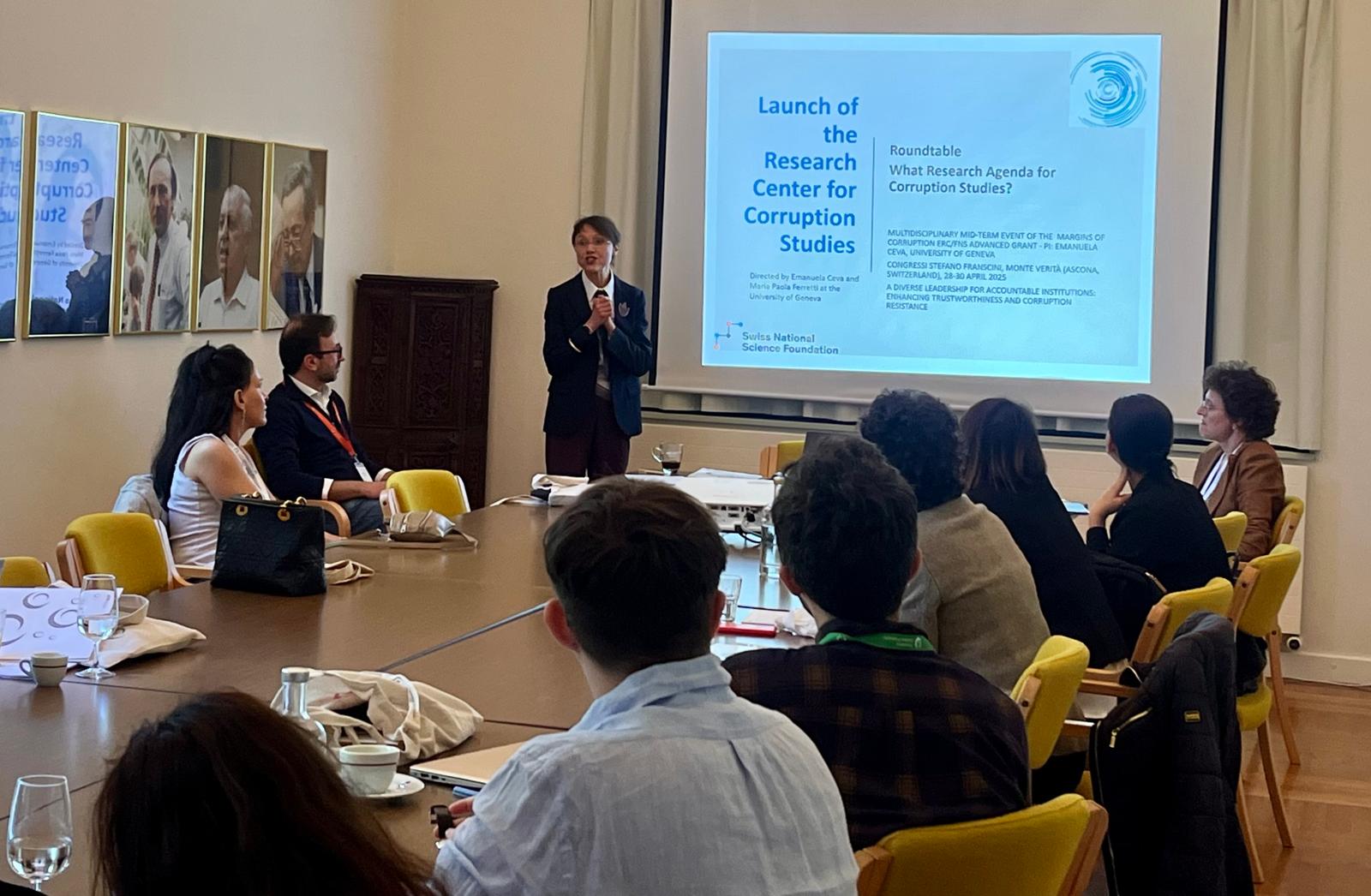
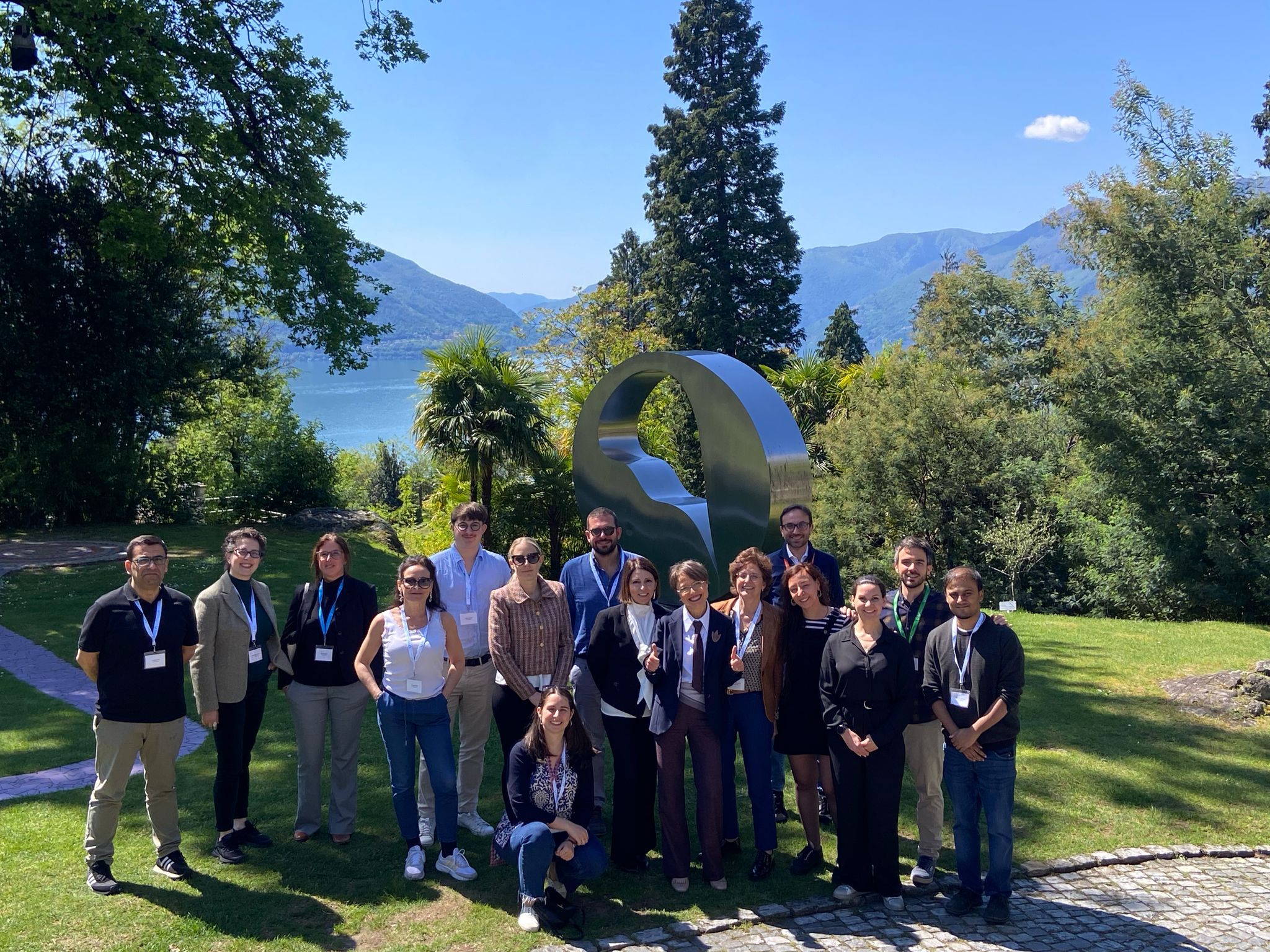
Image 2025-04-30 at 11.25.28.jpeg We are thrilled to announce the launch of the Research Center for Corruption Studies (RCCS) — founded by The Margins of Corruption project PI, Emanuela Ceva, with Maria Paola Ferretti, and based at the University of Geneva. The announcement was made from the stunning Monte Verità, a hilltop gem overlooking Ascona and Lago Maggiore, on the occasion of the multidisciplinary workshop "A Diverse Leadership for Accountable Institutions: Enhancing Trustworthiness and Corruption Resistance".


Image 2025-04-30 at 13.43.44.jpeg