
Publications

A new publication by Emanuela Ceva and Patrizia Pedrini on the American Journal of Political Science: What political theory can learn from conceptual engineering: The case of “corruption”
Available open access here: https://onlinelibrary.wiley.com/doi/epdf/10.1111/ajps.70035

Emanuela Ceva and Matthieu Debief have contributed to the open-access book "Philanthropy: Multidisciplinary Perspectives", edited by Giulia Neri-Castracane and Giuseppe Ugazio.
Their chapter, titled “Philanthropy and Institutional Trust,” explores the question: “Should philanthropy have a role in responding to crises of trust in and within public institutions, and if yes, what role?” They approach this issue by examining the relationship between philanthropy and institutional trust through the lens of public ethics.
https://www.taylorfrancis.com/chapters/oa-edit/10.4324/9781003546986-28/philanthropy-institutional-trust-emanuela-ceva-matthieu-debief?context=ubx&refId=77d2d076-073d-48d4-98cd-50c76e4f5066

A new project publication by Emanuela Ceva and Patrizia Pedrini: The Pro-Office Mindset. Anticorruption Beyond
Legal Instruments published in the Journal of Social Philosophy

A new project publication by Patrizia Pedrini: ‘Caring About Our Own Epistemic Capacities qua Responsible Citizens

The Margins of Corruption PI, Emanuela Ceva, and Maria Paola Ferretti (University of Mainz) have co-authored a new book in Italian on the Ethics of Anticorruption. Central to the book is the idea that anticorruption should be understood as a means to uphold institutional well-functioning and support officeholders in fulfilling their roles, rather than merely a system of legalistic surveillance.


Delving into the phenomenology of corruption and its impacts on the governance of societies, this cutting edge Encyclopedia considers what makes corruption such a resilient, complex, and global priority for study.
Entries include a contribution from Emanuela Ceva and Maria Paola Ferretti on Institutional Corruption.

Valsangiacomo, C. Fighting Political Corruption with the Citizens. Res Publica (2024).
Political Corruption by Emanuela Ceva and Maria Paola Ferretti (2021) presents a deontological account of political corruption, understood as an interactive injustice. The aim of the present contribution is to contextualize the authors’ arguments in relation to democracies and through the lens of democracy theory.
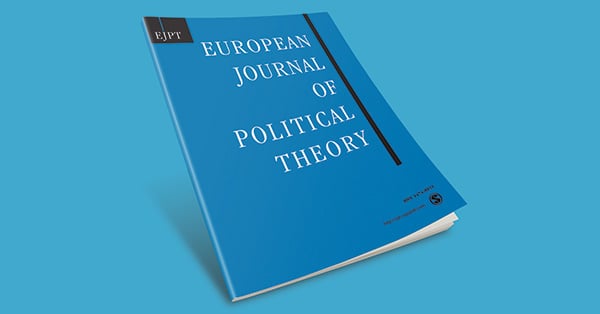
How is political corruption wrong when it undermines the work in progress of public institutional action? Who should bear responsibility for the corruption of public institutions? Emanuela Ceva and Maria Paola Ferretti address these questions in their response to Mark Warren, Daniele Santoro and Cecile Fabre in the European Journal of Political Theory.

A Symposium on Emanuela Ceva and Maria Paola Ferretti's Political Corruption: The Internal Enemy of Public Institutions (Oxford: Oxford University Press, 2021)
Introduction - Emanuela Ceva and Maria Paola Ferretti
The Duty-of-Office Accountability and Democratic Power – Alice el-Wakil
Political Corruption and Democratic Representatives – Chiara Destri

What kind of relation holds between the corruption of an institution and that of the officeholders within in? In this new encyclopedia entry on Institutional Corruption the authors offer an essential critical survey of philosophical theories of institutional corruption as developing teleological (§1), substrate (§2), discontinuity (§3), continuity (§4), impartiality (§5), and democratic (§6) explanations of this dysfunction of public institutions.

What makes public institutions normatively distinctive, if anything? Is there a sense in which the privatisation of the public function corrupts such distinctiveness? If such a sense is there, what exactly makes it worth opposing? These questions offer the coordinates for Chiara Cordelli’s insightful and much needed philosophical discussion of the fast-spreading practical delegation of collectively valuable or useful tasks to private providers.