
CryoGEnic: At the Cutting Edge of Molecular Imaging in Geneva
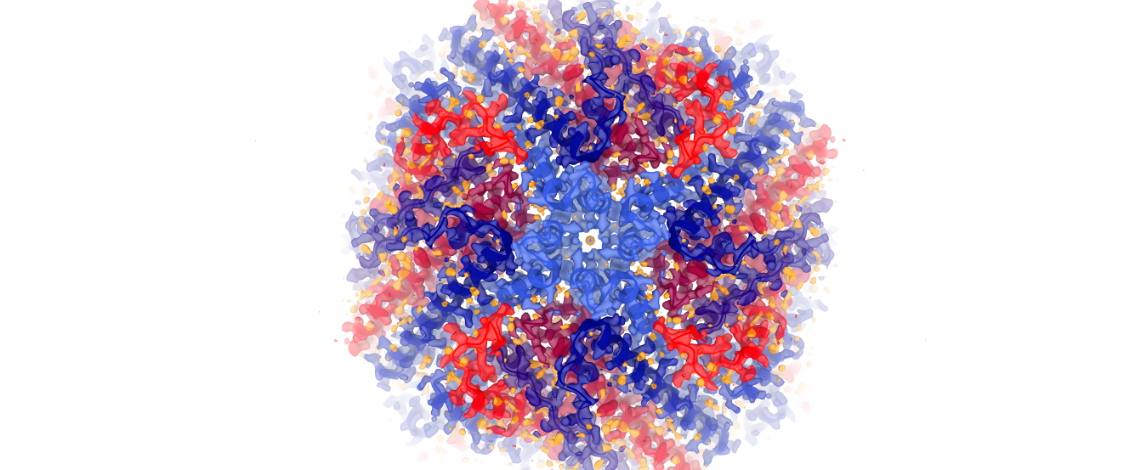
In the past decade, electron microscopy (EM) has developed into one of the most powerful imaging and structure determination method available to date. EM has a long and successful history at the University of Geneva, pioneered by Eduard Kellenberger and co-workers as early as 1945, with the aim to build a Swiss-made industrial electron microscope. In the early 1970s, Jacques Dubochet joined Kellenberger at UNIGE to conduct his PhD on “Contribution to the use of dark-field electron microscopy in biology”. Later work on cryogenic sample preparation for EM analysis eventually led to the Nobel prize jointly awarded to Dubochet in 2017.
In a joint initiative between the Universities of Geneva, Lausanne and Bern, and the EPFL the Dubochet Center for Imaging (DCI) was created in 2021 as a world-class service platform for cryogenic electron microscopy (cryoEM), with facilities established at all sites.
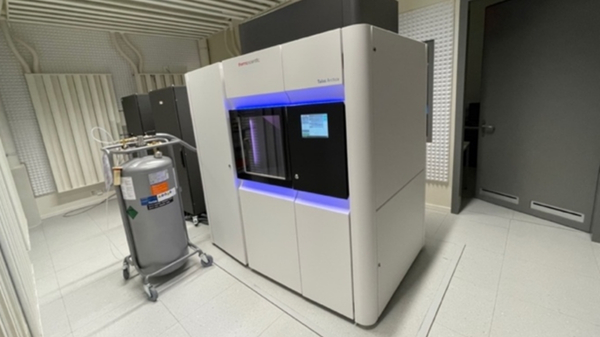
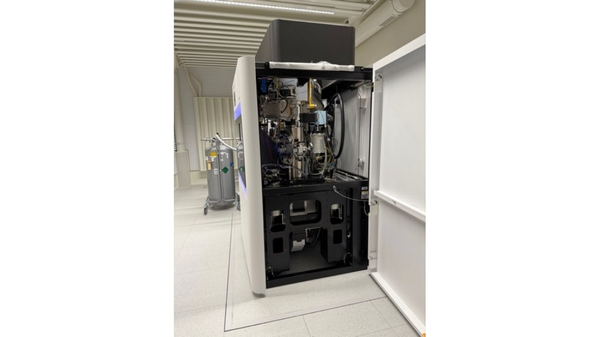
The mission of the DCI Geneva (aka cryoGEnic) is to supply access to instrumentation and expertise at the forefront of electron microscopy. The DCI Geneva is equipped with state-of-the-art microscopes and instruments to study biological molecules, viruses, bacteria, micro-crystals, small organelles, or sections of biological cells and tissues. The facility allows structure determination of biological macromolecules at near-atomic resolution. Cutting-edge expertise is provided by our EM experts Dr. Christoph Bauer, Dr. Andrew Howe, Dr. Sarah Barrass and Dr. Céline Besnard. The team members provide support and feedback at every step of the project pipeline, including experimental design, sample preparation, data collection for single particle analysis (SPA), tomography, and diffraction imaging; through to image processing and atomic model building.
Since the creation of the DCI Geneva, the facility has contributed to the publication of more than 20 scientific papers, including publications in Nature, Cell and Science. The facility serves dozens of groups at the Faculty of Sciences and the Faculty of Medicine and has facilitated numerous intra- and inter-faculty collaborations. Research topics investigated by cryoEM at UNIGE include structure determination of macromolecules involved in cell metabolism, cell division and signaling, DNA rearrangements, structural analysis of organelles, membrane protein biology and many more. Besides, structure-based drug design studies have resulted in the filing of a patent for peptides targeting the µ-opioid receptor to control pain medication.
Future developments at the facility will be manifold. The DCI team will focus on further simplifying structure determination of isolated biological macromolecules such as proteins or protein-nucleic acid complexes and provide teaching courses for data processing. The installation of instruments that enable sample preparation for in situ structure determination by electron tomography is the next big leap.
The DCI Geneva serves the academic, medical and industrial fields in Geneva, Switzerland and all around the world and is looking forward to discuss your research project with you.
Prof. Andreas Boland, Prof. Paul Guichard, Prof. Robbie Loewith
SHARE THIS STORY: