
2 avril 2026: Pr Marco Sandri
12H30
CMU - Auditoire Müller
suivi d'un apéritif
Hôte: Pre Perrine CASTETS
Centre de recherche sur le muscle squelettique et le mouvement (CR2M)
Département de physiologie cellulaire et métabolisme, Faculté de médecine UNIGE
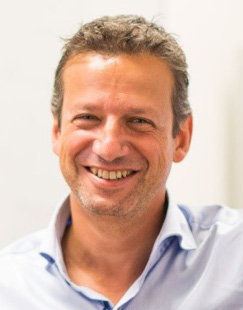
Pr Marco Sandri
MD and Professor of Clinical Pathology, Veneto Institute of Molecular Medicine,
Department of Biomedical Science, University of Padova, Italy
«Decoding the gene networks that control proteostasis during muscle wasting for developing a RNA-based therapeutic approach»
Maintaining the integrity of organelles and proteins despite the cellular stresses that arise from environmental pressure is essential for life. The time-dependent accumulation of cellular damage is widely considered to be the general cause of cellular degeneration and disease onset. Alteration of the protein quality control, called the loss of proteostasis, contributes to impairment of macromolecule and organelle function and is considered among the primary hallmark of aging, morbidity and mortality. Postmitotic tissues such as brain and striated muscles are particularly vulnerable to changes of proteostasis. Marco Sandri and his group have shown that the regulation of protein and organelles turnover is under the control of transcription factors belonging to different signalling pathways.
In the first part, Pr Sandri will describe why physical activity and exercise are beneficial for human health, while sedentary life and inactivity are one of the major detrimental behaviours of industrialized societies that contribute to mortality and morbidity. He has shown that these lifestyles impact on mitochondrial function, bioenergetics and glucose metabolism in skeletal muscles. He will discuss how the shape of mitochondrial network during inactivity regulates signalling pathways that alter mitophagy and promote a secretory pattern to induce tissue senescence and organism premature ageing. He will show how his group screened and identified a novel autophagy regulator gene that is required for a healthy ageing.
In the second part he will particularly focus on the mechanisms that link mitochondrial dysfunction to cancer-induced cachexia, a metabolic syndrome responsible of 30% cancer death. By combining single nucleus (sn) multiomic approach, spatial transcriptomic and human derived neuromuscular organoids (NMOs), Pr Sandri and his group have characterized the cellular and gene networks underpinning cachexia during cancer growth. By integrating the snRNAseq with ATACseq data sets, they identified the transcription factors that are recruited by cancer growth in the different cell types of muscle tissues.
Pr Sandri's findings depicted an unexpected scenario in which almost all the cell types activated a similar catabolic signature and synergised to promote a pro-catabolic anti-neurotrophic environment. By having decoded which transcription factors are recruited, he then developed an RNA-based therapeutic approach to block the most relevant ones. By targeting FoxO1 and FoxO3 transcription factors and the ubiquitin ligase, TRIM63, his group reverted the catabolic signature in murine models of cancer cachexia as well as in patients' derived neuromuscular organoids. These findings pave the way for an innovative RNA multi-target therapy that matches with the concept of precision medicine.
Biography
Marco Sandri is Full Professor of Clinical Pathology and was Chair of the Department of Biomedical Sciences at University of Padova and Chair of the Myology Center, University of Padova. He has an honorary position as Adjunct Professor at McGill University, Montreal, Canada from 2011. He received his M.D. degree and the residency in Clinical Pathology at the University of Padova. He carried out postdoctoral work in Alfred L Goldberg lab at Harvard Medical School, Boston- He is particularly interested in understanding the signaling pathways that control muscle mass with a focus on the role of the ubiquitin-proteasome and autophagy-lysosome systems. He was the first to show a transcriptional-dependent regulation of autophagy and protein breakdown (Cell, 2004; Cell Metabolism, 2007; Nat Communications 2015). He showed for the first time that autophagy impairment contributes to muscle wasting in inherited muscle disease (Nat. Med., 2010) and promotes premature ageing (Cell Metabolism 2009, Nature 2016). His research has provided insights into mechanisms of regulation of these proteolytic systems and to metabolic adaptations to physical activity (Cell Metabolism 2017a; Cell Metabolism 2017b; Nat Cell Biol. 2015). He showed that mitochondrial dynamics is fundamental for the regulation of muscle mass and that impairment of fission or fusion activates different signaling pathways and muscle phenotypes (EMBO J. 2010; Nat Communications 2019; Cell Metabolism; 2017b). He discovered and characterized new genes involved in the regulation of the ubiquitin proteasome system (Nat Genetics 2013; Sci Transl Med. 2021) and autophagy lysosome (J Clinical Investigations, 2024; Nat Communications 2023).
In 2005 and 2010 he received the prestigious Dulbecco Telethon career award prize. He got the prestigious ERC consolidator (2012) and Advanced grant (2025) awards, he has been panel member of ERC consolidator program and reviewer for the European Commission (ERC). From 2021 to present he got the “Highly Cited Researcher” award from CLARIVATE which recognizes the true pioneers in their fields over the last decade, demonstrated by the production of multiple highly-cited papers that rank in the top 1% by citations for field and year in the Web of Science™. In 2025 he got the Highly Ranked Scholar award by ScholarGPS. Highly Ranked Scholars™ are the most productive authors (by number of publications) whose works demonstrate exceptional impact (citations) and outstanding quality (h-index). These scholars hold a ScholarGPS® Rank within the top 0.05% in any given Field, Discipline, or Specialty. In 2023 he received the Alfredo Margreth prize for the Muscle Biology and Physiopathology conferred by National Academy of Lincei, the oldest scientific Academy in the world. From 2023 to present he got Biology and Biochemistry Leader Award for 2023 by Research. Com. His work has obtained more than 43.000 citations (Scopus) and he has an h-index of 88. For his contribution to the regulation of protein breakdown, Marco Sandri was invited to give lectures in outstanding research centers, including Harvard Medical School, the Imperial College of London, the Institut Pasteur in Paris, the Oxford University, the Medical Research Council in Cambridge, the McGill University in Montreal, the University of Pennsylvania of Philadelphia, and many others
2 avr. 2026