
GCIR Seminar on Microbiology and Immunology of Respiratory Tract Infections 16 May 2025
The GCIR scientific seminars are designed for researchers and biomedical students and focus on both clinical and fundamental research on specific topics related to infection, immunology and inflammation. We are grateful to our seminar sponsors, MesenFlow Technologies, Light Chain Bioscience and AMAL Therapeutics, for their invaluable support.
We are pleased to invite you to our upcoming seminar on Microbiology and Immunology of Respiratory Tract Infections!
CMU - Boymond Auditorium 12 to 13h45
Friday 16 May 2025
11h30 Snacks for all the participants!
12h00 "Aging and respiratory infections: from cellular senescence to dysfunctional gut microbiota"
Pr François TROTTEIN, Professor and Director of Research at the CNRS, Team Influenza, Immunity & Metabolism, CIIL - Center for Infection and Immunity of Lille, Lille Nord de France University, Pasteur Institute of Lille.
12h35 "Uncovering mechanisms of host-pathogen interactions using CRISPR interference"
Pr Jan-Willem VEENING, Professor and Director of the Laboratory of Systems and Synthetic Microbiology, Department of Fundamental Microbiology, University of Lausanne.
13h10 "Personalised aerosolised bacteriophage treatment of a chronic lung infection due to multidrug-resistant 'Pseudomonas aeruginosa'"
Pr Christian VAN DELDEN, Professor at the Department of Medicine, Faculty of Medicine, University of Geneva, Responsible for the Infection and Transplantation Unit, Infectious Disease Service, Geneva University Hospitals, HUG.
There will be time for scientific discussions and networking before and after the seminar! Join us at 11:30 for a snack before the seminar and afterwards for a coffee!
Organised by the Geneva Centre for Inflammation Research, Faculty of Medicine, University of Geneva.
About the speakers:

Prof. François TROTTEIN
Professor and Director of Research at the CNRS, Team Influenza, Immunity & MetabolismCIIL - Center for Infection and Immunity of Lille, Lille Nord de France University, Pasteur Institute of Lille.
Biography
François Trottein is heading a research group at the Pasteur Institute, Lille. The team has strong expertise in innate immunity and respiratory viral infections, including IAV and SARS-CoV-2, with a particular focus on ageing. The team has extensive expertise in the gut-lung axis and in cellular senescence. The goal is to develop new strategies for optimally triggering mucosal immunity and/or attenuating lung damage caused by respiratory viruses.
Lecture
Aging and respiratory infections: from cellular senescence to dysfunctional gut microbiota
Older adults are particularly susceptible to respiratory infections. This greater susceptibility is mainly related to impairments in pulmonary functions (poor mucociliary clearance, a weak lung barrier, and slow tissue repair) and immune responses in the ageing lung. Immunosenescence and inflammageing are key features of the ageing immune system, wherein an accumulation of senescent cells participates in this decline and favours an inflammatory phenotype. In parallel, in aged individuals, alteration of the gut microbiota functionality participates in many diseases. In this presentation, he will discuss the potential role of age-related cellular senescence and gut dysbiosis in respiratory infections.

Prof. Jan-Willem VEENING
Professor and Director of the Laboratory of Systems and Synthetic Microbiology
Department of Fundamental Microbiology, University of Lausanne.
Biography
Jan-Willem Veening obtained his PhD in molecular genetics from the University of Groningen, the Netherlands, and received postdoctoral training at the Centre for Bacterial Cell Biology, Newcastle University, UK. In 2009, he established his lab at the Groningen Biomolecular Sciences and Biotechnology Institute. In 2016 he moved to the University of Lausanne as full professor at the Department of Fundamental Microbiology as head of the Laboratory of Systems and Synthetic Microbiology. He was a visiting scholar at UC San Diego in 2023 and since September 2023 has been the director of the Department of Fundamental Microbiology in Lausanne. The Veening lab uses systems and synthetic biology approaches to study chromosome segregation, mechanisms of antibiotic resistance development, and gene expression in important opportunistic human pathogens such as Streptococcus pneumoniae, Staphylococcus aureus and Group A Streptococcus.
Veening published >120 papers in well-known journals including Cell, Cell Host & Microbe, PNAS, Science and Nature Microbiology. He received several prestigious grants (e.g. Veni, Vidi, ERC StG, ERC CoG), became EMBO Young Investigator in 2014, joined the Young Academy of the Royal Netherlands Academy of Arts and Sciences in 2015 and was elected fellow of the European Academy of Microbiology in 2024. Findings from the lab have been patented and led to the foundation of i-Seq Biotechnology in 2024 to advance novel, broad-spectrum, vaccines and therapeutics, on which Veening serves as chair of its scientific advisory board.
Lecture
Uncovering mechanisms of host-pathogen interactions using CRISPR interference
Streptococcus pneumoniae and Staphylococcus aureus are major human pathogens that also exist as commensals in the nasopharynx, with unclear mechanisms governing their transition to pathogenic states. Virulence factor variability, such as capsule production, is linked to disease outcomes, but the underlying regulatory complexity limits understanding. To address this, we employed genome-wide CRISPRi-seq screens targeting all genes in multiple clinical strains of both species to assess gene essentiality in vitro and in vivo. This approach identified conserved essential genes and infection-relevant virulence factors, leading to the development of a promising pneumococcal vaccine that engages airway CD4⁺ Th17 cells. These findings highlight the power of CRISPRi-seq for unbiased discovery of novel antibiotic and vaccine targets.
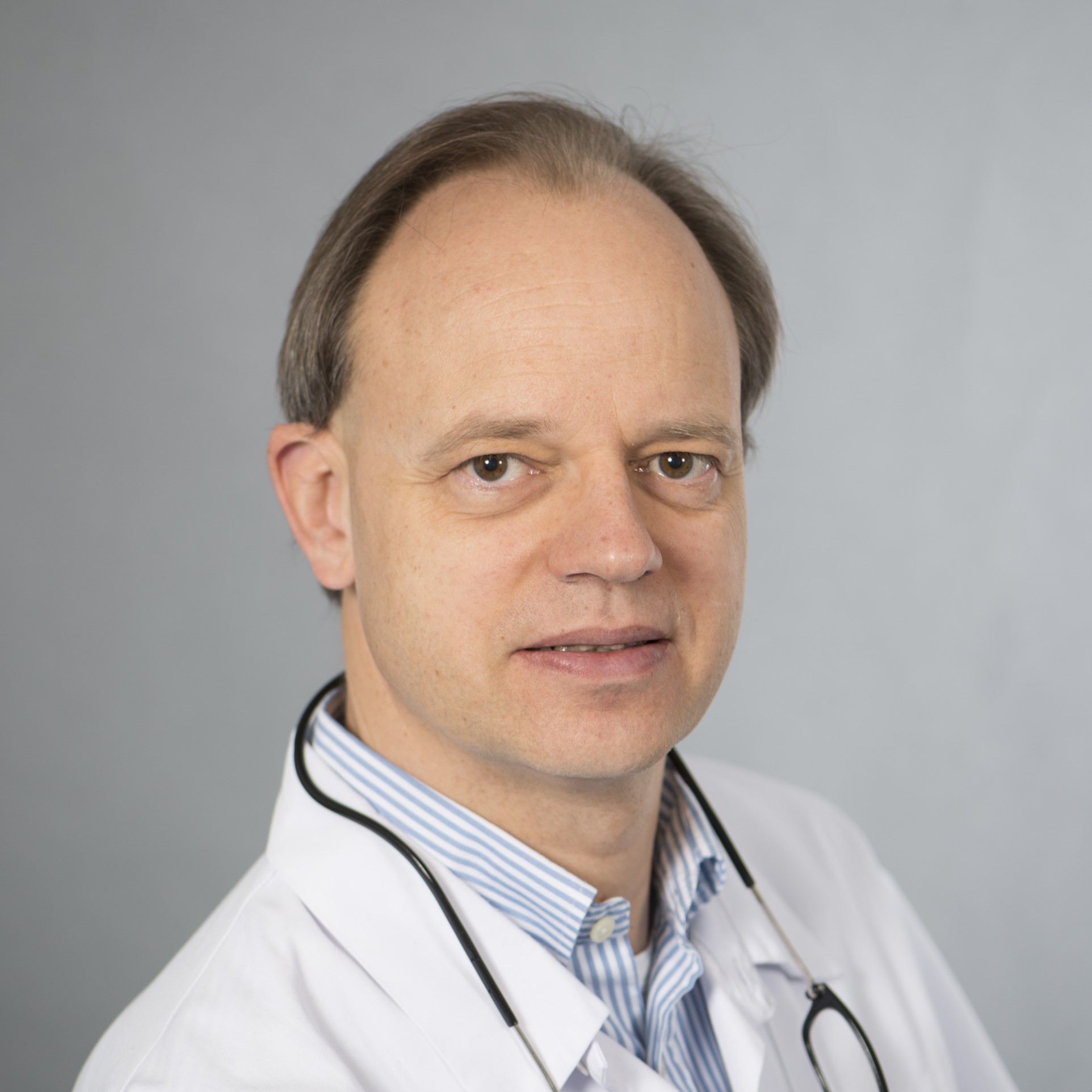
Prof. Christian VAN DELDEN
Professor at the Department of Medicine, Faculty of Medicine, University of Geneva, Responsible for the Infection and Transplantation Unit, Infectious Disease Service, Geneva University Hospitals, HUG.
Biography
Professor Christian van Delden, born in 1962 in Gronau (Germany), graduated from the Faculty of Medicine in Geneva in 1988. He specialised in Internal Medicine and Infectious Diseases, with clinical training at the Geneva University Hospitals and a postdoctoral fellowship at the University of Rochester, New York. He holds FMH titles in both specialties and leads a research group in microbiology at the University of Geneva.
Appointed Full Professor in 2018, he has been Deputy Chief Physician of the Infectious Diseases and Transplant Departments since 2020 and has led the Transplantation Infectiology Unit since 2015. A co-founder of the Swiss Transplant Cohort Study (STCS), he has served on its Executive Committee since 2006 and chaired its infectiology working groups. He was also active in Swiss Transplant and the Swiss Society of Infectiology, where he oversaw medical education from 2007 to 2023.
Prof. van Delden has published over 250 scientific articles. His clinical research focuses on infections in transplant patients, while his fundamental research explores bacterial virulence modulation and the development of new treatments for multi-resistant bacteria, including phage therapy and microbiome-targeted strategies. He has been a member of the Geneva University Hospitals Board since 2014.
Lecture
Personalised aerosolised bacteriophage treatment of a chronic lung infection due to multidrug-resistant Pseudomonas aeruginosa
In this talk, he will present a case of personalised phage therapy in a patient with Kartagener syndrome and a chronic, life-threatening multidrug-resistant Pseudomonas aeruginosa lung infection. He will describe how repeated aerosolised phage treatments, tailored to the patient’s bacterial strain, led to significant clinical improvement. He will also discuss phage replication, bacterial evolution, and resistance tracking, showing that even without full eradication, phage therapy can be an effective strategy against complex, drug-resistant infections.
6 Feb 2025