
Controlling phagosome lipids for better antigen production
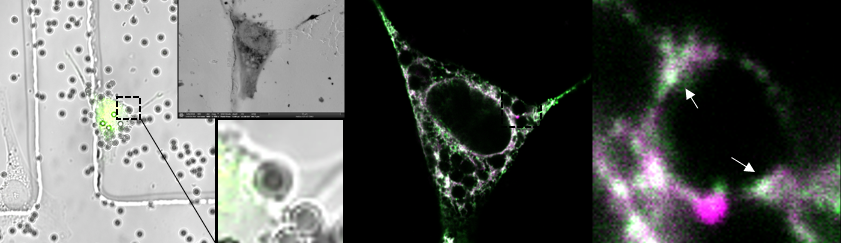
Phagocytosis is process through which certain types of immune cells called phagocytes ingest and destroy foreign material such as bacteria, fungi, and even mutated cancer cells into a newly formed organelle called phagosome. A primary goal is to kill, eliminate and recycle what is taken up, and this happens through phagosome maturation where acidification, delivery of digestive enzymes, and toxic oxidants will help to break things down. However, a second goal is to alert the adaptive immune system and set in motion a longer lasting immune response specific to the offending entity. This happens in large part through what is called antigen presentation, where pieces of the ingested material (antigens) are kept, linked to molecules called MHC (or HLA in humans), and displayed to T cells and B cells. For this second process to be efficient phagosome maturation needs to be tightly controlled so that when break-down happens, enough material is still preserved to be presented.
Sec22b is a protein first known for its role in fusion of vesicles in the early secretory pathway and was shown to be important for restraining phagosome maturation, though exactly how remained unclear. Part of the trouble is that most studies assumed fusion of early secretory vesicles was delivering something, but what exactly was leading to diminished antigen destruction was unknown. When researchers found that in neurons Sec22b didn’t always fuse membranes, and instead could just hold or tether membranes from two organelles in a structure called a “membrane contact site” this provided an important clue. In contact sites, membranes are held so close that lipids can be extracted and transferred from one to the other by specialized lipid transfers proteins, but the membranes usually do not fuse.
In this study, published in Communications Biology and led by GCIR Professor Paula Nunes-Hasler, the authors show that Sec22b not only tethers contact sites with phagosomes, it also interacts with a lipid transfer protein called ORP8 that removes the lipid phosphoinositol-4-phosphate PI(4)P from the phagosomes. PI(4)P is a lipid known to be important for docking lysosomes, organelles filled with digestive enzymes, to phagosomes. Thus, by tethering membranes to phagosomes in contact sites, Sec22b controls the lipid surface of the phagosome and prevents excessive delivery of digestive enzymes until the time is right, which helps preserve material for antigen presentation.
Read the full article: https://www.nature.com/articles/s42003-023-05382-0
This work was funded by The Sir Jules Thorn Overseas Charitable Trust, Novartis Foundation, Professor Dr. Max Cloëtta Foundation, Swiss National Science Foundation, Schmidheiney Foundation, as well as the FSER and the FVA.
Why is this important?
Many pathogens, such as those causing tuberculosis and Legionnaire’s disease, evade the immune system by preventing phagosome from maturing, so they can live comfortably protected inside a phagocyte. Cancer cells also evade destruction by the immune system in part by decreasing the ability of phagocytes to efficiently present their mutated antigens. Thus, a greater understanding of the mechanisms involved in controlling phagosome maturation and antigen processing can provide new insights and molecular targets in the development of more effective therapies against these elusive diseases.
6 Oct 2023