
[1076] Urinary tract infections, antimicrobial resistance, and antibiotic treatment optimisation
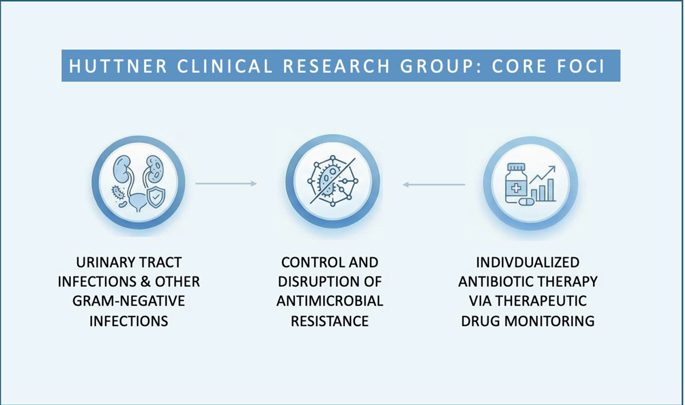
Bacteria are becoming ever more resistant to antibiotics, while new antibiotics with novel mechanisms of action are scarce. Urinary tract infections (UTI) are the most common bacterial infection, and people who suffer from recurrent UTI tend to carry the most resistant bacteria.
Our group conducts observational studies and interventional trials to better understand host-pathogen interactions in UTI and how to optimize antibiotic therapies for individual patients while reducing the emergence of antimicrobial resistance (AMR) for all patients.
Current research projects include the observational International UTI Cohort, the randomized, double-blind placebo-controlled trial assessing combination antibiotic therapy for gram-negative sepsis (CAVIFOS), and retrospective studies evaluating the association between subtherapeutic antibiotic concentrations and the emergence of AMR.