
Cell Therapy & Musculoskeletal Disorders
Our research team is dedicated to basic and translational studies of osteoarthritis, led by Prof. Didier Hannouche, and to the study and characterisation of human muscle stem cells (MuSC), led by Dr. Thomas Laumonier.
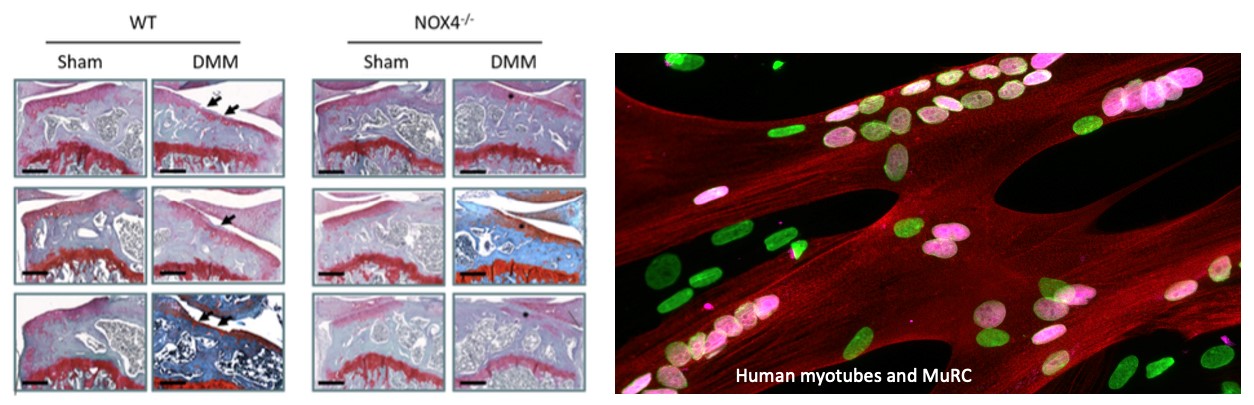
In osteoarthritis, articular cartilage undergoes progressive degradation in which low-grade inflammation may play a central role, in particular through a mechanism related to oxidative stress, exposure to reactive oxygen species (ROS) and alterations in chondrocyte metabolism. We have shown in vivo that ROS production by chondrocytes via NADPH isoform 4 (NOX4) plays a detrimental role in the pathogenesis of osteoarthritis. Our research focuses on the regulatory mechanisms of osteoarthritis pathophysiology by NOX4. First, we are investigating the impact of synovial inflammation in osteoarthritis and the role of NOX4 in its regulation. Secondly, we will investigate the changes in chondrocyte metabolism in osteoarthritis and the dependence of these changes on NOX4. We are particularly interested in the role of the switch between glycolysis and the Krebs cycle, as well as lipid beta-oxidation.
The laboratory also has extensive experience in the isolation, culture, characterisation and transplantation of human muscle stem cells (MuSCs). Our research is primarily focused on the development of cell therapy strategies for the treatment of muscle diseases. However, the procedures required to isolate human MuSCs prior to their characterisation and/or transplantation result in their rapid exit from quiescence and induce significant gene modulations that reduce their regenerative capacity. We have shown that human muscle reserve cells (MuRCs) generated in vitro remain in a quiescent state, can be reactivated and have significant regenerative capacity after transplantation. Our ongoing studies aim to characterise the molecular signature and metabolic profile of human MuRCs and to identify novel mechanisms regulating their function in vitro and in vivo.