
Genetics of Type 1 and Type 2 Diabetes
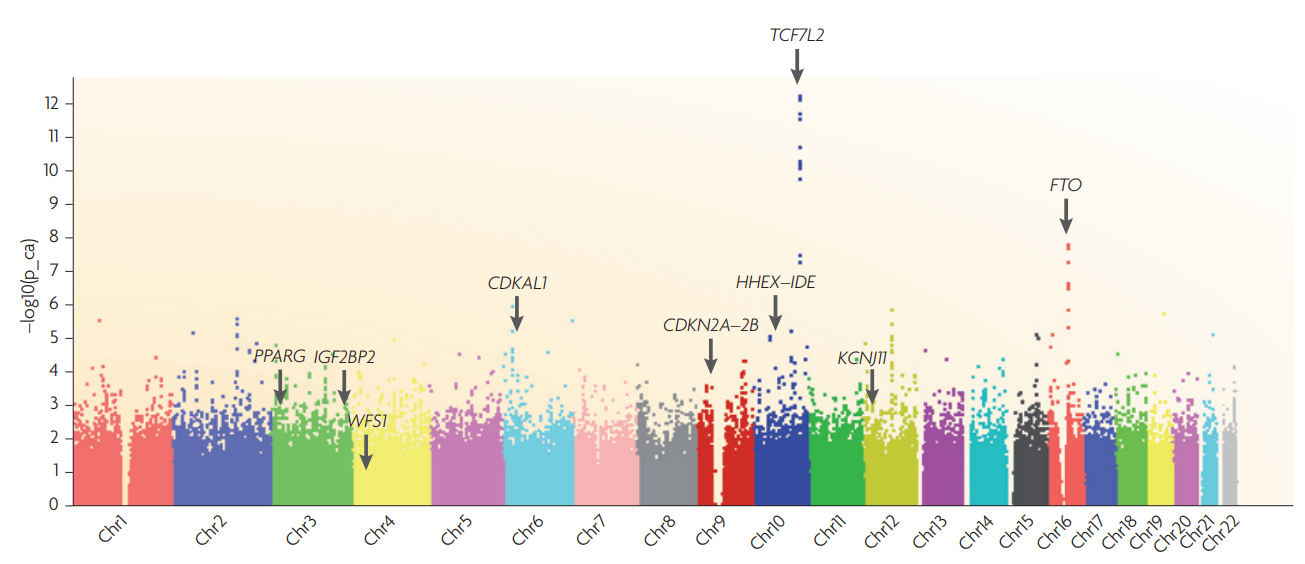
Recent advances in genetics have demonstrated a strong link between genetic background and the risk of Type 1 and Type 2 diabetes. Building on this foundation, our research aims to further elucidate how genetics relates to disease risk. By employing statistical approaches, we seek to decipher new relationships and uncover novel applications that can transform personalised healthcare. Understanding the genetic underpinnings of diabetes not only enhances our knowledge of disease mechanisms but also paves the way for innovative interventions and tailored treatment strategies.
RESEARCH AIMS
Our research team is committed to a comprehensive exploration of the genetic underpinnings of Type 1 and Type 2 diabetes through a multifaceted scientific approach. Firstly, we aim to identify and characterise rare genetic variants that significantly influence the pathogenesis and progression of these conditions. Secondly, our investigations seek to quantify the impact of adiposity on the risk of developing Type 1 and Type 2 diabetes, thereby elucidating the complex interplay between metabolic factors and genetic susceptibility. Furthermore, we are dedicated to enhancing the precision of screening protocols for Type 1 diabetes by integrating Genetic Risk Scores and familial history data, which promises to facilitate earlier diagnosis and more effective intervention strategies. Through these concerted research efforts, we aspire to contribute valuable insights to the field of diabetes genetics, ultimately advancing our understanding and management of these pervasive metabolic disorders.
CORE EXPERTISE
Whole GWAS, Polygenic risk score, Mendelian Randomisation, Screening optimisation, Big data, Biobanks, Bio-informatics.
SELECTED PUBLICATIONS
· Ferrat, L.A., Templeman, E.L., Steck, A.K. et al. Type 1 diabetes prediction in autoantibody-positive individuals: performance, time and money matter. Diabetologia (2025). https://doi.org/10.1007/s00125-025-06434-2
· Hawkes, G., Beaumont, R.N., Tyrrell, J. et al. Genetic evidence that high BMI in childhood has a protective effect on intermediate diabetes traits, including measures of insulin sensitivity and secretion, after accounting for BMI in adulthood. Diabetologia 66, 1472–1480 (2023). https://doi.org/10.1007/s00125-023-05923-6
· Martin S, Tyrrell J, Thomas EL, Bown MJ, Wood AR, et al Disease consequences of higher adiposity uncoupled from its adverse metabolic effects using Mendelian randomisation. Elife. 2022 Jan 25;11:e72452. doi: 10.7554/eLife.72452. Erratum in: Elife. 2022 May 18;11:e80233. doi: https://doi.org/10.7554/eLife.80233. PMID: 35074047; PMCID: PMC8789289.
· Ferrat, L.A., Vehik, K., Sharp, S.A. et al. A combined risk score enhances prediction of type 1 diabetes among susceptible children. Nat Med 26, 1247–1255 (2020). https://doi.org/10.1038/s41591-020-0930-4
· Timothy M. Frayling et al., A Common Variant in the FTO Gene Is Associated with Body Mass Index and Predisposes to Childhood and Adult Obesity.Science316,889-894(2007).DOI:10.1126/science.1141634
 3 Jul 2025