
Charna Dibner
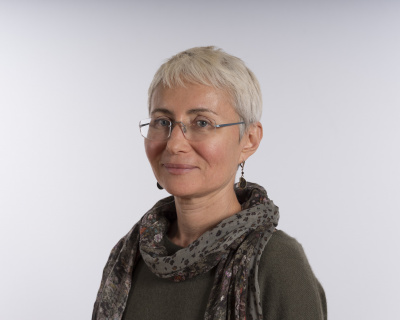
Charna Dibner completed her PhD in Medical Sciences in 2002 under the supervision of Professor Dale Frank in the Department of Biochemistry at the Technion Israel Institute of Technology, headed by Nobel Laureate Professor Avram Hershko. She completed her postdoctoral studies in the Department of Molecular Biology at University of Geneva, with Professor Ueli Schibler, a world leading expert in circadian rhythms. In 2009, she was appointed as a Group Leader (Biologist) of the Laboratory of Circadian Endocrinology in the Division of Endocrinology, Diabetes, Hypertension and Nutrition. Charna defended her Private Docent thesis in 2014, and she was appointed Associate Professor in 2021.
The reasearch in the Dibner lab has been funded by Swiss National Science Foundation, European Foundation of Studies of Diabetes (EFSD), Swiss Cancer League, ISREC Foundation, Leenaards Fondation, Velux Foundation, the Ligue Genevoise pour la lutte contre le Cancer, the Bo Hjelt Foundation, and many more competitive grants and awards. At present, the international team led by Dr. Dibner keeps developing basic, translational and clinical research focusing on the implication of molecular circadian oscillators in metabolic diseases, including obesity and diabetes.
RESEARCH AIMS
Translational chronobiology and chronomedicine
Circadian rhythms govern a wide range of biological processes in most light-sensitive organisms. Regulated by internal clocks, these approximately 24-hour cycles influence key functions such as metabolism. An increasing body of research highlights a strong link between circadian disruption and metabolic diseases, including obesity and type 2 diabetes.
Dr Dibner’s team is dedicated to uncovering the molecular underpinnings of these biological rhythms in various peripheral tissues, both in rodents and humans, under physiological and pathological conditions. The team has developed an innovative system that enables real-time, long-term monitoring of circadian gene reporter activity in primary human cells derived from multiple tissues. This approach, applied at both the population and single-cell levels, allows them to investigate the role of oscillators in pancreatic α- and β-cells, and to study the impact of glucose metabolism on these mechanisms in both mice and humans.
Their work also extends to other metabolically active tissues, such as skeletal muscle and adipose tissue, with a focus on their function in the context of insulin resistance. In parallel, the team explores the circadian rhythms of enteroendocrine cells using 3D organoid models, aiming to better understand the role of intestinal clocks and their involvement in the secretion of GLP-1, a key hormone in energy metabolism.
Finally, the team investigates the interactions between circadian clocks and cancer. By characterising the molecular composition of clocks in the thyroid, parathyroid, and lung, they seek to elucidate their role in tumour development and open new avenues for the diagnosis and treatment of clock-associated cancers.
In a world where metabolic diseases and cancers are on the rise, Dr Dibner’s research aims to deepen our understanding of the biological clock and its impact on health, potentially paving the way for novel therapeutic strategies.
ADDITIONAL RESOURCES
Dibner's lab webpage at the Surgery Department
Dibner's lab webpage at the Diabetes Centre