
Nutrition and Chronobiology
Numerous physiological and metabolic processes, including glucose homeostasis, exhibit a 24-hour oscillatory pattern governed by circadian rhythms, under the influence of the central clock located in the suprachiasmatic nuclei of the hypothalamus and entrained by external Zeitgebers (in German, literally the “time giver” or “time teller”). Light exposure represents the predominant Zeitgeber for the central clock, which in turn sends downstream signaling to peripheral oscillators situated in organs, thus ensuring temporal coordination of physiological processes across nearly all tissues and cells. Eating time is a key synchronizer for peripheral clocks in metabolic organs, such as the liver clocks.
Disruptions to this system can occur due to various features of modern lifestyle, such as exposure to artificial light at night, insufficient or irregular sleep patterns, late-night food intake, or shift work. Such disturbances can lead to circadian misalignment, which has been recognised as one of the contributing factors in the development of type 2 diabetes, cardio-metabolic, inflammatory and mental diseases. Our research focuses on how the appropriate timing of meals and other behavioural factors could reset the altered circadian rhythms for the prevention and management of cardiometabolic diseases, including diabetes.
RESEARCH AIMS
- Testing time-restricted eating and other intermittent fasting strategies targeting meal timing to improve metabolic health
- Assessing the interactions between meal timing, exercise timing and glucose control in adults with or without pre-diabetes, personalised to their chronotype
- Studying how night shift work and irregular schedules impact metabolic health to identify and evaluate targeted interventions to mitigate associated risks
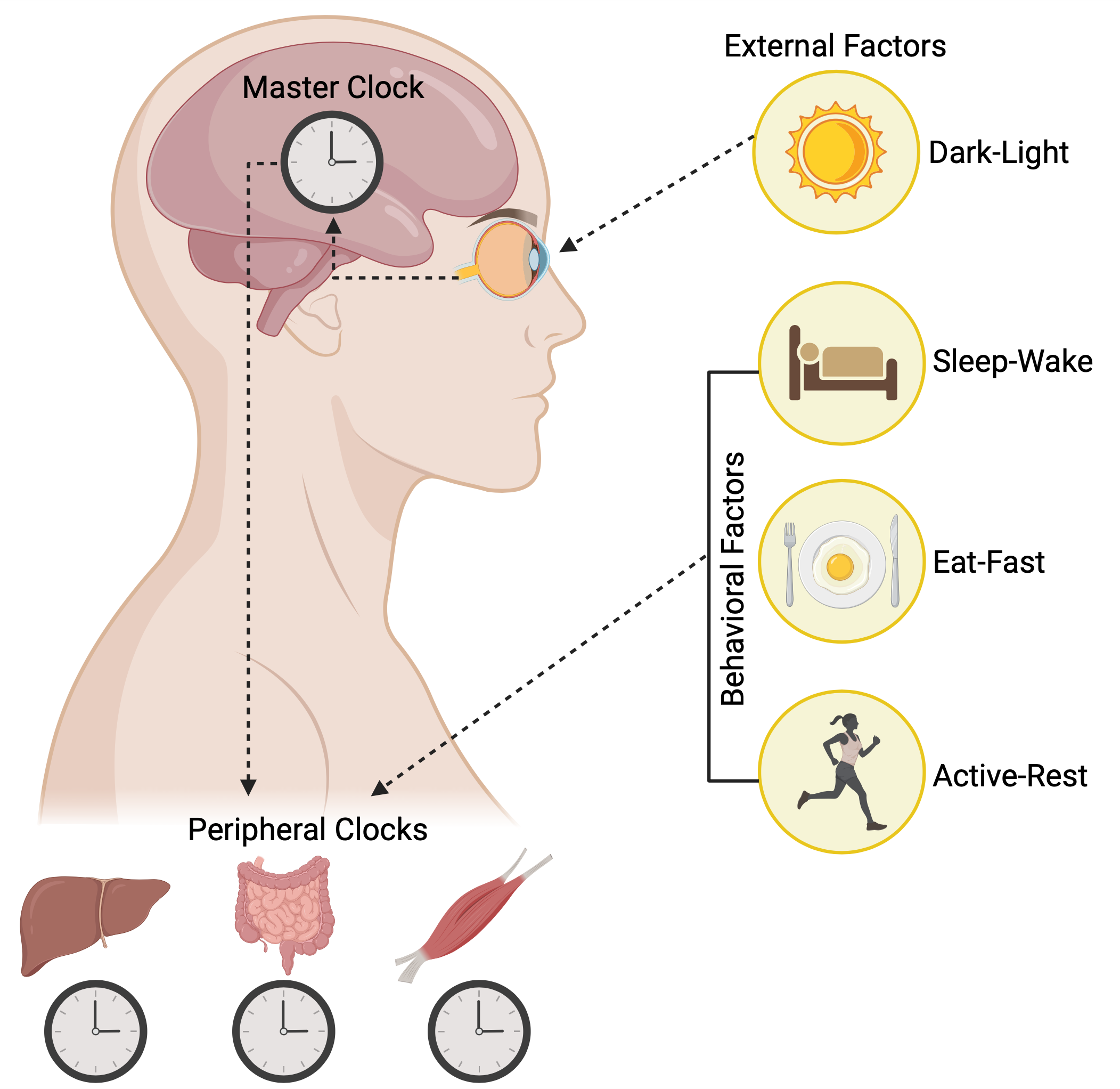
Our research aims to explore how the timing of behavioural factors such as meals, exercise and light exposure can support the prevention and management of cardiometabolic diseases, including type 2 diabetes.
CORE EXPERTISE
Intermittent fasting, Chronotype, Randomised controlled trials, Wearable devices, Diabetes management, Nutrition and chronobiology, Weight loss and body composition.
SELECTED PUBLICATIONS
- Hartmeyer, S. L., Phillips, N. E., Jassil, F. C., Joris, C., Dibner, C., Collet, T.-H., Andersen, M. Multi-Wearable Approach for Monitoring Diurnal Light Exposure and Body Rhythms in Nightshift Workers. Acta Physiologica, 2025, 241(7):e70069. https://doi.org/10.1111/apha.70069
- Phillips, N. E., Mareschal, J., Biancolin, A. D., Sinturel, F., Umwali, S., Blanc, S., Hemmer, A., Naef, F., Salathé, M., Dibner, C., Puder, J. J., Collet, T.-H. The metabolic and circadian signatures of gestational diabetes in the postpartum period characterised using multiple wearable devices. Diabetologia, 2025, 68(2):419–432. https://doi.org/10.1007/s00125-024-06318-x
- Phillips, N. E., Collet, T.-H., Naef, F. Uncovering personalized glucose responses and circadian rhythms from multiple wearable biosensors with Bayesian dynamical modeling. Cell Reports Methods, 2023, 3(8):100545. https://doi.org/10.1016/j.crmeth.2023.100545
- Papageorgiou, M., Biver, E., Mareschal, J., Phillips, N. E., Hemmer, A., Biolley, E., Schwab, N., Manoogian, E. N. C., Gonzalez Rodriguez, E., Aeberli, D., Hans, D., Pot, C., Panda, S., Rodondi, N., Ferrari, S. L., Collet, T.-H. The effects of time-restricted eating and weight loss on bone metabolism and health: a 6-month randomized controlled trial. Obesity (Silver Spring, Md.), 2023, 31 Suppl 1:85–95. https://doi.org/10.1002/oby.23577
- Phillips, N. E., Mareschal, J., Schwab, N., Manoogian, E. N. C., Borloz, S., Ostinelli, G., Gauthier-Jaques, A., Umwali, S., Gonzalez Rodriguez, E., Aeberli, D., Hans, D., Panda, S., Rodondi, N., Naef, F., Collet, T.-H. The Effects of Time-Restricted Eating versus Standard Dietary Advice on Weight, Metabolic Health and the Consumption of Processed Food: A Pragmatic Randomised Controlled Trial in Community-Based Adults. Nutrients, 2021, 13(3):1042. https://doi.org/10.3390/nu13031042
IN THE NEWS
-
University of Geneva Press release, November 2024, Technological shift unveils impact of gestational diabetes (in French and English)
Only in French:
- Magazine Générations, avr. 2024, entretien « Le Monde de Martina – J’ai testé pour vous… Le jeûne intermittent »
- La Tribune de Genève, avr. 2024, entretien « Le jeûne intermittent, une cause de risque cardiovasculaire ? » sur la controverse d’un poster de congrès de l’AHA et la couverture médiatique
- RTS La 1ère, Le Point J, avr. 2024, entretien avec Julie Kummer « Le jeûne intermittent, c'est bien ou pas ? » sur la controverse générée par un poster de l’AHA et ses résultats alarmants
- Le Temps, mars 2024, entretien « Le jeûne intermittent augmente-t-il vraiment le risque de mourir d’une maladie cardiovasculaire ? » sur la controverse d’un poster de congrès de l’AHA
- Le Matin Dimanche, 24 Heures & Tribune de Genève, sept. 2023, entretien « Le jeûne intermittent a fait ses preuves »
- Radio RTS La 1ère, On en parle, sept. 2023, entretien avec Laurence Froidevaux et Séverine Chedel, diététicienne, pour un « Guichet: le jeûne »
- Le Blick Romandie, juil. 2023, entretien « Pourquoi nous prenons autant de poids pendant les vacances »
- Magazine T, supplément hebdomadaire du journal Le Temps, mars 2023, entretien sur la chrononutrition « À la bonne heure »
- Le Temps, mars 2023, entretien « A l’EPFL, un jeûne d’une semaine est proposé aux étudiants »