Alan Carleton
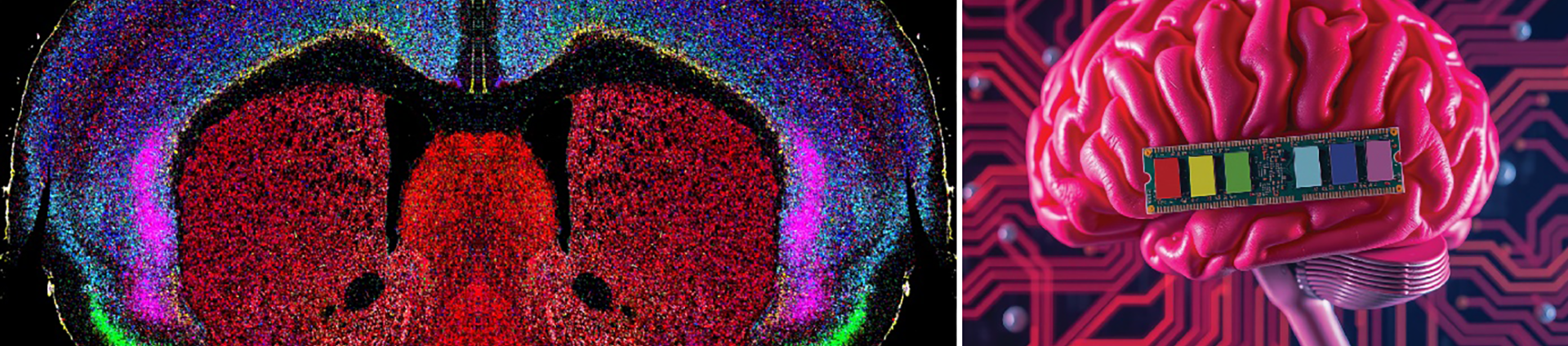
Alan Carleton is a full professor in the Department of Basic Neurosciences at UNIGE. His research focuses on the cellular mechanisms and neural networks underlying sensory perception, working memory and cognitive functions, with a particular focus on the claustrum and its connections to the prefrontal cortex. In recent years, he has shifted his focus to studying alterations in neural coding in the context of psychiatric disorders. This work aims to better understand how neural circuit dysfunction can lead to complex pathologies, particularly schizophrenia, and to identify the neural basis of human behaviour.
Alan Carleton's laboratory takes a multidisciplinary approach combining functional neuroanatomy and behaviour, as well as transcriptomic and electrophysiological approaches, to explore the interactions between sensory signals and cognitive or emotional states. Fascinated by the brain's ability to integrate various stimuli to generate appropriate responses, Alan Carleton is particularly interested in neural imbalances that can lead to mental health disorders. Through his research, he hopes to contribute to deciphering the complex mechanisms that link sensations, emotions, cognition and behaviour, while opening up prospects for new therapeutic strategies.
Cognitive dysfunction in psychiatric disorders
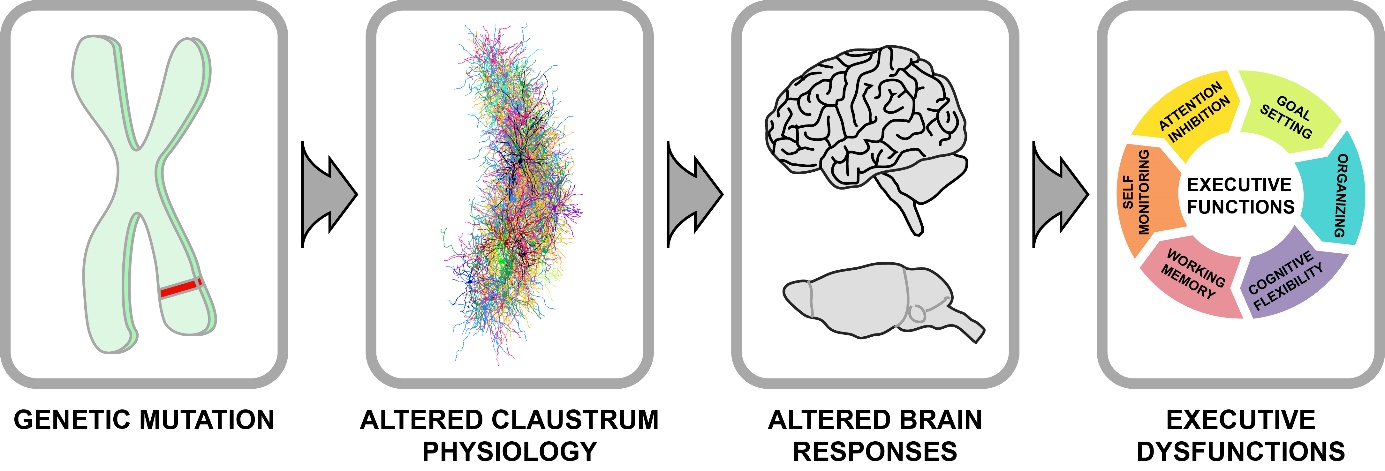
Alan Carleton's laboratory studies cognitive impairments associated with disorders such as schizophrenia and ADHD. His laboratory explores the neurobiological basis of these dysfunctions, for which current treatments are not very effective. The use of animal models linked to human genetic mutations that confer a risk of developing psychiatric disorders (e.g., 22q11 deletion) makes it possible to identify causal links between molecular alterations and brain dysfunction. The team is analysing the role of the claustrum, a little-studied but essential neural network for the organisation of cortical activity. This research aims to open up new therapeutic avenues for improving executive functions.
Circuits involved in working memory
Alan Carleton's laboratory seeks to better understand the neural circuits responsible for working memory. Working memory is essential for language, planning and everyday tasks, and is often impaired in psychiatric disorders such as schizophrenia. By studying specific interactions between brain areas in mice, Alan Carleton's project aims to identify the fundamental mechanisms of working memory and develop approaches to improve its performance in both pathological and healthy contexts.