“Understanding the biology of the mind modernises psychiatry”
American neuroscientist and psychiatrist Eric Nestler, a leading figure in translational research in mental health, has been awarded the 2025 Synapsy Prize. This distinction recognises his pioneering work in the study of the biological mechanisms in the brain that lead to mental disorders, with an integrated focus on preclinical and clinical data.
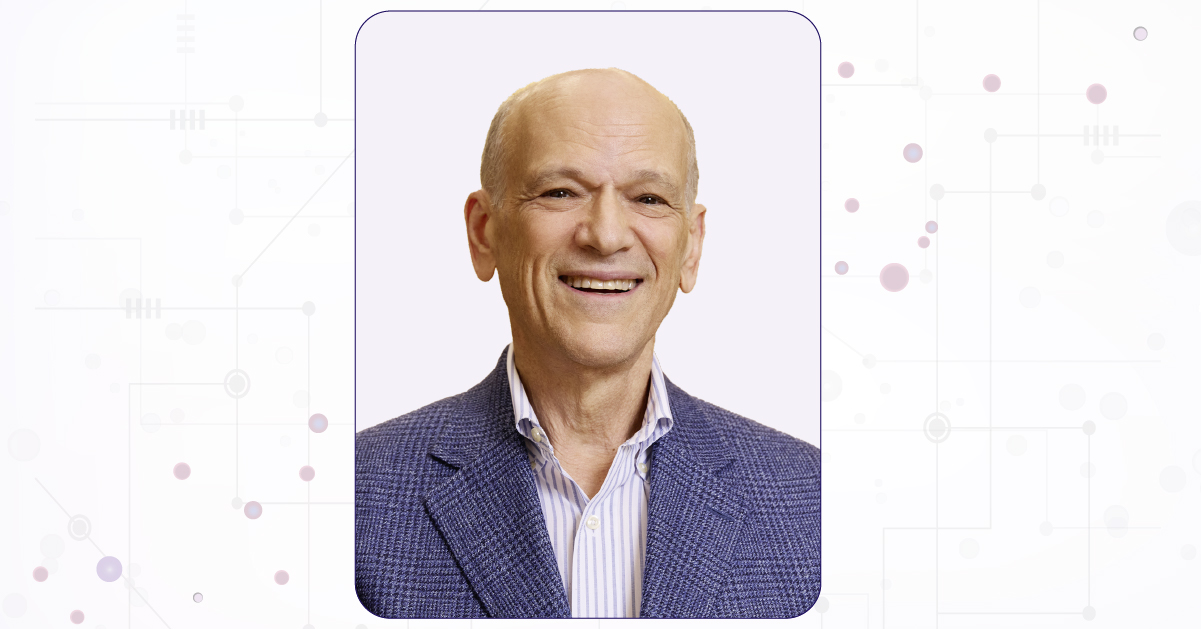
A professor of neuroscience and psychiatry at the Icahn School of Medicine at Mount Sinai (New York), Eric Nestler headed the Friedman Brain Institute from 2008 to 2025, serves as Chief Scientific Officer, and has just been appointed the Anne and Joel Ehrenkranz Dean of the Icahn School of Medicine. His work, which includes more than 700 publications, has shown how stress and addictive substances establish long-lasting gene expression and epigenetic programmes in the brain that promote depression and addiction, opening up new avenues for treatment. He embodies Synapsy’s approach more than anyone else. Interview.
Synapsy: What does this recognition mean to you?
Eric Nestler: Academic life tends to make us thick-skinned. Even when successful, every article and every research grant is subject to its share of criticism, some of it harsh! In this context, an award acts as a welcome counterpoint. It says that the work has mattered. Knowing that colleagues value our contributions is very important. I also see it as encouragement for my laboratory. Although my name appears, it is the doctoral students and postdocs who do the day-to-day work. Seeing them associated with this recognition is particularly important.
Why is an award specifically dedicated to translational research in neuroscience particularly useful today?
Because a gap persists between neuroscience and psychiatry, and with it, a certain stigma. Neurological diseases are instinctively perceived as brain disorders, in the same way that diabetes affects the pancreas. Mental disorders, on the other hand, are too often considered to have causes other than biology. An award such as Synapsy reminds us that psychiatry benefits from being rooted in biology in order to develop better diagnoses and truly targeted treatments. The prize highlights those who bring together clinical and research data. In doing so, it encourages this approach.
Is there still a need for neuroscientists and psychiatrists to work together?
Yes. I am both a psychiatrist and a neuroscientist, so my career has been built in both worlds. Forty years ago, there were only a handful of us with this dual profile, and we thought the ecosystem would change quickly. That rapid progress did not occur, but things have finally been moving forward and accelerating over the past five to ten years. Still, there is still a lot of work to be done. What is needed is for each field to acculturate the other: to share a vocabulary and to understand the constraints and possibilities of each approach. When we first launched these exchanges at Mount Sinai, we discovered that people were literally speaking two different languages. But by meeting regularly and exchanging perspectives and ideas of future investigations, the two worlds began to work effectively together and started yielding novel ways to advance our understanding of mental illness. Initiatives such as Synapsy make a decisive contribution to this needed collaboration.
If you had to summarise your translational approach, how would you describe it?
The laboratory started with very basic models, but my clinical training has always guided our choices. We designed experiments in rodents based on human observations, then moved on fairly early to studying post-mortem brain tissue from people suffering from depression or addiction, in order to verify the human relevance of the mechanisms identified in animals. This strategy led us to a key finding: in the human brain affected with one of these illnesses, only about half of the molecular changes observed promote susceptibility to the illness. The other half is part of an adaptive response, that is, they promote resilience. These findings teach us that in order to translate an observation from human brain into a treatment, we need to know which direction of effect it mediates: susceptibility or resilience. This is where experimentation on animal models remains essential. In recent years, several potential treatment targets derived from animal models, then validated on post-mortem human tissue for return to the clinic, have reached the clinical trial stage.
Your research focuses on addiction and depression. What have you discovered?
In addiction, we have shown that drugs divert gene expression programmes in the brain’s reward circuits. Remarkably stable induced transcription factors contribute to establishing and maintaining the addictive state. In addition, we have demonstrated that epigenetic mechanisms organise these programmes on the genome.
In depression, we validated a model of chronic social stress in mice that induces lasting alterations affecting behavioural health, such as social withdrawal, anhedonia, and sleep. However, we found that some of the animals remain resilient to stress and do not develop these symptoms. We then established that resilience is part of an active brain programme, rich in gene expression changes. This argues for therapeutic approaches that not only correct the deleterious effects of the stress, but also reinforce the natural pathways of resilience.
You emphasise the considerable time needed to transfer knowledge to the clinic. Where are we now?
Forty years ago, I imagined that basic neuroscience research would yield clinical applications within a decade. We now have trials underway, but few new approved treatments. This slow pace is not unusual. In oncology, for example, it often takes two or more decades between the discovery of a basic cancer mechanism and the arrival of a targeted therapy. For the brain, the scale is even longer. It is up to us to show progress as we go along, while continuing the fundamental exploration that will fuel tomorrow’s advances.
What do you see as the major challenges for research in the coming years?
Bringing together what technology has finally made possible: tracking the activity of identified cells in awake animals, attributing mechanisms to specific cell types in given brain regions, and reading the imprint left within individual cells, for example, on the entire genome and proteome. The brain is not a fixed-wired computer. Each activation reconfigures its own components. Tomorrow’s laboratory will have to consider molecules, cells, circuits, and behaviours and establish direct links between these different scales. In other words, it will have to bring together fundamental and clinical cultures within the same programme to achieve maximal advances.
Finally, a word about Synapsy?
Synapsy embodies precisely this ambition to bridge the gap between clinical and fundamental research by training hybrid investigators and building tailor-made research programmes. This is what we need to transform knowledge of the brain into real benefits for patients.
11 Nov 2025