
Juliette Bignard
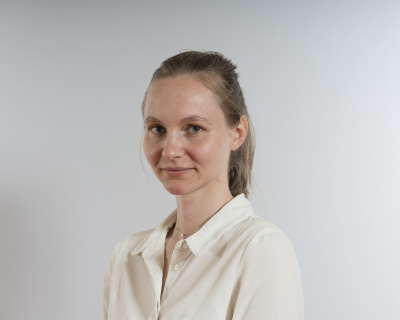
Juliette Bignard graduated from the Graduate School of Chemistry, Physics and Electronics (CPE) in Lyon, where she specialized in chemistry and process engineering. She obtained her PhD in pathophysiology from Sorbonne University in Paris. Her doctoral research focused on developing an experimental model for the hereditary form of pulmonary veno-occlusive disease. During her PhD, she acquired expertise in transcriptomic analysis, bioinformatics, as well as stem cell culture and differentiation.
She joined Ekaterine Berishvili’s laboratory as a postdoctoral researcher in 2022, and in 2024, she was appointed Maître Assistante.
In her postdoctoral project, Juliette Bignard focuses on the macroencapsulation of insulin-secreting, stem cell-derived organoids within a prevascularized biological matrix in the form of a hydrogel. These organoids present several challenges that her project aims to address, as she considers them a promising avenue for the treatment of type 1 diabetes. One of the major obstacles is the cellular differentiation heterogeneity within the generated organoids. While most studies focus on whole-organoid preparations, she believes that investigating islets at the individual level is essential to overcoming this issue. As part of her project, she is applying spatial transcriptomics to study the cytoarchitecture of stem cell-derived islets.
RESEARCH AIMS
Type 1 diabetes mellitus (T1DM) involves the autoimmune destruction of insulin-producing β-cells, making insulin therapy essential. While islet transplantation into the liver has demonstrated potential in restoring insulin independence and improving glycemic control, the limited availability of donor islets has prompted the search for alternative β-cell sources. Human pluripotent stem cells (hPSCs) have emerged as a promising solution. However, differentiation efficiency and the resulting heterogeneity in cell populations remain significant challenges.
Juliette Bignard's research project aims to improve the differentiation of stem cell-derived islets by enhancing their maturation and reducing cellular heterogeneity. To achieve this, she applies advanced transcriptomic techniques to study differences between individual islets, enabling a more refined understanding of islet composition and development.
The generation of mature, functional stem cell-derived islet-like structures remains a complex task due to the intricacy of native human islets. The extracellular matrix (ECM) plays a critical role by providing tissue-specific signals that influence cell fate and function. To address this, the laboratory has developed amnion-derived hydrogels and decellularised placental tissues to evaluate their effectiveness as microenvironments for insulin-producing cells. In her postdoctoral work, Juliette Bignard investigates how introducing placenta-derived ECM components can support the maturation of stem cell-derived islets.
EXPERTISE
- Single-cell transcriptomic analysis
- Stem cell culture (iPSC and ESC)
- Stem cell differentiation (into islet and endothelial cells)
KEY PUBLICATIONS
Cottet-Dumoulin D, Perrier Q, Lavallard V, Matthey-Doret D, Fonseca LM, Bignard J, Hanna R, Parnaud G, Lebreton F, Bellofatto K, Berishvili E, Berney T, Bosco D. Intercellular contacts affect secretion and biosynthesis of pancreatic islet cells. J Endocrinol. 2023;258(2):e220304. https://doi.org/10.1530/JOE-22-0304
Cottet-Dumoulin D, Fonseca LM, Bignard J, Hanna R, Parnaud G, Lebreton F, Bellofatto K, Berishvili E, Berney T, Bosco D. Identification of newly synthetized proteins by mass spectrometry to understand palmitate-induced early cellular changes in pancreatic islets. Am J Physiol Endocrinol Metab. 2023 Jun 20. https://doi.org/10.1152/ajpendo.00194.2022
Honarpisheh M, Lei Y, Zhang Y, Pehl M, Kemter E, Kraetzl M, Lange A, Wolf E, Wolf-van Buerck L, Seissler J, the VANGUARD Consortium, Bellofatto K, Berishvili E, Bignard J, Fonseca LM, Lebreton F, Assanelli S, Borsotti C, Cucci A, Follenzi A, Olgasi C, Citro A, Piemonti L, Pellegrini S, Thaunat O, de Jongh D, Massey E, Bunnik E, Cronin AJ, Mey D, Parisotto C, Rossi G, Kugelmeier P, Mühlemann M, Pal-Kutas K, Wolint P, Cavallaro M, Götz J, Müller J. Formation of re-aggregated neonatal porcine islet clusters improves in vitro function and transplantation outcome. Transpl Int. 2022;35:10697. https://doi.org/10.3389/ti.2022.10697