Topics
Maintaining physical activity and preserving the function of our skeletal muscles determine our life quality, autonomy and life expectancy. Skeletal muscle dysfunction and lack of movement have emerged as pressing public health challenges over the past decades. Aging, shifts in lifestyle, as well as pathological conditions, including musculoskeletal and neuromuscular disorders, chronic diseases or prolonged immobilization, are associated with skeletal muscle alterations, decreased mobility and decline in individual’s well-being. There is an emergent need to understand the underlying mechanisms, in order to develop targeted, and potentially personalized, therapeutic strategies that can mitigate these effects, improve recovery outcomes, and ultimately enhance the quality of life of patients and their caregivers.
How do skeletal muscles function from single molecules to movement? What are the mechanisms underlying neuromuscular disorders? What are the aging factors affecting the muscular system? How can exercise delay muscle wasting and weakness? How can we optimize individual motor capacity throughout life? How can therapeutic strategies cancel or at least minimise skeletal muscle deterioration?
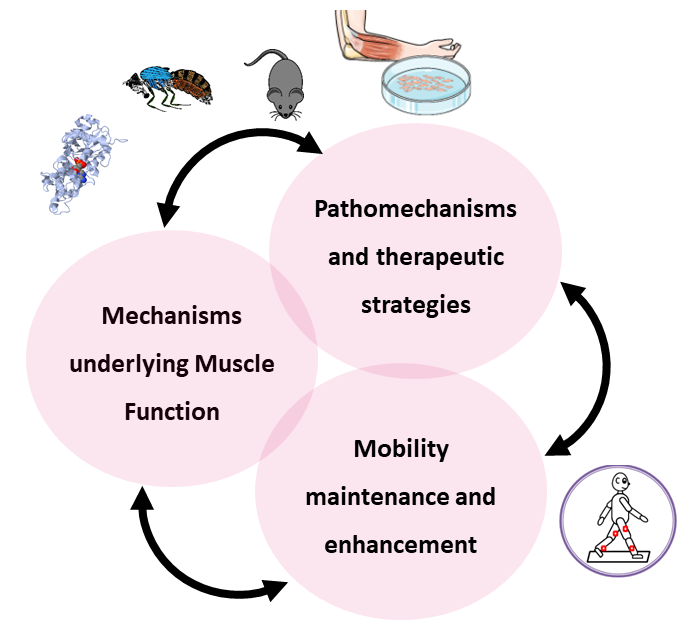
The CR2M apprehend these questions through integrative approaches involving:
-
Fundamental research on the neuromuscular system: muscle development, homeostasis maintenance, metabolism, plasticity and regeneration, environment…
>> LEARN MORE about Skeletal Muscle Function
-
Translational studies on pathological conditions threatening muscle integrity: sarcopenia, musculoskeletal and neuromuscular disorders, cachexia, disuse, inflammation…
>> LEARN MORE about Skeletal Muscle Disorders
-
Mobility and interventions on the locomotor apparatus: orthopaedic surgery, rehabilitation, functional evaluation, sport, nutrition, cell and gene therapies…