
- Events
Mindfulness: from research to teaching
On 11 December, Jon Kabat-Zinn—the leading proponent of mindfulness in the West and founder of the Mindfulness-Based Stress Reduction (MBSR) programme—will deliver a public lecture at UNIGE entitled "Mindfulness in a Changing World". This event holds particular significance for the Faculty of Medicine, where research on mindfulness has flourished for two decades and is now integrated into both teaching curricula and student support programmes.

© Adobe stock
"Mindfulness means paying attention to the present moment with a particular quality: observing without judgement", explains Françoise Jermann, a psychologist at Geneva University Hospitals (HUG) and lecturer in the Department of Psychiatry, whose clinical practice and research centre on mindfulness. "Two essential aspects converge here. First, intention—when we choose to be present. Second, attitude—approaching our experience with openness and without judgement."
While mindfulness draws its origins from Buddhist meditation, it has evolved beyond its religious roots to become a pragmatic approach applicable across many medical fields. From managing chronic pain to preventing depressive relapse, it also serves as a valuable tool for navigating everyday stress.
An interest in the scientific approach
In the 1980s, Jon Kabat-Zinn, a molecular biologist by training and a meditation practitioner, laid the foundations for an innovative approach. Working with people suffering from chronic pain at the University of Massachusetts, he proposed an original practice, accessible to all, structured as an eight-session programme: MBSR. "At the time, there wasn't much interest in the mind-body connection", recalls Françoise Jermann. "Moreover, with this programme, patients could also take an active and central role in their own health. This principle of participatory medicine, which is essential to many health professionals today, was virtually non-existent at the time."
Unlike other approaches, mindfulness has been accompanied by a scientific approach from the outset. In the 1990s, three psychologists drew on Jon Kabat-Zinn's work to develop a specific programme for the prevention of depressive relapse – MBCT (Mindfulness-Based Cognitive Therapy) – and launched a vast research programme. "From that point on, research really took off", adds Françoise Jermann.
Geneva: a European hub for mindfulness
In the early 2000s, Guido Bondolfi, a psychiatrist at HUG and professor at the Faculty of Medicine, trained in MBSR with Jon Kabat-Zinn and brought mindfulness to Geneva. In 2005, the SNSF funded an initial Geneva-based study on depressive relapse risk—evidence of Swiss institutions' early recognition of this emerging field. Studies soon demonstrated that MBCT was as effective as continued antidepressant treatment in preventing relapse. "This gives patients a genuine choice: those wishing to discontinue antidepressants find MBCT an equally effective alternative."
The following two decades witnessed a flourishing of mindfulness research in Geneva, applied to various clinical issues—from supporting women with breast cancer through disease-related stress and anxiety, to enhancing the emotional and cognitive capacities of adolescents born prematurely. "We observed significant improvements in social and emotional skills, as well as executive functions—attention, inhibition, working memory", explains Russia Ha-Vinh Leuchter, a developmental paediatrician who led the study. "Most importantly, the children facing the greatest difficulties benefited most from the intervention." Even more striking: these behavioural changes were accompanied by measurable brain modifications on MRI, including strengthened white matter networks and circuits linked to executive function.
Integrating clinical, neuroimaging and biomedical evidence
The e-SMILE study, now entering its final analytical phase, evaluates mindfulness's impact on stress management and empathy among 160 healthcare students followed over nine months—half participating in the programme, half serving as controls. The protocol encompasses MRI scans, blood and capillary sampling, and clinical questionnaires. "Our preliminary findings are highly encouraging", notes Françoise Jermann. "Healthcare students, often highly perfectionistic, sometimes lack self-compassion. Yet, to care effectively for others, one must first know how to care for oneself. We're seeing genuine progress here, beginning with enhanced self-awareness of one's own mechanisms, enabling students to avoid automatic reactive patterns."
Mindfulness is not, however, a universal panacea. "Research by Camille Nemitz-Piguet, one of e-SMILE's co-investigators, showed no significant effect among adolescent girls who weren't actively seeking help for a specific psycho-medical concern", observes Roussia Ha-Vinh Leuchter. "This confirms that personal engagement is fundamental to mindfulness success—it cannot be imposed."
A wide range of training courses at UNIGE
Beyond research, Geneva has developed robust training programmes. A joint Certificate of Advanced Studies (CAS) between the Faculty of Medicine and the School of Health Science at the University of Applied Sciences Western Switzerland has already trained 250 professionals across diverse fields. Optional courses are also available in medicine, pharmaceutical sciences and biomedical sciences, alongside workshops for UNIGE students and staff. "The strength of mindfulness lies in its ability to adapt to such varied contexts," observe Françoise Jermann and Roussia Ha-Vinh Leuchter. "At HUG, the practice is accessible to patients and staff alike."
For further information
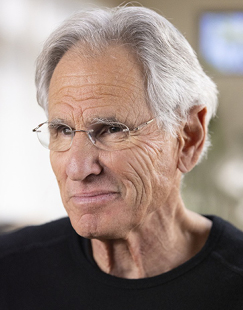
Pr Jon KABAT-ZINN
Founder of the Center for Mindfulness in Medicine, Health Care and Society,
University of Massachusetts
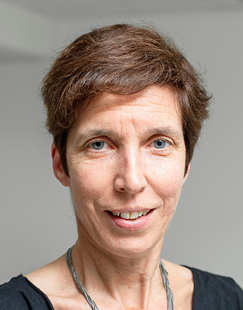
Dre Françoise JERMANN
Lecturer,
Department of Psychiatry,
UNIGE Faculty of Medicine
Psychologist,
HUG
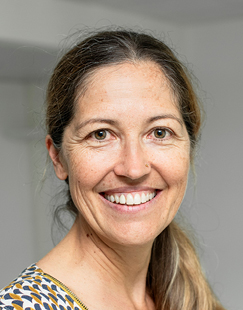
Dre Russia HA-VINH LEUCHTER
Development and Growth Division,
Women, Children, and Adolescent Department,
HUG


