From Compliance to Care: Integrating Accountability in Organisations
Executive Short Course
How can organisations move from compliance-driven accountability to relationships of trust, dialogue, and co-creation with affected communities? What are the concrete steps through which this commitment can be realised? This executive course explores accountability as a shared responsibility across humanitarian, development and peacebuilding actors. Drawing on real-world cases, it examines how leadership, funding structures, and organisational cultures (developing standards, auditing) can either enable or hinder people-centred and locally led action. Participants will learn to design adaptive strategies and advocacy tools that promote ethical, inclusive and sustainable accountability.
This is a 5-week online course that can be taken as a stand-alone or as part of the Certificate of Advanced Studies in Accountability to Affected People (CAS AAP).
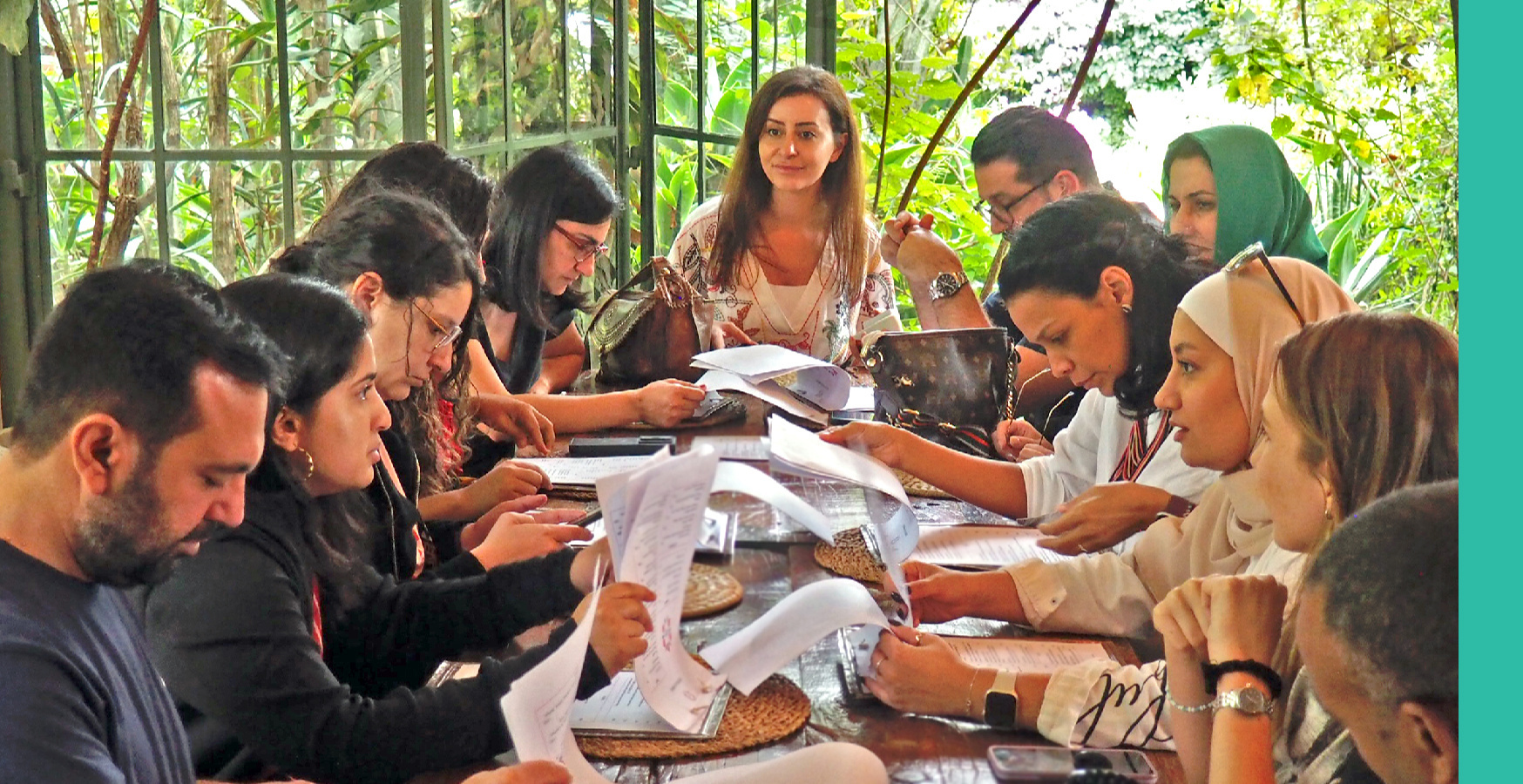
CAS in Accountability to Affected People course participants in Nairobi.
Synchronous live sessions (once per week). All live sessions are in group and mandatory – Usually in early afternoon CEST.
Asynchronous self-study activities (individual or group work activities such as readings, interviews, podcasts, videos, in-class presentations, self-tests, case studies and simulation exercises, reflexive analysis, forum discussions etc.)
Online course requires app. 15 hours of dedicated work per week. We recommend that participants allow at least 25% of their time for the course and adapt their professional activity accordingly and with flexibility on working hours.
Week 1: Accountability as ethics and practice (origins and challenges of AAP)The ethics and practice of people-centered approaches (rationale and methods)
Week 2: From standards to power: Rethinking relationships with communities (AAP frameworks)
Week 3: Leadership and organisational culture (listening, reflexivity, gender and diversity)
Week 4: Donor perspectives and systemic constraints (funding, reporting, risk management and advocacy)
Week 5: Designing transformative accountability (evaluations and strategies)
Professionals in the humanitarian, development or social sector looking to improve the provision of humanitarian assistance through people-centered approaches
Professionals from any other sectors (donors, policy-makers, civil servants, culture and arts) who wish to understand mechanisms for more inclusive participation
Explore related Accountability to Affected People courses
Executive Short Course
People-centred Programming: Tools and Strategies for Inclusive Humanitarian Action
Practical tools to strengthen participation, inclusion, and accountability in programme design and delivery.